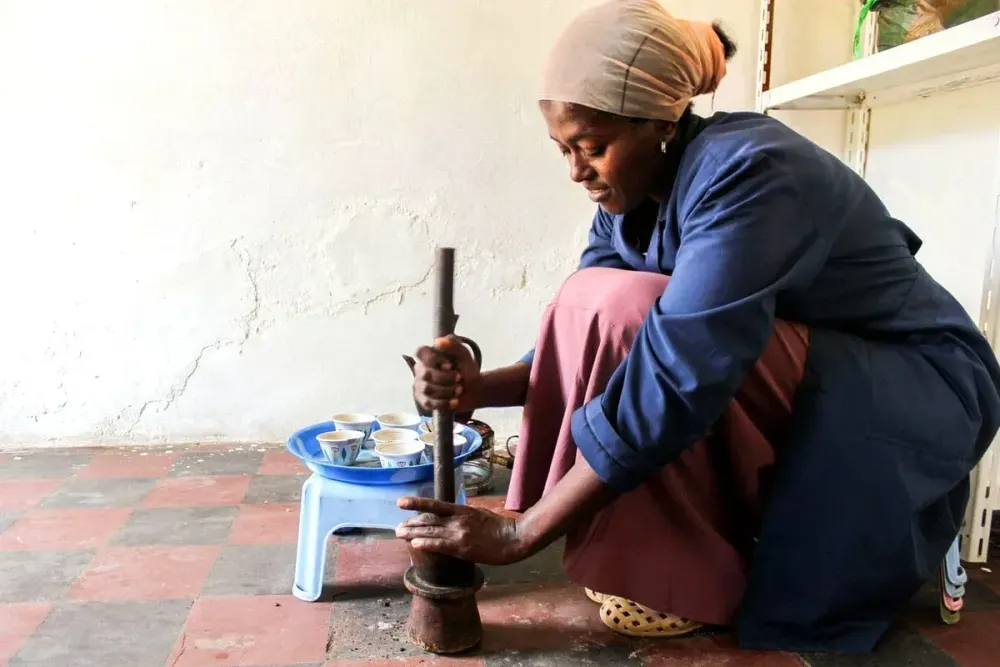
Coffee originated in Ethiopia — specifically in the Kaffa region of southwestern Ethiopia, where Coffea arabica grows wild and where the drink has been prepared and consumed for at least a thousand years. The Ethiopian coffee ceremony is not a performance for tourists; it is a daily ritual of hospitality and community that takes 45 minutes to an hour and involves three rounds of increasingly diluted coffee: abol (first), tona (second), and baraka (blessing, third). Each cup has specific significance.
The Three Rounds
Abol is the strongest cup — green coffee beans roasted on a small pan, ground with a mortar and pestle, brewed in a jebena (clay pot) over charcoal, and poured into small handle-less cups. The coffee is intensely flavoured, slightly smoky from the roasting, and served with sugar or salt. Tona is the second round — the same grounds brewed again with fresh water, producing a lighter cup. Baraka is the third, lightest round, considered a blessing for those who stay to receive it.
Niter Kibbeh in Coffee
In some Ethiopian traditions, a small amount of niter kibbeh — the spiced clarified butter that is the foundation fat of Ethiopian cooking — is added to the coffee. The butter floats on the surface, adding richness and a subtle spice note from the cardamom and other spices used in its preparation. This is the Ethiopian ancestor of Tibetan butter tea and the modern MAHA butter coffee — fat in a hot drink as a caloric and flavour addition.
Serves 4-6 (ceremony) · Prep 10 min · Brew 30 min
Ingredients
- 100g green coffee beans (or lightly roasted whole beans)
- 1 litre water
- Sugar or salt to serve
- Optional: 1 tsp niter kibbeh or ghee per cup
- Incense (frankincense/myrrh) for atmosphere
- Fresh grass (or herbs) to scatter
Method
- If using green beans: roast in a dry pan over medium heat, stirring constantly, until dark brown and fragrant — about 10 minutes. Cool briefly.
- Grind coarsely in a mortar or grinder.
- Bring water to a boil in the jebena or a pot.
- Add coffee grounds. Reduce heat and simmer 10 minutes.
- Strain through a fine sieve or cloth into the jebena for serving.
- Pour into small cups. For the Ethiopian tradition, add a pinch of salt rather than sugar for the first round.
- If using niter kibbeh: stir a small spoonful into each cup.
Making Niter Kibbeh
Niter kibbeh is ghee spiced during the clarification process. Melt 250g unsalted butter over low heat with 1 small onion quartered, 3 garlic cloves, 2cm ginger, 1 tsp cardamom pods, 1/2 tsp turmeric, 1/4 tsp fenugreek seeds, and 2 cloves. Simmer 30 minutes. Strain through a fine cloth. The result is golden, aromatic clarified butter that is the foundation fat of Ethiopian cuisine.
Where to find green coffee beans?
Specialty coffee roasters, Ethiopian grocery stores, and online suppliers. Green beans store for years — roast only what you need.
Can I use pre-roasted coffee?
Yes — the ceremony can be performed with pre-roasted whole beans. The visual drama of roasting at the table is lost but the coffee is the same.
What is the significance of the grass scattered on the floor?
Fresh grass symbolises the fields and nature's abundance. It is scattered on the floor during the ceremony as an act of welcome and grounding.
Follow Savannah: @theefoodiekitchen · Facebook · All Links
African, Hawaiian, Indian, Mediterranean, Asian, Exotic, Chicken, Rice, Cookies, Coffee, Spices, Plants, World Cuisine, 30-Minute Dinners and more.
View All 23 Books on Amazon →