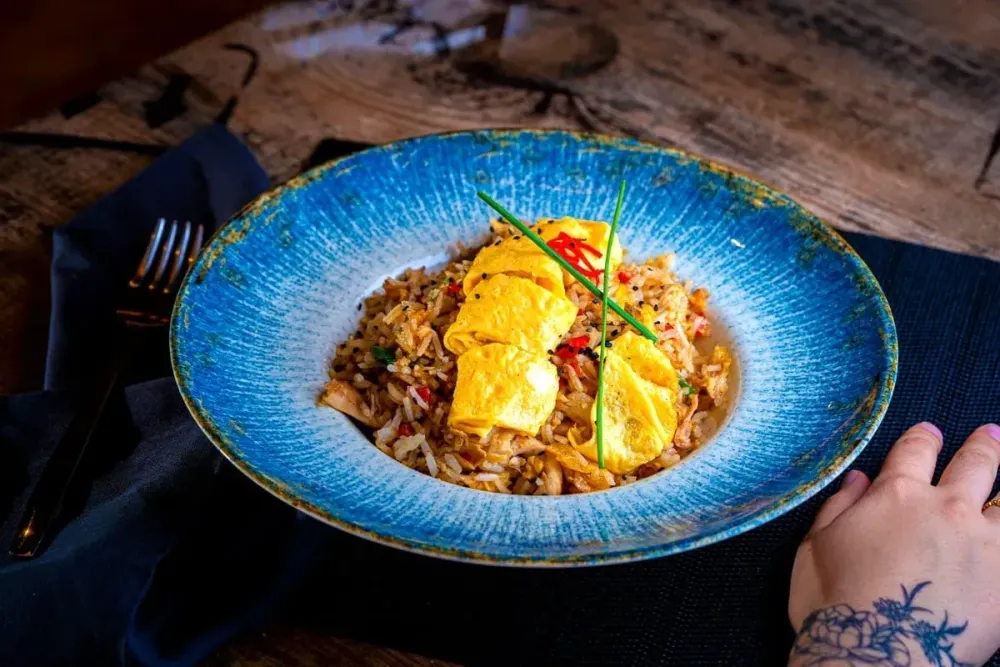
Chinese fried rice cooked in lard is the authentic version of the dish. Lard was the wok fat in Chinese restaurant cooking until vegetable oil displaced it in the 1970s and 1980s, driven by the same anti-saturated fat messaging that reshaped Western cooking. The result of that shift was a blander, less texturally interesting fried rice that most home cooks and many restaurants still serve today. Lard fried rice has a richness and depth — and produces wok hei more effectively at domestic hob temperatures — that vegetable oil versions cannot match.
The Secret of Wok Hei
Wok hei — roughly translated as 'breath of the wok' — is the smoky, slightly charred, deeply savoury quality of great Chinese restaurant stir-fry cooking. It is produced by very high heat, a seasoned wok, and a fat with a high smoke point that can briefly reach temperatures above its smoke point without producing excessive off-flavours. Lard's smoke point is approximately 370°F — moderate by ancestral fat standards, but its fat composition means it breaks down cleanly at high temperatures, producing the characteristic flavour of wok hei rather than the acrid oxidation products of overheated seed oils.
Day-Old Rice Is Not Optional
Fresh rice contains too much water. In a hot wok, fresh rice clumps, sticks, and steams into an unpleasant mass. Day-old rice has lost sufficient moisture that the individual grains remain separate during the high-heat tossing phase. Spread leftover rice on a tray and refrigerate overnight. If you are making rice specifically for fried rice, cook it, spread it out on a tray to cool quickly, and refrigerate for at least 4 hours before using.
Serves 2 · Prep 10 min · Cook 8 min
Ingredients
- 400g day-old cooked rice (ideally jasmine)
- 2 tbsp lard
- 2 eggs, beaten
- 3 garlic cloves, minced
- 2 spring onions, whites and greens separated
- 100g frozen peas (or any vegetable)
- 2 tbsp soy sauce
- 1 tsp sesame oil (finishing oil only)
- White pepper
- Optional: 150g prawns, char siu pork, or leftover roast chicken
Method
- Heat wok or large pan over the highest possible heat until smoking. Add lard.
- If using protein, cook first until coloured and set aside.
- Add garlic and spring onion whites. Stir-fry 30 seconds.
- Add rice. Press into the wok and leave untouched for 30 seconds until the bottom starts to colour slightly. Toss and repeat.
- Push rice to the sides. Add beaten eggs to the centre. Scramble briefly, then toss through the rice before fully set.
- Add peas and any protein.
- Add soy sauce and white pepper. Toss everything together for 1-2 minutes over high heat.
- Remove from heat. Add sesame oil and spring onion greens. Serve immediately.
The Egg Technique
The eggs in fried rice should be half-scrambled before being tossed through the rice — not fully set, not raw. Push the rice to the edges, add beaten eggs to the centre of the hot wok, let them begin to set for 15-20 seconds, then drag and toss through the rice before they fully cook. The residual heat from the rice finishes the eggs. This produces streaks of egg through the rice rather than either raw egg or rubbery dry scrambled egg.
Can I use butter instead of lard?
Butter's lower smoke point makes it difficult for this application — the high heat required for wok fried rice will burn the milk solids. Ghee is a better substitute. But lard is the most authentic and most effective fat for wok cooking.
What type of rice is best?
Jasmine rice — the standard in Chinese and Southeast Asian cooking — has the right starch content and grain length for fried rice. Long-grain rice also works. Avoid short-grain or sticky rice, which clumps too readily.
How do I get enough heat at home?
Use your largest, heaviest pan or wok. Preheat it over highest heat for 3-4 minutes before adding the lard. Do not add too much food at once — cook in batches if making more than 2 portions to maintain temperature.
Related guides: Vegetable Oil Substitute Guide
📌 Follow on Pinterest: Asian Seed Oil Free Recipes on Pinterest
Follow Savannah: @theefoodiekitchen · Facebook · All Links
African, Hawaiian, Indian, Mediterranean, Asian, Exotic, Chicken, Rice, Cookies, Coffee, Spices, Plants, World Cuisine, 30-Minute Dinners and more.
View All 23 Books on Amazon →