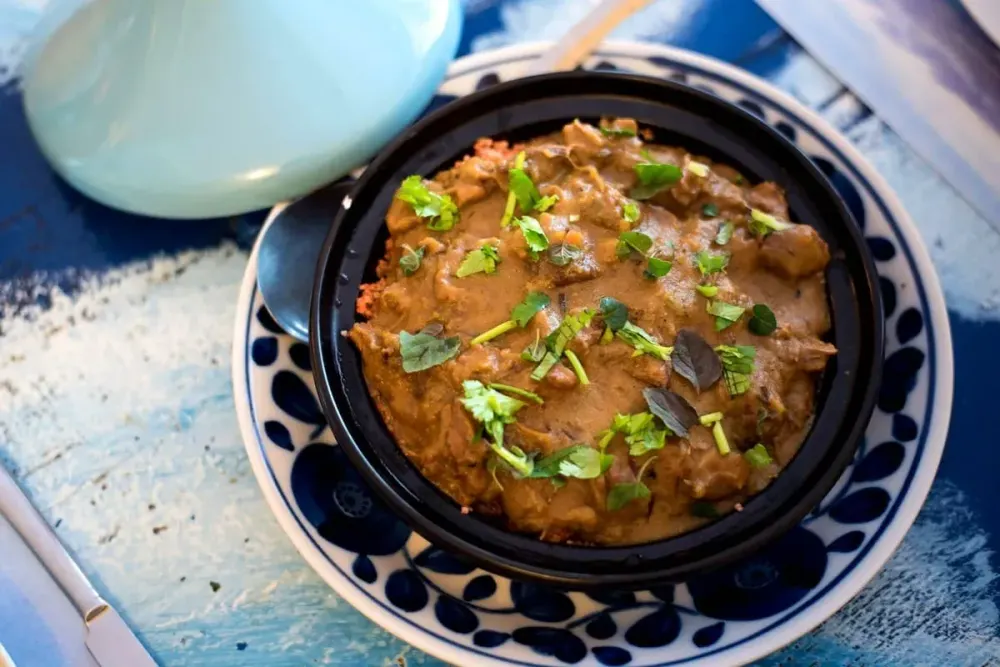
Moroccan lamb tagine is one of the defining dishes of North African cuisine — slow-braised lamb with preserved lemon, olives, and ras el hanout in a conical clay pot that circulates steam to keep the meat tender and moist throughout the long cook. The fat is butter and olive oil. Not vegetable oil. The combination of butter's milk solids and olive oil's polyphenols creates a sauce base that defines the dish.
The Tagine Pot
The tagine pot is not decorative. The conical lid serves a specific thermal function: steam rises, condenses on the cone, and drips back down over the meat, constantly basting it during the cook. This is why tagine meat is always moister than braise — the self-basting mechanism does the work that periodic turning and basting does in other techniques. A good heavy-bottomed pot with a tight lid can approximate this, but a clay tagine used on a heat diffuser is the authentic tool.
Serves 4 · Prep 20 min · Cook 2.5 hours
Ingredients
- 1.2kg lamb shoulder, cut into large pieces
- 2 tbsp butter
- 2 tbsp olive oil
- 2 onions, thinly sliced
- 4 garlic cloves, minced
- 2 tsp ras el hanout
- 1 tsp ground cumin
- 1 tsp ground ginger
- 1/2 tsp saffron, steeped in warm water
- 400ml lamb or chicken stock
- 1 preserved lemon, pulp removed, rind sliced
- 100g green olives
- Fresh coriander and flat-leaf parsley to serve
Method
- Heat butter and olive oil in the tagine or heavy pot over medium heat. Brown the lamb in batches until golden on all sides. Remove and set aside.
- In the same fat, cook onions slowly for 15 minutes until very soft and beginning to colour.
- Add garlic and all the spices. Cook 2 minutes, stirring constantly.
- Return lamb to the pot. Add stock and saffron water. Season generously with salt.
- Cover and cook over the lowest possible heat for 2 hours, turning the lamb halfway through.
- Add preserved lemon rind and olives. Cook uncovered for 30 minutes to reduce the sauce.
- Serve with couscous and finish with fresh herbs.
Ras el Hanout
Ras el hanout means 'head of the shop' in Arabic — the spice merchant's best blend, containing anywhere from 10 to 35 spices depending on the maker. Good commercial blends include cardamom, nutmeg, anise, mace, cinnamon, ginger, pepper, coriander, and cumin at minimum. Make your own if you have access to the individual spices — the freshness is incomparable to a pre-ground blend that has been sitting in a jar for months.
Frequently Asked Questions
Yes — a heavy Dutch oven with a tight-fitting lid works well. The key is low heat and a sealed environment. Check periodically and add a splash of stock if the liquid is reducing too quickly.
Fresh lemon zest plus a small amount of lemon juice is the closest substitute, but preserved lemon has a unique fermented flavour that cannot be fully replicated. Making your own is simple — pack lemon quarters in salt and leave for 3 weeks.
Beef shin or chuck works well with this spice profile. Add 30-45 minutes to the cooking time as beef takes longer to become tender.
Related guides: Vegetable Oil Substitute Guide · Is Olive Oil a Seed Oil?
📌 Follow on Pinterest: Mediterranean Seed Oil Free Recipes on Pinterest
📌 Follow on Pinterest: African Seed Oil Free Recipes on Pinterest
African, Hawaiian, Indian, Mediterranean, Asian, Exotic, Chicken, Rice, Cookies, Coffee, Spices, Plants, World Cuisine, 30-Minute Dinners and more.
View All 23 Books on Amazon →