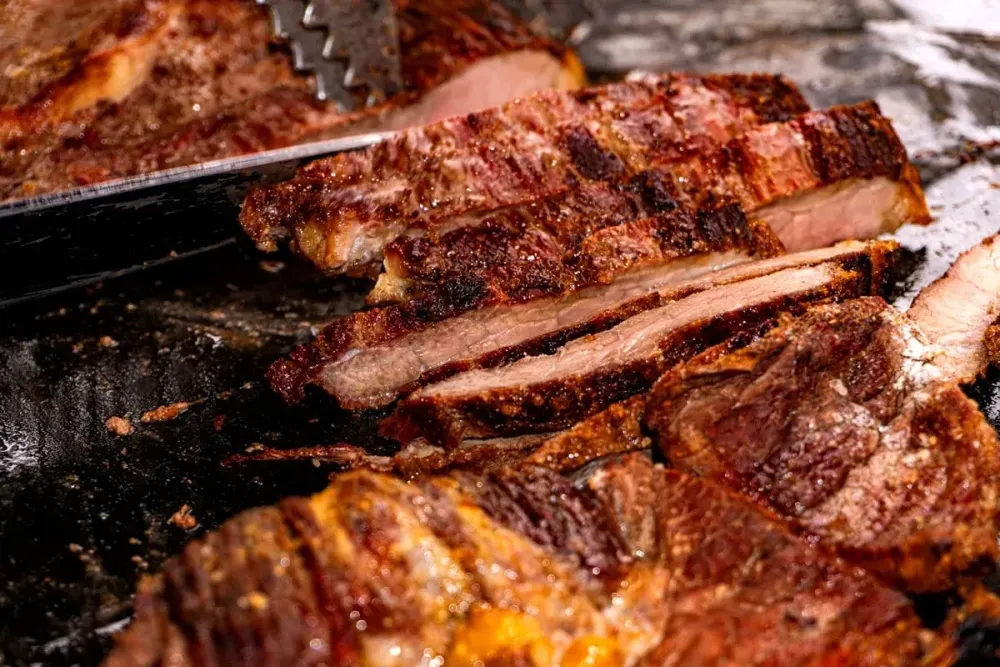
Beef tallow is rendered beef fat — specifically the fat from around the kidneys and loins, called suet when raw, which is rendered (slowly heated until the fat separates from any remaining connective tissue and water) to produce a solid, shelf-stable cooking fat. It was the dominant high-heat cooking fat in Western kitchens until the 1970s and 1980s, when it was displaced by cheaper industrial seed oils. McDonald's fried in beef tallow until 1990. The switch to vegetable oil is well-documented and the flavour difference is equally well-remembered by anyone old enough to have tasted the original.
Benefits of Cooking With Beef Tallow
- 420°F smoke point — handles deep frying, cast iron searing, and oven roasting without degrading or producing harmful compounds the way seed oils do at high heat.
- Stable saturated fat — tallow is primarily saturated and monounsaturated fat, which does not oxidise at cooking temperatures. Seed oils (polyunsaturated) oxidise when heated and produce aldehydes.
- Fat-soluble vitamins — grass-fed beef tallow contains vitamins A, D, E, and K2, which are absent from industrial seed oils.
- Superior crust and texture — tallow's saturated fat structure creates the roast potato crust, smash burger crust, and deep-fried texture that seed oils cannot replicate.
- Shelf-stable without refrigeration — tallow keeps at room temperature for up to 12 months in a sealed container. Seed oils go rancid faster and are more susceptible to oxidation during storage.
What Is Beef Tallow Used For?
- Deep frying — chips, doughnuts, fried chicken. McDonald's used tallow until 1990.
- Roasting — roast potatoes, root vegetables, bone-in chicken. Tallow produces the crispiest roasted crust of any fat.
- Searing and pan frying — steak, smash burgers, chicken thighs. Cast iron plus tallow at high heat creates the Maillard crust.
- Seasoning cast iron — tallow polymerises well at oven temperatures, creating a durable non-stick seasoning layer.
- Beef-based braises and stews — birria, bone broth, beef stew. Tallow adds depth to beef dishes.
- Skincare — whipped tallow is used as a moisturiser in the ancestral health community, valued for its similarity to human sebum.
Cooking With Beef Tallow at Home
Tallow is solid at room temperature and melts quickly in a hot pan. For everyday cooking, spoon 1-2 tablespoons directly into a cold cast iron skillet, heat over medium-high, and begin cooking once the tallow is liquid and shimmering. For roasting, melt 2-3 tablespoons in the oven at 425°F in the roasting pan before adding food. For deep frying, fill a heavy-bottomed pot a third deep with tallow, melt, and bring to 350-375°F using a thermometer before adding food. Store tallow in an airtight container away from light. Full cooking guide: Cooking With Beef Tallow — Temperature Guide and Best Dishes.
How Tallow Is Made
The raw material for tallow is beef suet — the hard fat found around the kidneys and loins of cattle. Suet has a high melting point and a waxy, firm texture when raw. To render it into tallow, the suet is heated gently over several hours — either in a low oven or on the stovetop at the lowest possible heat — until the fat melts and separates from the connective tissue, water, and impurities. The liquid fat is strained through a fine sieve, poured into jars, and allowed to solidify. The result is a creamy white or pale yellow fat that is solid at room temperature.
The Chemistry of Stability
Tallow is primarily saturated fat (approximately 50%) and monounsaturated fat (approximately 42%), with only about 4% polyunsaturated fat. Saturated fats are chemically stable at high temperatures because their carbon chains have no double bonds for oxygen to attack during the oxidation process. Seed oils, by contrast, are primarily polyunsaturated — their multiple double bonds make them prone to oxidation at cooking temperatures, producing aldehydes and other breakdown products.
Savannah's Take
Tallow is the fat I reach for when I want the Maillard reaction to happen fast and hard. Smash burgers in tallow on a cast iron skillet produce a crust that I have never replicated with any other fat — the combination of the high smoke point, the saturated fat stability, and the subtle beef flavour that carries into the meat. I render my own from grass-fed suet when I can get it from my butcher, and I keep Fatworks on standby for when I can't. What surprised me most when I first switched was that tallow doesn't taste strongly of beef — it's more of a clean, neutral fat with a subtle richness. It seasons cast iron better than anything else I've tried and it produces the best roast potatoes I've ever made.
Smoke Point and Cooking Applications
Beef tallow has a smoke point of approximately 420°F (215°C) — significantly higher than butter at 350°F and comparable to refined avocado oil. This makes it suitable for the highest-heat cooking applications: deep frying, searing steaks, roasting potatoes, and anything requiring a very hot dry surface. At high heat, tallow produces a crust through the Maillard reaction more effectively than seed oils because the fat does not oxidise and produce competing off-flavours.
Where to Buy or How to Make
Grass-fed beef tallow is available from specialty food retailers, farmers markets, and online. Butchers often carry suet — the raw material — for a nominal cost or free. Making tallow at home requires only time: chop the suet into small pieces, place in a heavy pot or slow cooker at the lowest possible setting, and cook for 3-4 hours until the fat has fully rendered. Strain, pour into jars, allow to cool. It keeps at room temperature for 6 months or refrigerated for a year.
Tallow in the MAHA Kitchen
- Roast potatoes — the benchmark application. Tallow at 220°C produces shatteringly crispy potatoes with a golden colour that seed oil cannot replicate.
- Deep frying — the original McDonald's french fries were cooked in beef tallow. The flavour and crispness were better.
- Searing steaks and burgers — the high smoke point means maximum Maillard reaction crust.
- Tallow chicken thighs — the cold-pan start technique combined with tallow produces the crispiest chicken skin achievable.
Is beef tallow the same as lard?
No — tallow is rendered beef fat; lard is rendered pork fat. Both are ancestral cooking fats with high smoke points, but they have different flavour profiles and different typical cooking applications. Tallow is more neutral; lard has a slightly porky note.
Is tallow sustainable?
Tallow is a byproduct of beef processing — it would otherwise be discarded. Using tallow is one of the most sustainable choices in the kitchen because it utilises fat that the beef production system already produces.
Can I use tallow for baking?
Yes — tallow can substitute for shortening or lard in pastry and biscuit recipes. It is less commonly used for sweet baking because of its subtle beefy note, but it works well in savoury pastry and biscuits.
Related guides: Vegetable Oil Substitute Guide · Butter Mashed Potatoes · Seed Oil Free Chicken Nuggets · Hidden Seed Oils in Common Foods
📌 Follow on Pinterest: Ancestral Cooking Fats on Pinterest
🛒 The Foodie Kitchen Shop — every fat, cookbook, and kitchen tool used across 230+ recipes in one place.
Browse Shop →Research: Weston A. Price Foundation: Know Your Fats →
Follow Savannah: @theefoodiekitchen · Facebook · All Links
African, Hawaiian, Indian, Mediterranean, Asian, Exotic, Chicken, Rice, Cookies, Coffee, Spices, Plants, World Cuisine, 30-Minute Dinners and more.
View All 23 Books on Amazon →