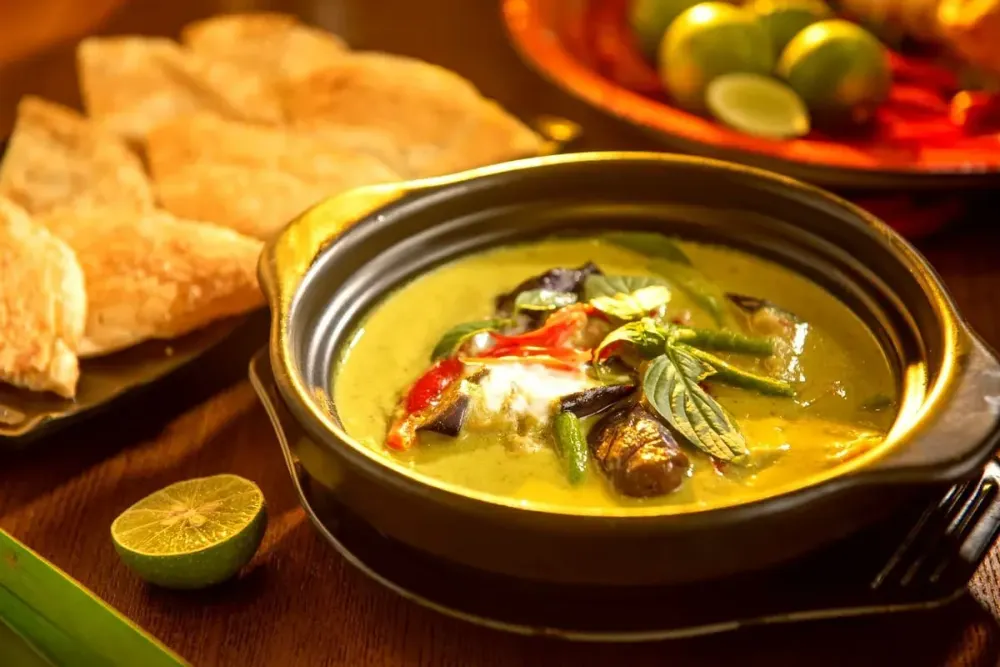
Thai cooking built on coconut oil and coconut cream is a completely different proposition from the seed oil version that most Thai restaurants in the West now serve. Coconut oil's medium-chain triglycerides handle the high wok heat of Thai stir-frying. Coconut cream — the fat-rich first press of coconut flesh — is the base of every Thai curry. The substitution of palm olein and soybean oil for coconut in Thai commercial cooking was an economic change; this recipe returns to the original.
Coconut Oil vs Coconut Cream in Thai Cooking
Coconut oil — refined or virgin — is used for high-heat applications: stir-frying, sautéing aromatics, frying shallots and garlic for curry paste. Coconut cream — the thick, fatty first extraction from grated coconut flesh — is the braising medium for curries. When coconut cream is cooked in a wok over high heat until the fat separates and the solid milk begins to fry the curry paste, the process is called 'cracking the coconut cream' — it is the technique that makes Thai curry paste bloom properly.
Cracking the Coconut Cream
Add coconut cream to a hot wok or pan. Cook over medium-high heat, stirring occasionally, until the water in the cream evaporates and the coconut fat separates and pools at the surface — about 8-10 minutes. The cream will go from a smooth liquid to a thick, bubbly mass before finally splitting into clear coconut fat and white solids. Add curry paste at this point and fry in the coconut fat for 2 minutes. This step is the foundation of Thai curry flavour.
Thai Green Curry in Coconut Cream — Serves 4 · Prep 15 min · Cook 25 min
Ingredients
- 400ml full-fat coconut cream
- 2-3 tbsp green curry paste (store-bought or homemade)
- 500g chicken thighs, sliced, or vegetables
- 1 tbsp coconut oil
- 200ml coconut milk
- Fish sauce to taste (or salt)
- Palm sugar or coconut sugar
- Fresh Thai basil, kaffir lime leaves, Thai chillies
- Jasmine rice to serve
Method
- Heat wok or pan over medium-high heat. Add coconut cream.
- Cook 8-10 minutes until the coconut fat separates and pools on the surface — the cream 'cracks'.
- Add curry paste. Fry in the coconut fat for 2 minutes until fragrant and darkened.
- Add chicken or vegetables. Stir to coat in the paste.
- Add coconut milk. Bring to a simmer and cook 12-15 minutes until chicken is cooked through.
- Season with fish sauce and palm sugar. Taste — it should be rich, aromatic, balanced.
- Add Thai basil and kaffir lime leaves off the heat. Serve with jasmine rice.
Curry Paste from Scratch
Green curry paste: 10 green chillies, 4 shallots, 4 garlic cloves, 2 lemongrass stalks, 3cm galangal, kaffir lime zest, coriander root, cumin seeds, white pepper — blended to a smooth paste in a mortar or blender. Homemade paste is significantly more flavourful than commercial and keeps refrigerated for 2 weeks.
Can I use light coconut milk instead of cream?
Light coconut milk has too little fat to 'crack' properly. Always use full-fat coconut cream for authentic Thai curries. The fat content is essential to the technique.
What is the difference between coconut cream and coconut milk?
Coconut cream is the first press — higher fat, thicker, richer. Coconut milk is a second or subsequent press — lower fat, thinner. In Thai curry, use coconut cream to fry the paste and coconut milk to extend the sauce.
What vegetables work in green curry?
Bamboo shoots, Thai eggplant (small round), zucchini, baby corn, spinach, green beans, and bell peppers all work well. Add harder vegetables first and leafy greens in the last 2 minutes.
Follow Savannah: @theefoodiekitchen · Facebook · All Links
African, Hawaiian, Indian, Mediterranean, Asian, Exotic, Chicken, Rice, Cookies, Coffee, Spices, Plants, World Cuisine, 30-Minute Dinners and more.
View All 23 Books on Amazon →