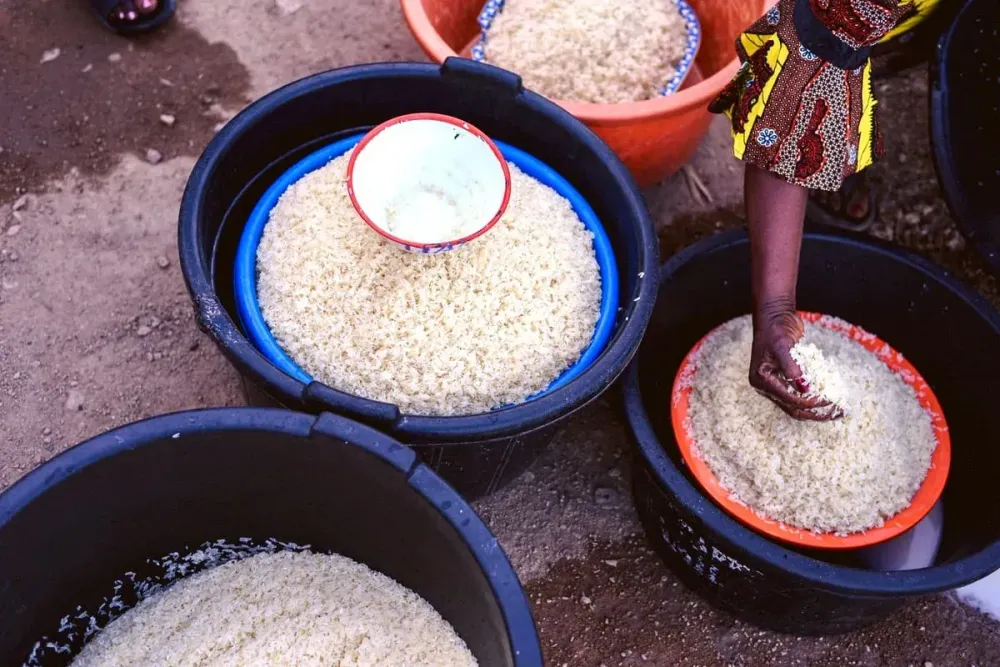
Nigerian jollof rice is one of the most debated dishes in West African cooking. Every family has a version, every nation claims the best, and the argument about whether Nigerian or Ghanaian jollof reigns supreme has been running for decades. What is not up for debate is the fat. Jollof rice was built on palm oil and ghee — not vegetable oil. This version uses ghee for a deeper, nuttier base that carries the tomato and pepper sauce beautifully.
Why Ghee Changes Jollof Rice
The flavour base of jollof rice is a cooked-down tomato and pepper sauce — blended Roma tomatoes, red peppers, scotch bonnet, and onion, reduced in fat until the raw taste is gone and the sauce is thick and fragrant. That reduction process takes 20-25 minutes, and the fat you use determines the flavour of everything that follows. Ghee's milk solids have already undergone browning during the clarification process, which gives it a nuttiness that deepens the tomato sauce in a way vegetable oil simply cannot.
Serves 4 · Prep 15 min · Cook 50 min
Ingredients
- 500g parboiled long-grain rice
- 400g Roma tomatoes, blended
- 2 red bell peppers, blended
- 1-2 scotch bonnet peppers, blended
- 1 large onion, half blended, half sliced
- 4 tbsp ghee
- 500ml chicken stock
- 2 tsp tomato paste
- 1 tsp thyme
- 1 tsp curry powder
- Salt to taste
- Bay leaves
Method
- Heat ghee in a wide, heavy pot over medium-high heat. Fry the sliced onion until golden, about 5 minutes.
- Add the blended tomato and pepper mixture. Cook down stirring frequently for 20-25 minutes until the sauce is thick, fragrant, and the raw tomato smell is gone.
- Add tomato paste, thyme, curry powder, and salt. Cook for a further 5 minutes.
- Add stock and bring to a simmer. Taste for seasoning.
- Rinse the rice and add to the pot. The liquid should just cover the rice. Stir once, then reduce heat to the lowest setting.
- Cover tightly and cook for 25-30 minutes. Check at 20 minutes — if the bottom is catching, reduce heat and add a splash of water.
- Remove from heat and rest covered for 10 minutes before fluffing.
The Secret to Smoky Jollof
The best Nigerian jollof has a slightly smoky bottom — called party jollof — achieved by cooking over high heat at the end until you hear the rice starting to catch. This is not burning. It is the Maillard reaction between the rice starch and the ghee on the bottom of the pot. Remove from heat immediately when you hear the sizzle change from a simmer to a dry crackle.
What to Serve With Nigerian Jollof
Jollof rice is traditionally served with fried plantain, moi moi (steamed bean pudding), coleslaw, and grilled or fried chicken. The rice is the centrepiece. Everything else is accompaniment.
Frequently Asked Questions
Yes, but reduce the heat slightly as butter has a lower smoke point. Ghee is preferred because it can be cooked at a higher temperature during the tomato reduction without burning.
Parboiled rice holds its shape better in jollof than regular long-grain rice, which can become mushy. The partial pre-cooking gives each grain a slightly firmer texture that survives the long, slow cook.
Yes. After adding the rice, cover tightly with foil and a lid and bake at 180°C for 30-35 minutes. This method produces perfectly even cooking with no risk of a burnt bottom.
Related guides: West African Cooking Fats Guide
📌 Follow on Pinterest: African Seed Oil Free Recipes on Pinterest
African, Hawaiian, Indian, Mediterranean, Asian, Exotic, Chicken, Rice, Cookies, Coffee, Spices, Plants, World Cuisine, 30-Minute Dinners and more.
View All 23 Books on Amazon →