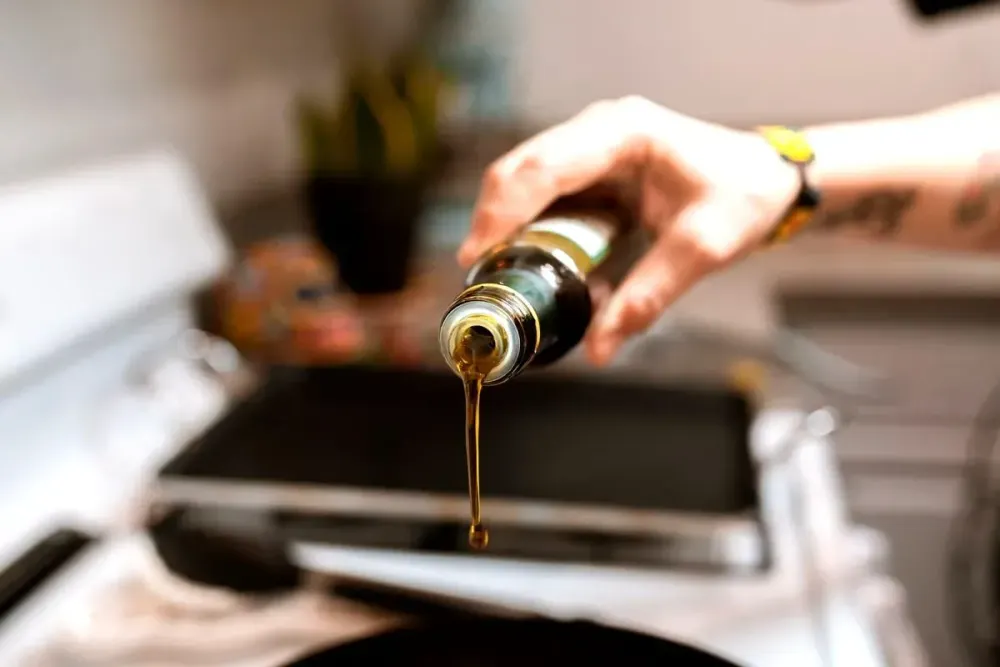
Canola oil is the most widely consumed cooking oil in North America and one of the most heavily marketed as healthy. The marketing emphasises its low saturated fat content and its omega-3 fatty acid component. What the marketing does not emphasise is the industrial process required to extract it, the high linoleic acid content that oxidises at cooking temperatures, or the trans fat content in commercially refined versions. Understanding why canola oil is a poor cooking fat requires understanding how it is made.
What Canola Oil Actually Is
Canola oil is extracted from the seeds of the rapeseed plant — a variety bred in Canada in the 1970s to reduce the erucic acid content of natural rapeseed oil (erucic acid is associated with heart damage at high doses). The name canola is a contraction of 'Canadian oil, low acid.' The plant itself is a legitimate food crop. The issue is the extraction process and the resulting fat profile.
Savannah's Take
I used to buy the large bottles of canola oil from Costco. It seemed like the sensible choice — it was cheap, 'heart healthy' according to the label, and neutral enough in flavour to use in everything. Then I read the actual production process: canola seeds crushed under high heat, then washed with hexane (an industrial solvent), then deodorised at high temperature to remove the rancid smell created during processing. I couldn't find a single step in that chain that sounded like food. The label said 'heart healthy.' The production process looked like industrial chemistry. That was the last bottle I bought.
How Canola Oil Is Made
Commercial canola oil production involves the following steps. The rapeseed is first crushed to extract most of the oil mechanically. The remaining oil is then extracted using hexane — a petroleum-derived solvent — to maximise yield. The crude oil extracted by hexane is then degummed (phospholipids removed), refined (free fatty acids neutralised with sodium hydroxide), bleached (colour removed with activated clay), and deodorised (heated to 230-270°C under vacuum to remove volatile compounds including partially oxidised fatty acids that would otherwise make the oil smell rancid). The deodorisation step is necessary because the oil is already partially oxidised before it reaches the consumer.
The Linoleic Acid Problem
Canola oil is approximately 19% linoleic acid — an omega-6 polyunsaturated fatty acid with two double bonds in its carbon chain. These double bonds are reactive with oxygen, particularly at cooking temperatures. When linoleic acid oxidises, it produces a range of breakdown products including aldehydes — 4-hydroxynonenal (4-HNE) and malondialdehyde (MDA) — that are documented cytotoxins at sufficient concentrations.
Trans Fats in Canola Oil
The high-temperature deodorisation step in canola oil production generates trans fats as a byproduct — specifically elaidic acid, the trans form of oleic acid. Commercial canola oil contains between 0.4% and 4.2% trans fats depending on processing method. Because amounts below 0.5g per serving can be labelled as 0g trans fat per FDA rules, most canola oil products are labelled as trans-fat free despite containing measurable trans fat content.
What to Use Instead
- Butter — for medium heat cooking, baking, finishing sauces
- Ghee — for high heat cooking, where butter's lower smoke point would cause burning
- Tallow — for the highest heat applications: deep frying, searing, roasting
- Coconut oil — for Southeast Asian cooking, baking, medium-high heat
- Extra virgin olive oil — for dressings, low-heat Mediterranean cooking, finishing
Is cold-pressed canola oil better?
Cold-pressed canola oil is not solvent-extracted and contains fewer oxidation products. It has a much shorter shelf life and stronger flavour. It is a meaningfully better product than commercial refined canola, but still contains the same linoleic acid that oxidises at cooking temperatures.
What about omega-3 in canola?
Canola oil contains alpha-linolenic acid (ALA), a short-chain omega-3. The conversion rate of ALA to EPA and DHA (the long-chain omega-3s with documented health effects) is approximately 5-15% in humans. Canola oil is a poor source of effective omega-3s.
Does the MAHA view on canola have scientific support?
The relationship between seed oil consumption and chronic disease is an area of active research with genuine uncertainty. What is established chemistry: polyunsaturated fats oxidise at cooking temperatures and produce breakdown products. Whether those products at typical dietary levels cause harm in humans is not fully resolved.
Related guides: Vegetable Oil Substitute Guide · Hidden Seed Oils in Common Foods · Seed Oil Free Mayo · Seed Oil Free Salad Dressing
📌 Follow on Pinterest: Seed Oil Free Cooking on Pinterest
Research: PubMed: Seed oils, oxidative stress and metabolic disease →
Also see: Healthy Food Without Seed Oils
Follow Savannah: @theefoodiekitchen · Facebook · All Links
African, Hawaiian, Indian, Mediterranean, Asian, Exotic, Chicken, Rice, Cookies, Coffee, Spices, Plants, World Cuisine, 30-Minute Dinners and more.
View All 23 Books on Amazon →