
As an Amazon Associate I earn from qualifying purchases. Affiliate disclosure.
If you grew up with American baking, “shortening” was the white tub next to the flour. It was sold as cleaner and more modern than lard. For pastry, both fats work: they are solid at room temperature and cut into flour the same way. The difference that matters on The Foodie Kitchen is the ingredient list. Lard is pork fat. Shortening is usually built from seed oils.
This guide compares what each fat is, how they behave in pastry and frying, and the USDA figures for fat profile. It is a cooking guide, not medical advice. Sources are listed at the end.
What lard and shortening actually are
Lard is rendered pork fat. Raw fat is cleaned and heated slowly so the pure fat separates from water and tissue; once strained and cooled it sets soft-white and scoopable. Leaf lard (from around the kidneys) is the pastry grade; back fat suits frying and savoury cooking. See our full what is lard guide. Wikipedia’s lard page covers the culinary history across European, Mexican and Chinese kitchens.
Shortening is a solid fat made for baking. The word once covered any fat that “shortens” gluten strands (including lard and butter), but in a modern supermarket it almost always means a vegetable product. Crisco, the first shortening made entirely from vegetable oil (originally cottonseed), was launched by Procter & Gamble in 1911 (Wikipedia — Crisco). Early versions were partially hydrogenated; that process created industrial trans fat. The FDA’s final determination on partially hydrogenated oils removed those PHOs from the US food supply (FDA). Modern tubs still start from vegetable oils — often soybean, palm or blends — and are formulated to stay soft and spreadable.
Read the label either way. Some supermarket “lard” is hydrogenated for shelf life; skip those and look for a single ingredient: pork fat. Shortening labels usually list one or more vegetable oils, emulsifiers and preservatives.
Side-by-side comparison
| Point | Lard | Vegetable shortening |
|---|---|---|
| What it is | Rendered pork fat | Manufactured vegetable baking fat |
| Typical ingredients | Pork fat (leaf or back) | Soybean, cottonseed, palm or blends |
| Seed-oil-free? | Yes (when pure) | No — built from seed/vegetable oils |
| Pastry | Very flaky; mild pork note (leaf lard is nearly neutral) | Very flaky; deliberately neutral |
| Frying | Traditional for tortillas, tonkatsu, fried chicken | Formulated mainly for baking, not our frying fat of choice |
| Linoleic acid (USDA) | About 10 g per 100 g | About 26 g per 100 g (household composite) |
| Saturated / mono / poly (USDA) | ~39 g / 45 g / 11 g per 100 g | ~25 g / 41 g / 28 g per 100 g |
| Smoke point (commercial) | About 240 °C / 464 °F for deodorised lard (ISEO, cited on our smoke-points guide) | Varies by brand; check the label — we do not cook with it here |
| Best uses here | Pie crust, biscuits, tortillas, frying | None on this site — swap to lard or butter |
USDA figures above are from FoodData Central SR Legacy entries for lard (FDC 171401) and household vegetable shortening, composite (FDC 173584). The shortening entry is a composite that includes older formulations; treat the exact grams as a published reference point, not a brand-by-brand guarantee. Always read the tub in front of you.
Baking: pie crust, biscuits and pastry
Both fats stay solid enough to cut into flour in small pieces. Those pieces melt in the oven and leave steam pockets, which is what makes pastry flake. That is why shortening replaced lard so successfully in mid-century American kitchens — the texture was familiar even when the flavour was blander.
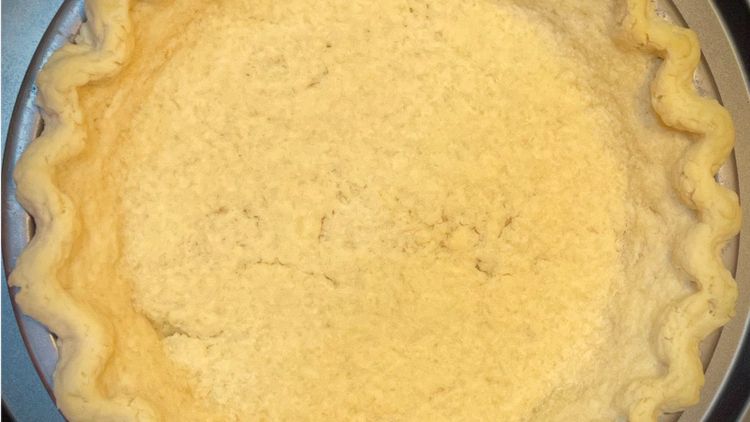
On this site we go back to lard (often with a little butter for flavour). Our flaky lard pie crust is the base for savoury and sweet pies, including pecan pie with a butter filling and lard crust. Mexican-style lard flour tortillas use the same soft, workable fat in a flatbread rather than a crust.
Swap rule: in most pastry recipes, use lard 1:1 by weight for the shortening called for. If you want a richer flavour, use half lard and half butter. Keep the fat cold, and do not overwork the dough.
Frying and everyday cooking
Lard is a working frying fat: tortilla chips, tonkatsu, fried rice, shallow-fried chops. Commercial deodorised lard has a typical smoke point around 240 °C / 464 °F on the ISEO chart we cite in cooking fat smoke points; home-rendered lard usually smokes lower, so use a thermometer and stay in the 170–190 °C frying window. Vegetable shortening was engineered for cakes and crusts, not as our deep-fry fat. For seed-oil-free frying we reach for lard or beef tallow instead — see also tortilla chips fried in lard.
How to choose (and what to buy)
- Want flaky pastry without seed oils? Use leaf lard, or a lard–butter mix.
- Want a neutral white fat for biscuits? Leaf lard is nearly flavourless when fresh; chill it well before cutting in.
- Avoiding pork? Use butter for pastry, or tallow for frying — see lard vs tallow and our traditional cooking fats guide.
- Reading labels: pure lard lists pork fat only. Skip “hydrogenated lard”. Shortening that lists soybean, cottonseed or “vegetable oil” is outside our pantry.
A short history: how shortening pushed lard aside
Before industrial vegetable fats, pie crust in American and British kitchens meant lard, butter or a mix of the two. Leaf lard was prized precisely because it was mild. When Crisco arrived in 1911 as a pure vegetable alternative, it was marketed as cleaner, more modern and free of the “animal” association that packers and advertisers tied to lard. Over the following decades, vegetable shortening largely replaced lard in many American kitchens — a shift our Thanksgiving hub notes when it points bakers back to lard and butter for holiday pastry.
That marketing story is separate from how the fats behave in a bowl of flour. Both shorten gluten. Both flake. The practical question for a seed-oil-free cook is simply: which ingredient list do you want on the pastry you eat every week?
Recipe swaps from shortening to lard
| Recipe calls for | Use instead | Notes |
|---|---|---|
| 1 cup vegetable shortening (about 205 g) | 205 g cold leaf lard | Weigh when you can; cups of solid fat vary |
| Shortening in pie crust | Leaf lard, or 50/50 lard and butter | Butter adds flavour; keep all fat cold |
| Shortening in biscuits | Cold lard, or lard + butter | Cut in until pea-sized pieces remain |
| Shortening for frying | Lard or beef tallow | Use a thermometer; 170–190 °C for most deep frying |
| “All-purpose” baking tub | Leaf lard in the fridge | Scoop cold; return the rest to the fridge |
If a vintage recipe already says “lard or shortening,” choose lard and you are done. If it only says shortening, the 1:1 weight swap above is the starting point; adjust liquid by a spoonful only if the dough feels unusually dry or wet, because brands of flour and how firmly you pack a cup both vary.
Storage and shelf life
Pure rendered lard keeps for months in a sealed jar in the fridge, and longer in the freezer. It can pick up fridge odours, so use a clean jar with a tight lid. Commercial leaf lard in a tub or pouch follows the best-before date on the pack once opened. Vegetable shortening is shelf-stable by design; that convenience is part of why it won the mid-century pantry, but it is not a reason to keep it once you have switched to traditional fats.
For frying, strain cooled lard through a fine sieve, return it to a clean jar, and reuse it while it still smells clean and does not smoke early. Our frying guides cover the same discipline for tallow; the crumbs you leave in the fat are what burn next time.
This is cooking and ingredient guidance only. For personal dietary questions, speak with a qualified clinician.
Frequently asked questions
Is lard the same as shortening?
No. Lard is rendered pork fat. In a modern supermarket, shortening almost always means a vegetable baking fat made from oils such as soybean, cottonseed or palm. Older cookbooks sometimes used “shortening” for any solid fat that tenderises pastry, including lard and butter.
Can I substitute lard for shortening 1:1?
Yes, by weight, in most pie crusts, biscuits and pastry. Keep the lard cold. For a richer flavour, use half lard and half butter. Our flaky lard pie crust walks through the method.
Why avoid vegetable shortening on this site?
Vegetable shortening is built from seed and other vegetable oils. Our pantry uses butter, ghee, tallow, lard, coconut and olive oil (with cold-pressed sesame only in small amounts as a finishing flavour). Pure lard fits; shortening does not.
Does modern shortening still contain trans fat?
Partially hydrogenated oils — the main historical source of industrial trans fat in shortening — can no longer be added to foods in the US under the FDA’s final determination on PHOs. Always read the label; formulations vary by brand.
Which is better for pie crust, lard or shortening?
Both make flaky crusts. We prefer leaf lard because it is a single traditional ingredient and is seed-oil-free. Leaf lard is nearly neutral; back fat has a slightly more savoury note.
Where do the USDA numbers come from?
Per 100 g, USDA FoodData Central lists lard (FDC 171401) at about 39 g saturated, 45 g monounsaturated and 11 g polyunsaturated fat, with about 10 g linoleic acid (18:2). Household vegetable shortening, composite (FDC 173584) lists about 25 g saturated, 41 g monounsaturated and 28 g polyunsaturated fat, with about 26 g linoleic acid. The shortening entry is a composite and may reflect older formulations.
Sources
Part of: Traditional Cooking Fats Guide — Tallow, Ghee, Lard, Butter · Shop the pantry →
African, Hawaiian, Indian, Mediterranean, Asian, Exotic, Chicken, Rice, Cookies, Coffee, Spices, Plants, World Cuisine, 30-Minute Dinners and more.
View All Books on Amazon →