
As an Amazon Associate I earn from qualifying purchases. Affiliate disclosure.
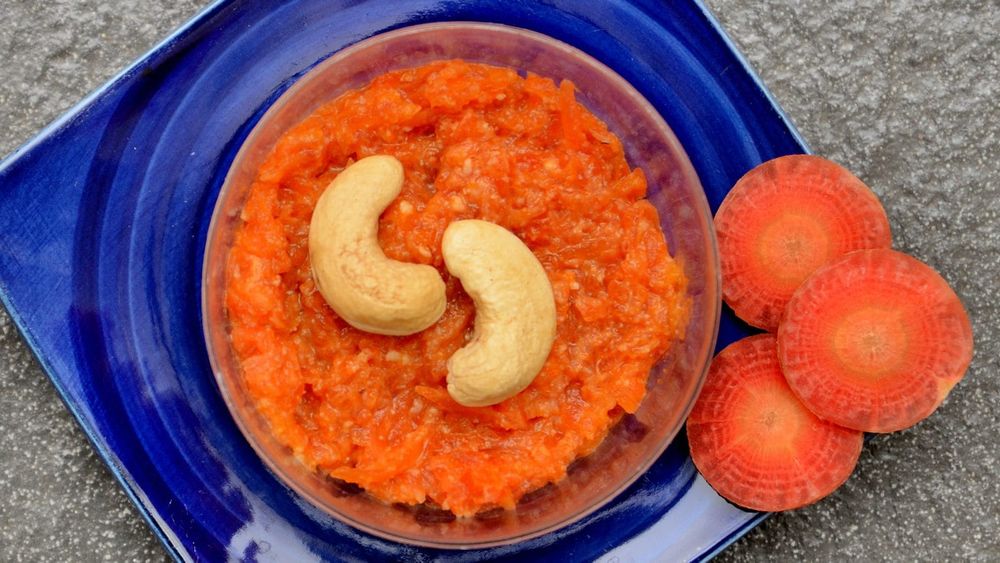
Gajar ka halwa is what happens when carrots, milk and ghee are given time. Grated carrots simmer until they have drunk up a litre of milk, then they are fried in ghee with sugar and cardamom until glossy and deep orange. It is a classic for Diwali and the cold months, and it is far easier than its reputation suggests: you mostly just stir. The one thing you must not do is reach for vegetable oil. The ghee is the point.
Why ghee?
The milk gives the halwa its creamy body, but the ghee gives it flavour and shine. Frying the reduced carrots in ghee toasts the milk solids and the sugar, so the finished halwa tastes rich and nutty rather than simply sweet. Use a good shop-bought ghee, such as one from Pure Indian Foods, or make your own from butter; it takes about 20 minutes. For the carrots, firm, fresh ones from a local grower are worth hunting down on LocalHarvest.
Serves: 6–8 · Prep: 15 minutes · Cook: 1 hour 10 minutes
Ingredients
- 1kg carrots (about 8 medium), peeled and finely grated
- 1 litre whole milk
- 4 tbsp ghee (about 55g)
- 150–180g caster sugar, to taste
- 6 green cardamom pods, seeds ground (or ½ tsp ground cardamom)
- 2 tbsp raisins
- 30g cashews, roughly chopped
- 20g almonds or pistachios, slivered, to finish
Method
- Grate the carrots on the fine side of a box grater or with a food processor disc. Finer shreds soften faster and give a silkier halwa.
- Put the carrots and milk in a large, heavy-based pan or kadhai and bring to a simmer over a medium heat. Keep it bubbling gently, stirring every few minutes and scraping the bottom, for 40–50 minutes, until almost all the milk has been absorbed and the mixture looks thick and moist rather than wet.
- Meanwhile, warm 1 tbsp of the ghee in a small pan over a low heat. Fry the cashews until golden, about 2 minutes, add the raisins for the last 30 seconds until they puff, then tip everything onto a plate.
- Once the milk has reduced, add the remaining 3 tbsp ghee to the carrots and stir-fry over a medium heat for 8–10 minutes. The halwa will start to glisten, darken slightly and pull away from the sides of the pan.
- Stir in the sugar. It will loosen the mixture again; keep cooking and stirring for 8–10 minutes more until it thickens back up and the ghee begins to separate at the edges.
- Stir in the cardamom and most of the fried cashews and raisins. Taste and add a little more sugar if you like.
- Serve warm, scattered with the slivered nuts and the rest of the cashews and raisins.
Tips
- Use a wide, heavy pan. More surface area means the milk reduces faster and is less likely to catch on the bottom.
- Do not add the sugar too early. Sugar added while the carrots are still in lots of milk slows the reduction and can make the carrots tough.
- A pinch of saffron soaked in a spoonful of warm milk, stirred in with the cardamom, makes it even more festive. See our saffron guide for how to get the most from it.
- Making a Diwali spread? Serve it alongside our besan ladoo made with ghee, and browse more in our seed-oil-free desserts.
It is the kind of recipe we gathered for Savor India, our collection of Indian classics cooked in ghee, never seed oils.
FAQ
What is gajar ka halwa?
It is a North Indian carrot pudding made by slowly simmering grated carrots in milk, then frying them in ghee with sugar and cardamom. It is a winter favourite and a regular on festival tables, including at Diwali.
Why ghee rather than oil?
Ghee is the traditional fat and it is the flavour. Frying the reduced carrots in ghee gives the halwa its glossy finish and nutty, toasty taste, which a neutral vegetable oil simply cannot give you. We cook without seed oils, and here the classic choice happens to be the best one anyway.
Can I use khoya or condensed milk?
Yes. Crumble in 100g khoya (dried milk solids) with the sugar for an extra-rich halwa. For a shortcut, reduce the milk to 500ml and stir in 200g sweetened condensed milk in place of most of the sugar, then taste before adding any more.
Which carrots should I use?
In northern India it is traditionally made with red winter carrots, which are sweet and juicy. Ordinary orange carrots work well; just pick firm, fresh ones and grate them finely.
How long does it keep?
Cool it, cover it and keep it in the fridge for up to 4 days. Warm portions gently in a pan with a splash of milk or a little ghee to bring back the gloss.
Can I make it ahead for a party?
Yes, it is one of the best make-ahead sweets there is. Cook it a day or two before, keep it chilled, and reheat it slowly just before serving, then add the nuts.
More ideas: besan ladoo · the complete guide to cooking with ghee · ghee rice.
African, Hawaiian, Indian, Mediterranean, Asian, Exotic, Chicken, Rice, Cookies, Coffee, Spices, Plants, World Cuisine, 30-Minute Dinners and more.
View All Books on Amazon →