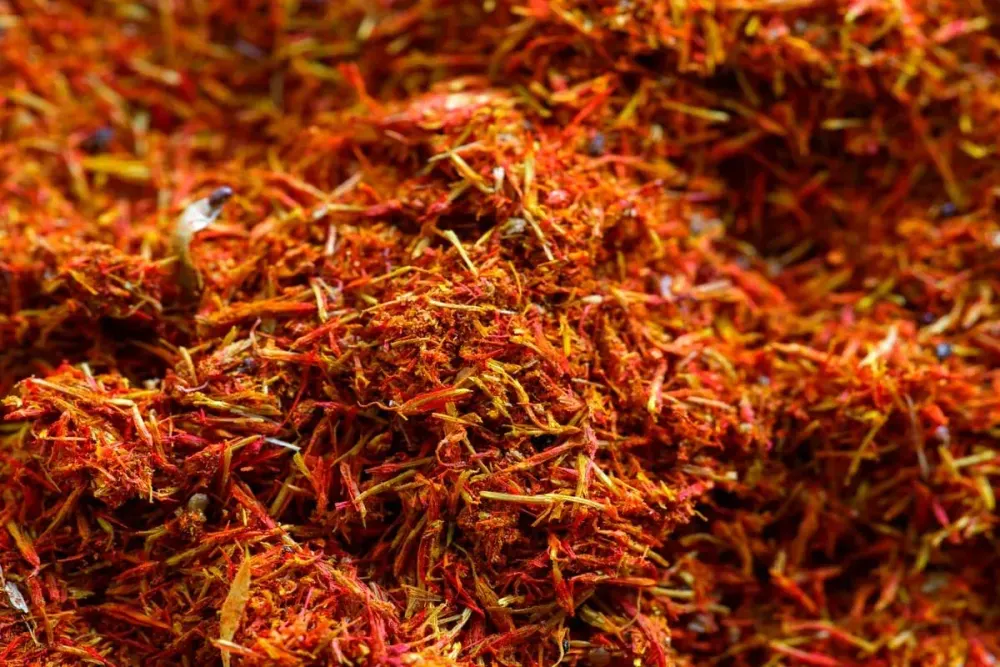
Saffron is the dried stigma of the Crocus sativus flower — three hair-thin red threads per flower, harvested by hand in the October morning before the flowers open in the afternoon sun. Iran produces 90% of the world's saffron in the Khorasan region, where the crocus has been cultivated for over 3,000 years. The extraordinary price of saffron — the most expensive spice by weight in the world — is a direct function of this manual harvest: it takes approximately 150 flowers to produce one gram of dried saffron.
Buying Real Saffron
The saffron market has significant adulteration problems — dyed safflower petals, dried corn silk, and coloured paper strips have all been sold as saffron. Real saffron has three identifying characteristics: the threads are deep red with a slight orange-yellow gradient at one end (the style end), they smell like honey and hay with a slightly metallic edge, and they turn water golden-yellow (not red — food colouring turns water red). The packaging should state the origin: Iranian (Kashmiri or Spanish saffron are also legitimate).
How to Bloom Saffron
Blooming saffron extracts maximum colour and flavour. Grind a pinch (10-15 threads) to a coarse powder using a mortar and pestle or by rubbing between your fingers. Add 2-3 tablespoons of hot water (or hot stock or hot ghee). Stir and leave for 15 minutes. The liquid turns deep golden yellow. Add this bloomed saffron — liquid and all — to your dish at the point specified in the recipe. Never add dry saffron threads directly to a dish unless the recipe specifically calls for it.
Recipes Using Saffron
- Iranian tahdig — stirred through the rice after cooking
- Mediterranean saffron pilaf — bloomed in hot butter
- Persian lamb khoresh — added in the last 20 minutes of braising
- Lamb biryani — bloomed in hot ghee and drizzled over the layered rice
- Risotto Milanese — the definitive use in Italian cooking
- Moroccan bastilla — adds golden colour to the chicken filling
How much saffron per recipe?
A generous pinch — 10-15 threads — is sufficient for most dishes serving 4 people. More is not better: excess saffron adds bitterness.
Does saffron expire?
It does not expire but loses potency. Use within 2-3 years of purchase. Store in an airtight glass container away from light and heat.
Is Spanish saffron as good as Iranian?
Spanish (La Mancha) saffron is genuine and high quality. Iranian saffron is generally considered to have a slightly more intense aroma and flavour, but both are legitimate purchases.
📌 Follow on Pinterest: Global Spice Guides on Pinterest
Follow Savannah: @theefoodiekitchen · Facebook · All Links
African, Hawaiian, Indian, Mediterranean, Asian, Exotic, Chicken, Rice, Cookies, Coffee, Spices, Plants, World Cuisine, 30-Minute Dinners and more.
View All 23 Books on Amazon →