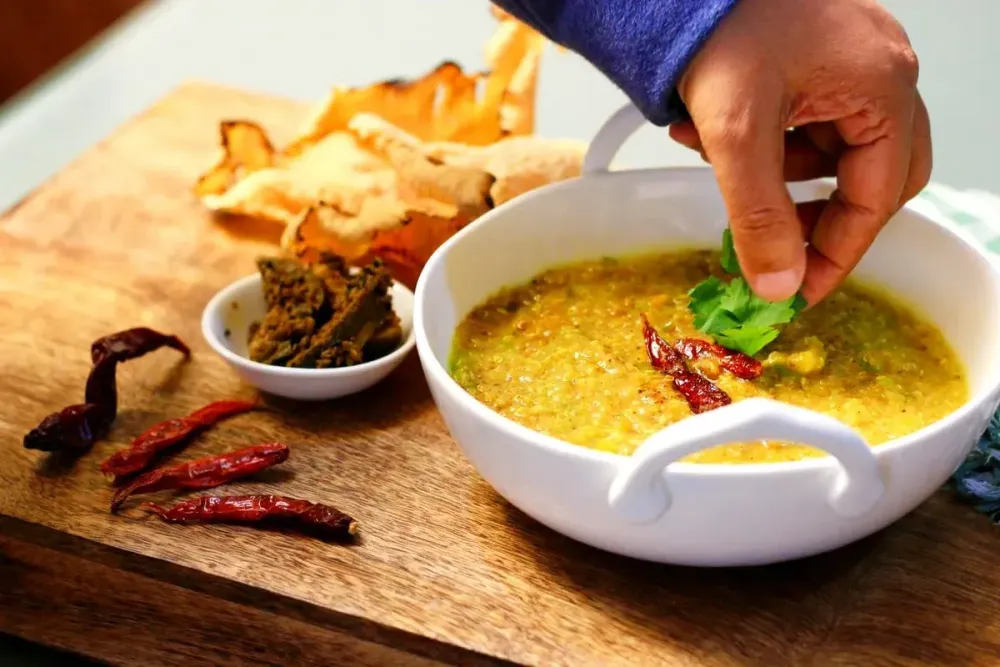
Khichdi is the oldest complete meal in Indian cooking — rice and split mung lentils (moong dal) cooked together with ghee and warming spices until they collapse into a soft, porridge-like consistency. It predates every other major dish in the Indian repertoire and is mentioned in texts as far back as the 4th century BCE. It was the dish that Mughal Emperor Akbar ate when he wanted simplicity, the dish that Gandhi fasted on, the dish every Indian mother makes when someone is ill. It is also — cooked properly in ghee — one of the most satisfying things you can eat.
The Perfect Texture
Khichdi exists on a spectrum from fairly dry and grainy (where the rice and lentils are distinct) to completely mushed (khichdi of recovery cooking). The standard restaurant version is somewhere in the middle — the rice and lentils cooked soft but not completely dissolved, with the ghee creating a coating that prevents any stickiness. The home version can go further toward the mushy end, which is where the dish is most comforting.
Serves 4 · Prep 10 min · Cook 30 min
Ingredients
- 200g basmati rice
- 100g yellow moong dal (split mung lentils)
- 4 tbsp ghee, divided
- 1 tsp cumin seeds
- 1 tsp mustard seeds
- 1/4 tsp asafoetida (hing)
- 1 tsp turmeric
- 2cm fresh ginger, grated
- 900ml water
- Salt
- To serve: extra ghee, lemon juice, fresh coriander
Method
- Rinse rice and dal together. Soak 20 minutes. Drain.
- Heat 2 tbsp ghee in a pot over medium heat.
- Add cumin and mustard seeds. When they crackle, add asafoetida.
- Add ginger and turmeric. Stir 30 seconds.
- Add drained rice and dal. Stir to coat in spiced ghee.
- Add water and salt. Bring to boil.
- Reduce to lowest heat. Cover and cook 20 minutes.
- The khichdi should be very soft and slightly soupy. Add more water if needed.
- Serve with a generous pour of remaining ghee on top, lemon juice, and fresh coriander.
What is asafoetida (hing)?
A pungent dried resin used in tiny quantities — a pinch — in Indian tadka cooking. It adds an onion-garlic-like depth and aids digestion. Available at Indian grocery stores.
Can I use any other lentil?
Red split lentils work well. Chana dal (split chickpeas) produce a chunkier result. Yellow moong dal is the most traditional and produces the softest texture.
Is khichdi always vegetarian?
The classic version is vegetarian. Some regional variations add chicken or shrimp. Keema khichdi (with minced meat) exists in some northern Indian traditions.
Follow Savannah: @theefoodiekitchen · Facebook · All Links
Storage and Reheating
Store refrigerated for up to 3 days. Khichdi thickens significantly when cold as the lentils and rice continue to absorb moisture. Add water or stock when reheating — start with 4 tablespoons and increase to reach your preferred consistency. Reheat over low heat with constant stirring.
Recipe Variations
- Satvic variation — omit the onion and garlic entirely and use only ginger, cumin, and turmeric — the pure Ayurvedic preparation used during cleansing protocols
- Vegetable khichdi — add finely diced carrot, peas, and potato in the last 15 minutes of cooking — the most common family-meal variation
- Adjust the fat — this recipe works equally well in ghee, lard, or grass-fed butter if ghee is unavailable. Each fat produces a slightly different flavour profile; ghee gives the most historically accurate result.
What to Serve With Khichdi
Serve khichdi with a substantial spoonful of cold ghee melted on top at the table — this is non-negotiable in the traditional preparation and is where most of the flavour and all of the Ayurvedic rationale comes from. A side of plain yogurt, lime pickle, and papad completes the meal. Khichdi is one of the few Indian dishes where simplicity is the point — resist the urge to add more ingredients.
What is khichdi?
Khichdi (also spelled khichri) is a one-pot dish of rice and lentils cooked together until porridge-soft. It is considered the original comfort food of Indian cuisine and the basis of the British colonial dish kedgeree. In Ayurvedic medicine it is prescribed for digestive recovery and cleansing protocols because it is the easiest food for the body to process.
What type of lentils are best for khichdi?
Yellow moong dal (split mung beans) is the traditional and Ayurvedically preferred choice — it is the lightest, easiest to digest, and most neutral in flavour. Red lentils (masoor dal) are a common alternative with a slightly earthier taste. Both cook in the same time.
How much ghee do I add to khichdi?
A minimum of 1 tablespoon per serving, ideally 2. In traditional Ayurvedic preparation, khichdi is a delivery mechanism for therapeutic amounts of ghee — the fat is the medicine, not a garnish. Do not reduce the ghee.
African, Hawaiian, Indian, Mediterranean, Asian, Exotic, Chicken, Rice, Cookies, Coffee, Spices, Plants, World Cuisine, 30-Minute Dinners and more.
View All 23 Books on Amazon →