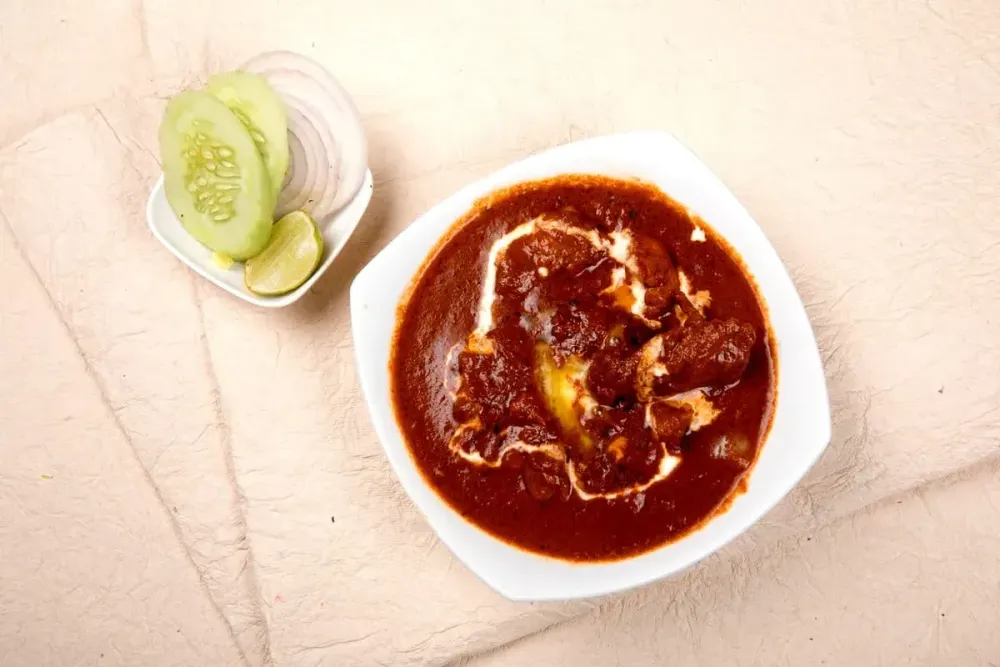
Rajma chawal — kidney bean curry with plain white rice — is north India's ultimate comfort food. The pairing is as Indian as dal chawal, as reliable as any dish in the repertoire. Kidney beans slow-cooked in a ghee-based onion and tomato gravy with ginger, garlic, and warming spices until the beans are completely tender and the sauce has thickened around them. The ghee is added twice: once to build the gravy, and again at the end in a finishing pour that rounds the whole dish.
The Slow Cook
Rajma requires either soaking dried kidney beans overnight and then cooking for 1-1.5 hours, or using canned kidney beans and reducing the cooking time to 30 minutes. The slow cook of dried beans produces a creamier, more flavourful result because the starches from the beans thicken the sauce naturally as they cook. Canned beans produce a serviceable quick weeknight version. Both are good; the dried bean version is excellent.
Serves 4 · Prep 10 min · Cook 1 hour
Ingredients
- 400g canned kidney beans, drained, or 200g dried soaked overnight
- 3 tbsp ghee, divided
- 1 large onion, very finely diced
- 4 garlic cloves, minced
- 2cm ginger, grated
- 400g canned tomatoes, blended
- 1 tsp cumin seeds
- 1 tsp coriander powder
- 1 tsp cumin powder
- 1/2 tsp turmeric
- 1/2 tsp chilli powder
- 1/2 tsp garam masala
- Salt, fresh coriander
Method
- Heat 2 tbsp ghee over medium heat. Add cumin seeds.
- Add onion. Cook 12 minutes until deep golden — this is the flavour base.
- Add garlic and ginger. Cook 2 minutes.
- Add coriander, cumin, turmeric, chilli powders. Cook 1 minute.
- Add blended tomatoes. Cook 10 minutes until oil separates from masala.
- Add beans and 300ml water. Simmer 25 minutes for canned, 60 minutes for dried.
- Mash some beans against the pot side to thicken the sauce.
- Finish with garam masala and remaining ghee. Scatter coriander.
- Serve with white basmati rice.
Why cook the onion for so long?
Golden, deeply caramelised onion is the flavour base of north Indian cooking. Rushing this step produces a weaker sauce. 12 minutes minimum over medium heat.
How do I know when the masala is done?
When the oil visibly separates from the tomato-spice mixture — you can see the ghee rising to the edges. This means the tomato has cooked down enough to stop steaming the spices.
Can I make rajma in a pressure cooker?
Yes — cook soaked dried beans on high pressure for 25 minutes. Release pressure naturally. Then make the gravy and combine.
Follow Savannah: @theefoodiekitchen · Facebook · All Links
Storage and Reheating
Store refrigerated up to 5 days — deepens overnight. Freeze 3 months. Reheat over low-medium heat with a splash of water to loosen the thickened sauce.
Recipe Variations
- Restaurant Punjabi style — increase ghee to 3 tbsp and add 2 tbsp heavy cream in the last 5 minutes for a richer dhaba-style result
- Rajma with spinach — stir 2 large handfuls of baby spinach into the finished rajma, cover, and wilt for 3 minutes
- Fat substitution — ghee is the traditional fat here. Ghee, lard, or grass-fed butter each produce slightly different results.
What to Serve With Rajma
Serve over steamed basmati rice — rajma chawal is one of the most beloved comfort food combinations in North Indian cuisine. Red onion sliced raw, a wedge of lemon, and Indian pickle (achaar) complete the traditional presentation.
What type of kidney beans?
Dark red kidney beans (rajma) for authentic result. Dried, soaked overnight, and cooked from scratch produce significantly better flavour than canned — the cooking liquid becomes part of the sauce.
Why does my rajma taste flat?
Undercooked masala (needs 15-18 minutes until oil separates) or insufficient salt. Taste and adjust aggressively at the end.
Can I use canned beans?
Yes. Drain, rinse, reduce final simmer to 15 minutes. The flavour is less complex but still very good.
African, Hawaiian, Indian, Mediterranean, Asian, Exotic, Chicken, Rice, Cookies, Coffee, Spices, Plants, World Cuisine, 30-Minute Dinners and more.
View All 23 Books on Amazon →