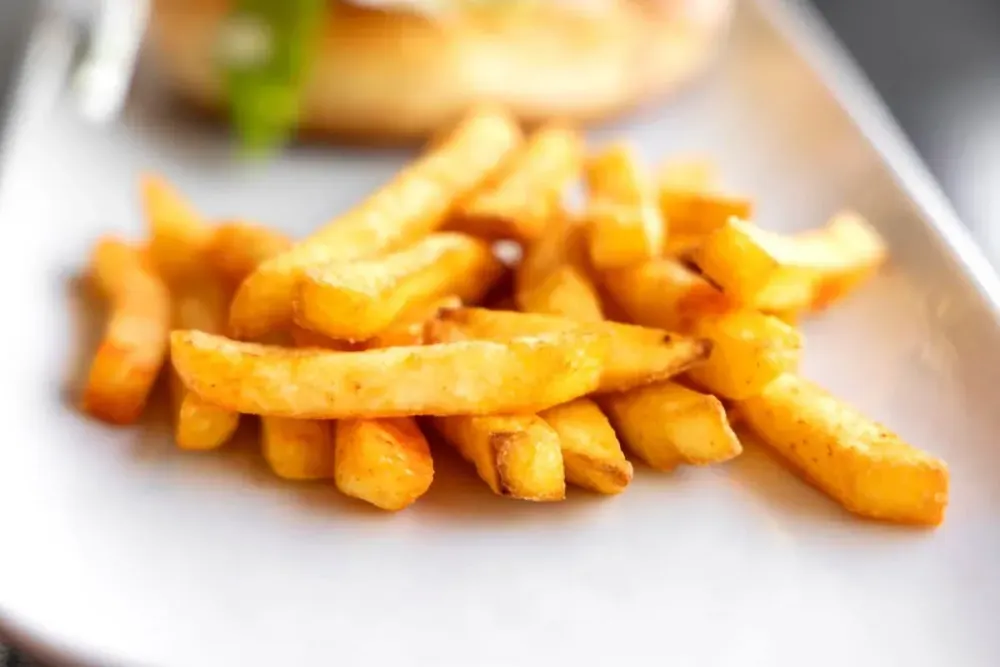
McDonald's fries tasted different before 1990. Every person old enough to remember them says the same thing. The reason is well-documented: until 1990, McDonald's fried in beef tallow. The switch to vegetable oil — prompted by a 1986 campaign by nutrition activist Phil Sokolof, who took out full-page newspaper ads claiming McDonald's beef tallow was a health risk — changed the flavour of one of the world's most-eaten foods permanently.
What Changed in 1990
McDonald's announced in 1990 that it would switch from beef tallow to 100% vegetable oil for frying. The change was completed across US locations by 1992 and rolled out globally over the following years. The stated reason was health — reducing saturated fat content. The result was a product with significantly less saturated fat and significantly more polyunsaturated fat from the soybean oil that replaced the tallow.
The Flavour Difference
Beef tallow frying produces french fries with a distinct beefy, rich note — a flavour that the best fast food journalists describe as 'meaty', 'deep', and 'irreplaceable.' This flavour comes from the fat's composition and from the Maillard reaction between the beef fat's compounds and the potato starch at frying temperature. Vegetable oil produces a neutral, clean fry with less depth. After the switch, McDonald's began adding 'natural beef flavour' to its fries as a compensatory flavouring agent — an acknowledgement that the tallow's flavour could not be replicated by oil alone.
Was the Switch Healthy?
The substitution of beef tallow for vegetable oil reduced the saturated fat in McDonald's fries but replaced it with partially hydrogenated vegetable oil — which contains trans fats. The trans fat content of McDonald's fries increased significantly after the switch to vegetable shortening. By the time the scientific consensus on trans fats' cardiovascular risks emerged in the late 1990s and 2000s, McDonald's had already completed the transition away from the saturated fat (tallow) that was considered dangerous and toward the trans fat (hydrogenated vegetable oil) that turned out to be more so.
Making Tallow Fries at Home
The McDonald's-style fry at home requires: russet potatoes, parboiled then frozen (the freezing ruptures cells and creates the crispy exterior), fried at 160°C to cook through, then fried again at 185°C to crisp. Use beef tallow for both fries. The result is a fry of quality that has not been available commercially since 1990.
Do McDonald's still use any beef tallow?
No — McDonald's uses refined vegetable oil in all markets for all fried products. Some markets previously used beef tallow blends but have transitioned fully to vegetable oil.
Did the flavour really change that much?
Consumer taste tests conducted at the time of the transition showed measurable preference for the tallow-fried version. The addition of 'natural beef flavour' to the fry formulation suggests McDonald's itself acknowledged the flavour loss.
Is tallow-fried food better for you than vegetable oil?
The comparison depends on the metric. Tallow is higher in saturated fat. Vegetable oil is higher in polyunsaturated fat that oxidises at frying temperatures. The health question is not resolved — but the flavour question is.
Follow Savannah: @theefoodiekitchen · Facebook · All Links
African, Hawaiian, Indian, Mediterranean, Asian, Exotic, Chicken, Rice, Cookies, Coffee, Spices, Plants, World Cuisine, 30-Minute Dinners and more.
View All 23 Books on Amazon →