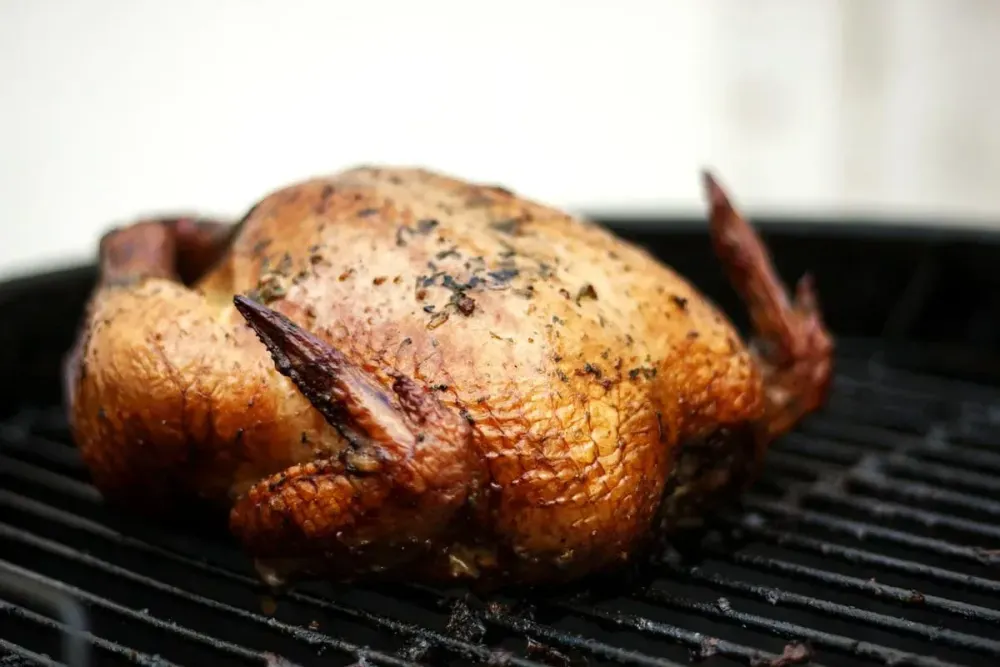
The compound butter technique is the single most impactful improvement available to roast chicken. Standard roast chicken — bird seasoned outside with oil and herbs — produces a seasoned exterior and a relatively plain interior. Compound butter pushed under the skin seasons the flesh directly, bastes the meat from inside the skin throughout the roast, and produces a bird where every bite of breast meat carries the flavour of the butter and herbs rather than just the surface.
Making Compound Butter
Compound butter is softened unsalted butter combined with flavourings — typically herbs, garlic, citrus zest, and spice — and formed into a log in cling film or used immediately. For under-skin application, the butter should be soft enough to spread easily without tearing the skin. Make it the day before and refrigerate in the skin overnight for maximum flavour penetration.
Getting Under the Skin
Insert your fingers between the skin and the breast meat, starting at the neck end, and work gently to loosen the skin from the meat without tearing it. The skin is attached down the breastbone and around the edges — separate it only from the top surface of the breast and the top surface of the thighs. Push spoonfuls of compound butter into the pockets created and massage from outside the skin to distribute evenly.
Serves 4 · Prep 20 min + chill · Cook 1 hr 20 min
Ingredients
- 1.8kg whole chicken
- Compound butter: 100g unsalted butter (softened), 4 garlic cloves (minced), 2 tbsp fresh thyme leaves, 2 tbsp fresh rosemary (chopped), zest of 1 lemon, 1 tsp smoked paprika, salt and pepper
- Extra butter for outside of skin
- Lemon halves and herb sprigs for cavity
Method
- Make compound butter: beat softened butter with all flavourings until well combined.
- Dry chicken completely with kitchen paper. Season cavity with salt.
- Loosen skin from breasts and thighs. Push compound butter under the skin. Massage to distribute.
- Rub any remaining butter over the outside of the skin.
- Fill cavity with lemon halves and extra herbs.
- Refrigerate uncovered on a rack 4-24 hours for maximum crispiness.
- Preheat oven to 220°C. Roast 15 minutes, then reduce to 190°C.
- Roast a further 55-65 minutes until juices run clear at the thigh.
- Rest 15 minutes before carving.
Compound Butter Variations
- Tarragon and lemon — classic French combination, works particularly well with chicken
- Miso and butter — Japanese-inspired, umami-forward
- Harissa and coriander — North African heat and freshness
- Blue cheese and walnut — assertive, for blue cheese lovers
- Sundried tomato and basil — Mediterranean, bright and savoury
Can I use ghee instead of butter for the compound?
Ghee lacks the water content of butter and is always liquid above around 30°C, which makes it difficult to push under the skin as a solid. Use butter for the compound; ghee for the exterior if desired.
How do I know the butter is distributed evenly?
Massage the outside of the skin after pushing the butter in — you should be able to feel the butter spread. Any obvious lumps, smooth them out from outside.
Does the overnight refrigeration make a big difference?
Significantly — the salt in the compound butter draws moisture from the skin via osmosis, leaving it paper-dry when it goes into the oven. This is the primary driver of crispy skin.
Follow Savannah: @theefoodiekitchen · Facebook · All Links
African, Hawaiian, Indian, Mediterranean, Asian, Exotic, Chicken, Rice, Cookies, Coffee, Spices, Plants, World Cuisine, 30-Minute Dinners and more.
View All 23 Books on Amazon →