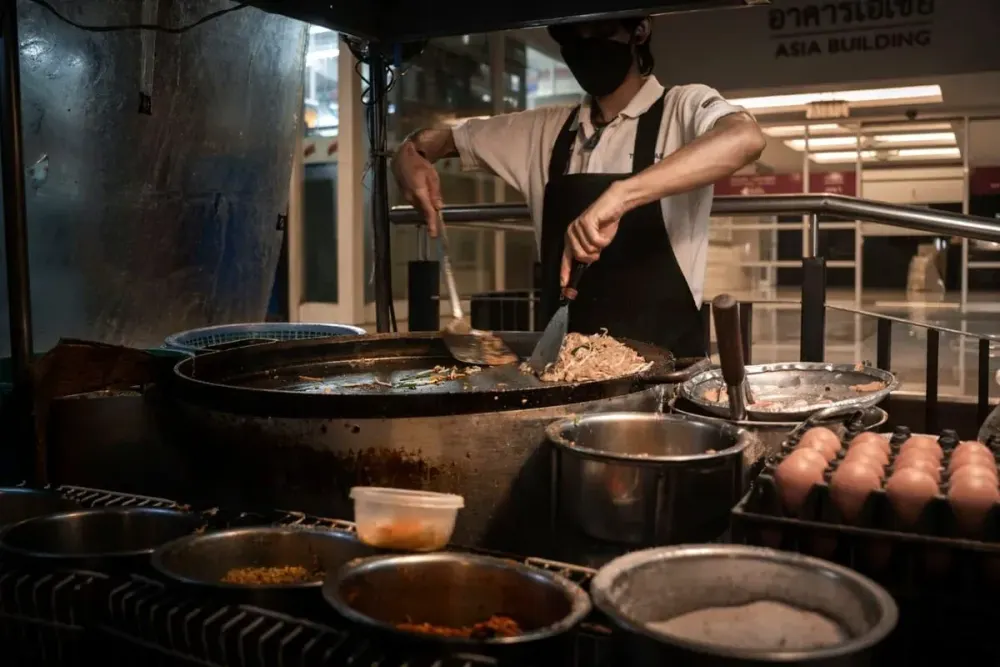
Pad thai was created in the 1930s as part of a Thai government campaign to promote national unity through a standardised noodle dish. The recipe was deliberately designed to use rice noodles (not imported wheat), with a tamarind-based sauce, fish sauce for salt, palm sugar for sweetness, and dried shrimp for umami depth. The original cooking fat was lard. The shift to vegetable oil in Thai restaurants globally is a cost and logistics decision, not a culinary one. Lard produces wok hei at domestic heat levels that vegetable oil cannot.
The Sauce
Pad thai sauce is a balance of three elements: tamarind (sour), fish sauce (salt and umami), and palm sugar (sweet). The ratio is typically 3:2:2 by tablespoon. The sauce should taste sour-first, then salty, then sweet — never primarily sweet, which is the mistake most restaurant versions make for Western palates. Make more than you need and store in the fridge.
Serves 2 · Prep 20 min · Cook 8 min
Ingredients
- 200g dried rice noodles (3-4mm wide), soaked 30 min in cold water
- 2 tbsp lard
- 2 eggs
- 150g protein — prawns, chicken, or tofu
- 3 tbsp dried shrimp
- 3 spring onions, cut into 3cm pieces
- 100g bean sprouts
- Sauce: 3 tbsp tamarind paste, 2 tbsp fish sauce, 2 tbsp palm sugar
- To serve: crushed peanuts, lime wedges, chilli flakes, extra fish sauce, sugar
Method
- Mix sauce ingredients. Taste and adjust — it should be sour-salty-sweet.
- Heat wok on highest heat until smoking. Add lard.
- Add protein. Cook 2 minutes. Push to side.
- Add eggs. Scramble briefly. Toss with protein.
- Add drained noodles. Add sauce. Toss aggressively.
- Add dried shrimp and spring onions. Toss.
- Add bean sprouts. One final toss — keep them slightly crunchy.
- Serve with peanuts, lime, chilli flakes, and condiments on the side.
What type of tamarind paste to use?
Pure tamarind paste (not tamarind sauce or concentrate with added ingredients). Mix tamarind block with water and strain, or use pure wet tamarind paste.
Can I use pre-soaked fresh noodles?
Fresh wide rice noodles work better than dried if available — they don't need soaking and have a better texture. Add them directly to the wok.
Why serve condiments on the side?
Traditional Thai restaurant practice — each diner adjusts their own pad thai with extra fish sauce (salt), sugar, chilli, or lime to personal taste. The dish at the table is the starting point.
Related guides: Vegetable Oil Substitute Guide · Avoiding Seed Oils at Restaurants
📌 Follow on Pinterest: 30-Minute Seed Oil Free Dinners on Pinterest
📌 Follow on Pinterest: Asian Seed Oil Free Recipes on Pinterest
Follow Savannah: @theefoodiekitchen · Facebook · All Links
African, Hawaiian, Indian, Mediterranean, Asian, Exotic, Chicken, Rice, Cookies, Coffee, Spices, Plants, World Cuisine, 30-Minute Dinners and more.
View All 23 Books on Amazon →