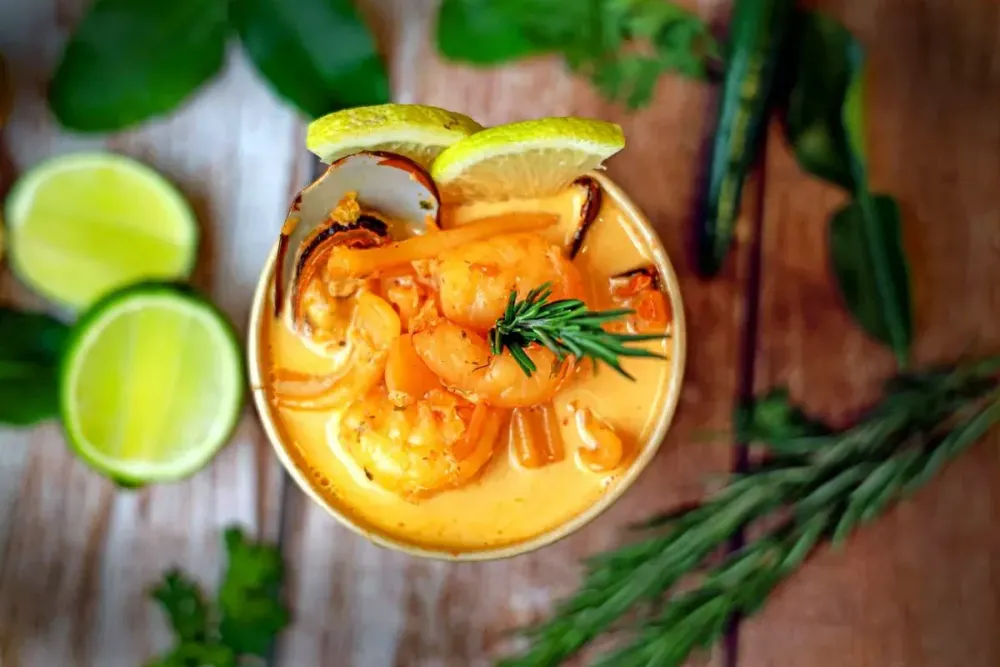
Thai red curry — kaeng phed daeng — is built on a technique that most Western recipes get wrong: the coconut cream must be cracked before anything else goes in. Cracking coconut cream means heating it in a dry wok or pan until the water evaporates and the coconut fat separates out, leaving a pool of fragrant oil in which the curry paste fries. This is the moment that makes the difference between a flat, emulsified curry and a properly fragrant one. The curry paste blooms in the coconut fat. Everything that follows benefits from it.
Cracking Coconut Cream
Pour 200ml full-fat coconut cream into a hot wok. Do not add oil. Cook over high heat, stirring occasionally, until the cream separates — the water evaporates and you are left with coconut fat with white solids. This takes 5-8 minutes. Add the curry paste to the cracked coconut cream and fry it for 2-3 minutes. The paste frying in coconut fat releases aromatic compounds that dissolve only in fat, not in water. This is the ancestral fat technique that makes Thai curry taste the way it does.
Serves 4 · Prep 10 min · Cook 20 min
Ingredients
- 500g chicken thigh or beef sirloin, sliced
- 400ml full-fat coconut cream, divided
- 2-3 tbsp red curry paste (store-bought or homemade)
- 200ml coconut milk
- 2 tbsp fish sauce
- 1 tbsp palm sugar or brown sugar
- 6 kaffir lime leaves, torn
- 2 red chillies, sliced
- Large handful Thai basil
- 1 tsp coconut oil if needed
Method
- Heat wok over high heat. Add 200ml coconut cream. Cook until cracked and fat separates, 5-8 minutes.
- Add curry paste. Fry in the coconut fat 2 minutes until fragrant.
- Add protein. Toss to coat. Cook 3 minutes.
- Add remaining coconut cream, coconut milk, fish sauce, sugar, and lime leaves.
- Simmer 10 minutes until protein is cooked and sauce is glossy.
- Taste — adjust fish sauce and sugar balance.
- Finish with Thai basil and fresh chilli.
- Serve with jasmine rice.
What is the difference between red and green curry?
Red curry paste uses dried red chillies and is slightly milder. Green curry paste uses fresh green chillies and has a brighter, more herbaceous, often hotter character.
Can I use regular basil?
Thai basil (horapha) has an anise note and a sturdy leaf that holds up to heat. Regular basil is a substitute but wilts faster and has a different flavour. Add it at the very last moment.
Where to find kaffir lime leaves?
Asian grocery stores, frozen. The frozen version works as well as fresh. Dried is a poor substitute — use more fresh chilli instead.
Related guides: Is Coconut Oil a Seed Oil?
📌 Follow on Pinterest: Asian Seed Oil Free Recipes on Pinterest
Follow Savannah: @theefoodiekitchen · Facebook · All Links
African, Hawaiian, Indian, Mediterranean, Asian, Exotic, Chicken, Rice, Cookies, Coffee, Spices, Plants, World Cuisine, 30-Minute Dinners and more.
View All 23 Books on Amazon →