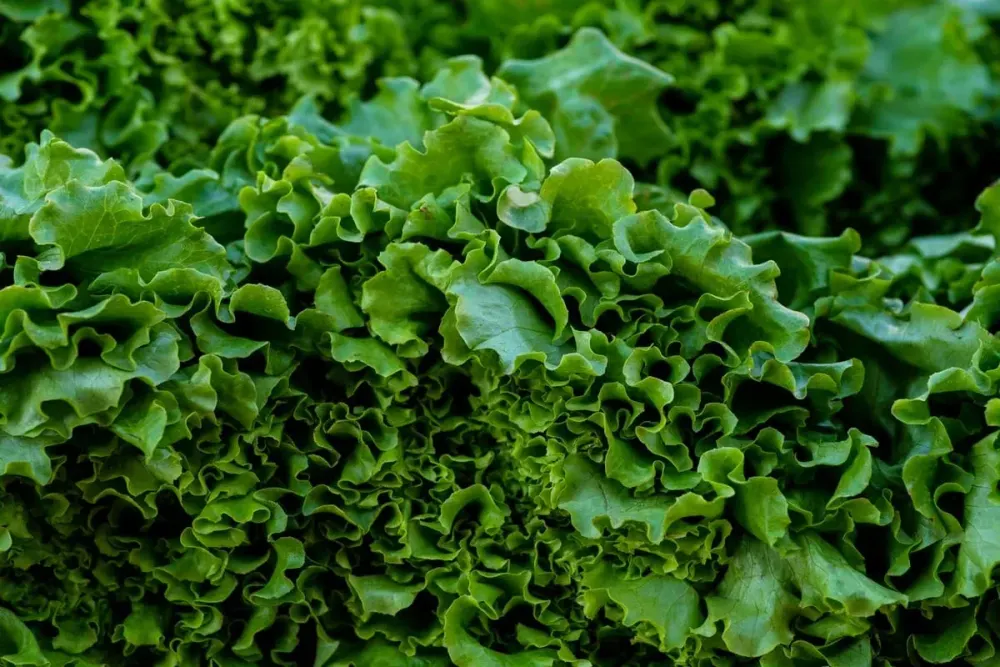
Lettuce is one of the most productive crops you can grow at home — cut-and-come-again varieties produce for months from a single sowing, and succession planting keeps fresh salad available year-round.
Cut and Come Again
Loose-leaf varieties like Oak Leaf, Lollo Rossa, and Salad Bowl are designed for repeated harvesting. Cut the outer leaves to within 2cm of the soil and the plant regenerates from the centre. Each plant can be harvested 5 to 8 times over 2 to 3 months before it bolts. One tray of 12 plants sown every 3 weeks produces continuous salad.
Growing Conditions
Lettuce prefers cool temperatures — 10 to 20°C is ideal. It bolts quickly in heat. In summer, grow in partial shade or use heat-resistant varieties like Jericho and Nevada. In winter, grow under cover in an unheated greenhouse or coldframe. Lettuce grown under cover in winter is slower but produces through the coldest months.
Starting From Seed
Sow thinly in modules or trays and thin to one plant per module. Lettuce seeds need light to germinate — do not cover with compost, just press them onto the surface and mist. Germination takes 5 to 10 days. Transplant to final position when seedlings have 4 true leaves.
Savor Plants — MAHA Kitchen Garden Edition
Plant-based seed oil free recipes using home-grown produce.
Get on Amazon →📌 Follow on Pinterest: Grow Your Own Food on Pinterest
All Links · @theefoodiekitchen · Facebook · · YouTube
Growing Lettuce and Salad Greens Year Round
Lettuce is a cool-season crop that bolts (goes to seed and turns bitter) quickly in summer heat, which is why many gardeners treat it as a spring and autumn vegetable only. The key to year-round lettuce is understanding succession planting and variety selection — different cultivars have different heat tolerance, different bolt thresholds, and different growing speeds. The Grow Lettuce guide covers the full selection of lettuces and salad greens with this framework: which varieties to grow when, how to stagger planting to maintain continuous harvest, and how to extend the season using low tunnels and cold frames.
Variety Selection
Leaf lettuces (loose-leaf types like Oak Leaf, Red Sails, and Freckles) are the most forgiving for beginners and the most productive by weight. They are harvested by cutting outer leaves and allowing the plant to continue growing — a single plant can be harvested 4-6 times over a season. Butterhead lettuces (Bibb, Boston, Buttercrunch) form loose heads and have a milder flavor; they are slightly slower to bolt than leaf types. Romaine (Cos) lettuces are the most heat-tolerant of the standard types, with a crunchy rib and a flavor that holds up well to dressing. Batavian types combine heat tolerance with the crunch of romaine and are among the best summer lettuces available.
Beyond lettuces, the guide covers the cut-and-come-again salad green mix: arugula (peppery, fast-growing), mache (corn salad — cold-tolerant, good for winter growing), sorrel (perennial, lemon-tangy, returns every spring), mizuna (mild mustard flavor, very cold hardy), and spinach (not a lettuce but a salad staple that grows at the same temperatures). A tray of mixed salad greens seeded every two weeks provides continuous salad from early spring through late autumn in most climates.
Salad Greens in the Seed Oil Free Kitchen
A homegrown salad dressed with extra virgin olive oil, apple cider vinegar, dijon, and sea salt is complete. Every bottled salad dressing in a grocery store uses canola, soybean, or sunflower oil as its base fat. Growing your own greens is the first half of making salad seed oil free; making your own dressing is the second. Both are straightforward, and both improve the result compared to commercial alternatives in ways that are immediately obvious at the table.
African, Hawaiian, Indian, Mediterranean, Asian, Exotic, Chicken, Rice, Cookies, Coffee, Spices, Plants, World Cuisine, 30-Minute Dinners and more.
View All 23 Books on Amazon →