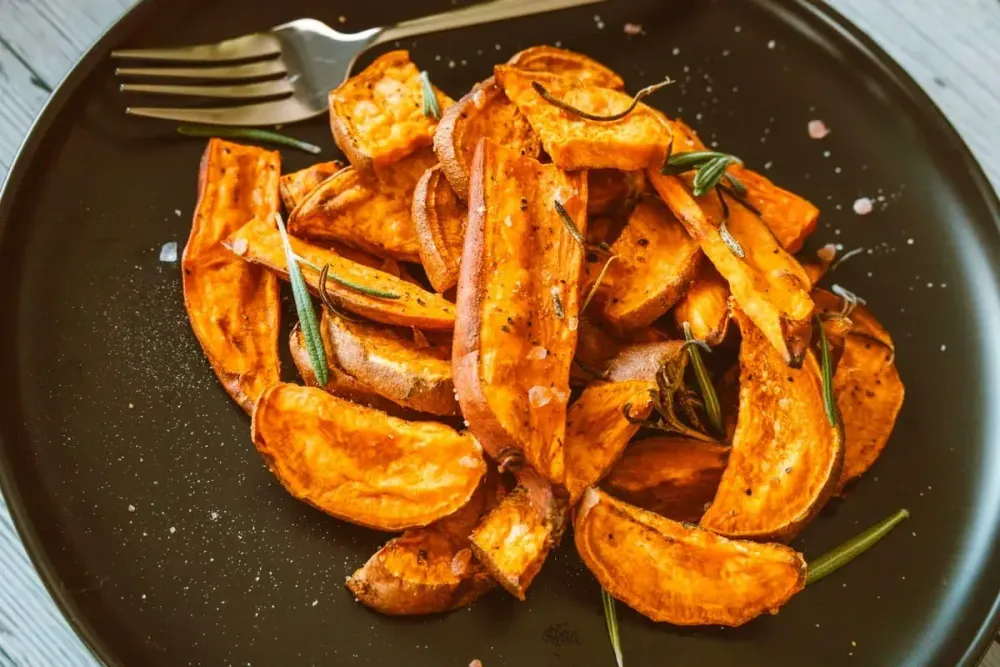
Sweet potatoes are one of the most nutritionally dense crops you can grow at home. They are high in resistant starch, rich in beta-carotene and vitamin A, and they store for months after harvest. In a MAHA kitchen, they are a primary carbohydrate source — baked in butter, roasted in tallow, or mashed with ghee. Growing them in bags makes the harvest simple: lift the bag, dump the contents, and collect.
Why Sweet Potatoes Belong in the MAHA Garden
Sweet potatoes are not the same plant as regular potatoes. They are a tropical root vegetable that produces sprawling vines above ground and clusters of starchy roots below. The nutritional profile is significantly different from regular potatoes: higher in vitamin A (from the beta-carotene that gives the orange flesh its colour), lower glycaemic index, and higher in fibre. Cooked in butter or ghee, the natural sweetness deepens and the texture becomes creamy.
Slips — How Sweet Potatoes Are Propagated
Sweet potatoes are not grown from seed or from tuber divisions like regular potatoes. They are grown from slips — the rooted shoots that grow from a mature sweet potato. This is the step that catches most beginners by surprise, but it is straightforward once you understand the process.
- Take a healthy organic sweet potato (non-organic ones are sometimes treated with growth inhibitors) and suspend it half-submerged in water using toothpicks or a jar that supports the potato at its widest point.
- Place in a warm, bright spot. A windowsill in a heated room works well.
- In 2-4 weeks, shoots will emerge from the top of the potato and roots will form below. These shoots are the slips.
- When slips are 10-15cm long, twist them off the mother potato and place in a glass of water. They will develop their own roots in 5-10 days.
- Once slips have 2-3cm of root, they are ready to plant.
Growing in Bags
Large fabric grow bags — 45 litres or more — are the best container for sweet potatoes. The fabric allows air pruning of the roots, which produces a denser, more productive root system than plastic containers. The bags can be placed on any hard surface.
- Fill bags with a rich, well-draining compost mix. Sweet potatoes prefer slightly acidic soil with good drainage.
- Plant 2-3 slips per 45-litre bag, 20cm apart.
- Water consistently — sweet potato vines are drought-tolerant once established, but consistent moisture during the first 6 weeks dramatically improves yield.
- The vines will sprawl. In a container garden, train them back over the bag rather than letting them spread onto other surfaces.
- Harvest when the leaves begin to yellow, typically 90-120 days after planting. Lift the bag, empty the contents, and collect the tubers.
- Cure harvested sweet potatoes at 30°C with high humidity for 10 days before storing. This converts starches to sugars and heals any skin damage from harvest.
Cooking Sweet Potatoes in Ancestral Fat
A home-grown sweet potato baked whole in the oven develops a different depth of flavour from any supermarket equivalent — because you can harvest at true maturity and cook immediately, before the sugars begin to convert back to starch. Baked and split, with a generous amount of butter melting into the flesh, it is one of the simplest and most satisfying MAHA meals.
Cubed sweet potato roasted in tallow at high heat produces crispy edges and a caramelised exterior that rivals any root vegetable preparation. The combination of the sweet potato's natural sugars and the Maillard reaction in tallow creates a depth that seed oils cannot produce at the same temperature.
9 books covering garlic, microgreens, ginger, mushrooms, lettuce, potatoes, sweet potatoes, avocado and strawberries. Every crop a MAHA kitchen needs to grow at home.
View the Complete 9-Book Series on Amazon →All Links · @theefoodiekitchen · · Facebook · YouTube
African, Hawaiian, Indian, Mediterranean, Asian, Exotic, Chicken, Rice, Cookies, Coffee, Spices, Plants, World Cuisine, 30-Minute Dinners and more.
View All 23 Books on Amazon →