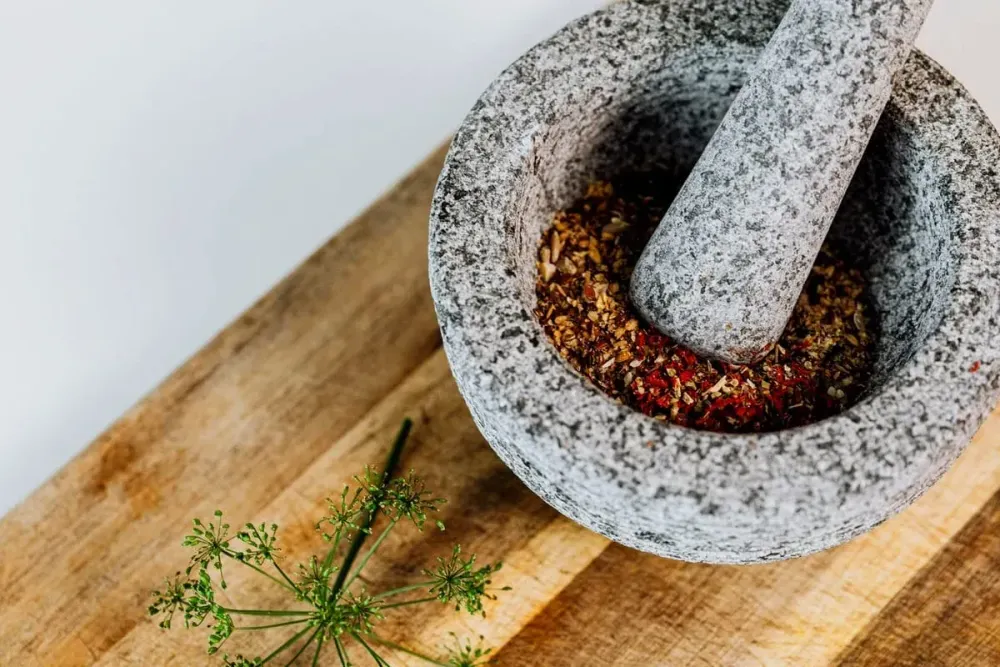
A mortar and pestle bruises. A food processor cuts. The difference is not trivial when working with aromatic spices and fresh herbs. Bruising physically ruptures the cell walls of lemongrass, galangal, and fresh herbs, releasing their essential oils directly into the work. Cutting — which is what a food processor blade does — slices the cells, which releases some oils but leaves others intact. For Yemeni zhug, Cambodian kroeung, suya yaji, and curry pastes, a mortar produces a more complex, more fragrant result than a food processor.
Which Material to Buy
Granite is the correct choice for a primary mortar. It is heavy enough to grind hard spices, non-porous so it does not absorb odours between uses, and its roughness aids the grinding action. Thai stone mortars (a different material, lighter in colour) are traditional for Thai curry pastes and work excellently. Wood and ceramic mortars are decorative — they cannot grind hard spices and are only suitable for soft herbs.
Recipes That Need a Mortar
- Yemeni zhug — bruising the coriander and parsley releases oils a food processor misses
- Cambodian kroeung — traditional preparation uses mortar from hardest to softest ingredient
- Suya yaji — the peanut must be ground dry, not processed into paste
- Niter kibbeh whole spices — crushing cardamom pods releases aromatic oils
- Garam masala fresh — grinding whole spices immediately before use
- Garlic paste — smashed flat with mortar then worked into paste, sharper than minced
The Food Processor Compromise
For recipes where you need large quantities of paste quickly — more than 200g — a food processor is the practical choice. The flavour difference between mortar and food processor is real but not enormous. For daily cooking, a food processor saves 15 minutes per recipe. Own both: use the mortar for recipes where texture and aroma are critical (zhug, kroeung, fresh spice blends), use the food processor for large-batch cooking.
How do I clean a granite mortar?
Rinse with warm water and a brush. No soap — it penetrates the stone. Season a new granite mortar by grinding white rice until the rice is no longer grey (removing stone dust), then wash and dry.
What size mortar do I need?
4-cup minimum for recipes on this site. Smaller mortars require splitting recipe quantities into multiple batches.
Can I grind coffee in a mortar?
Yes — a granite mortar produces a coarser, more variable grind than a burr grinder but works for the coarse grind needed for Turkish coffee and Ethiopian ceremony coffee.
Follow Savannah: @theefoodiekitchen · Facebook · All Links
African, Hawaiian, Indian, Mediterranean, Asian, Exotic, Chicken, Rice, Cookies, Coffee, Spices, Plants, World Cuisine, 30-Minute Dinners and more.
View All 23 Books on Amazon →