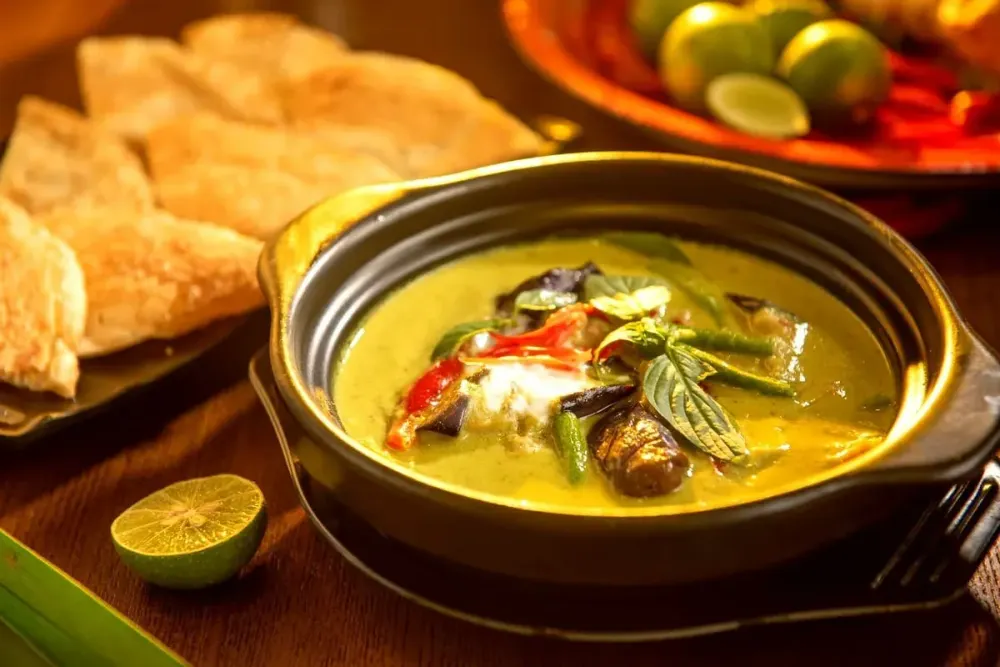
Kroeung is to Cambodia what the French mirepoix is to French cooking and what the Indian masala paste is to South Asian cooking — the foundational aromatic base without which the cuisine does not exist. It is made by pounding or blending fresh lemongrass, galangal, fresh turmeric, kaffir lime leaves, garlic, and shallots into a smooth paste, then frying that paste in coconut oil until it is fragrant, slightly caramelised, and ready to build a dish on. Every major Cambodian dish — amok (fish curry), lok lak (shaking beef), samlor machu (sour soup) — begins with kroeung.
The Mortar Method
Traditional kroeung is made in a large stone mortar, working from the hardest, most fibrous ingredients first (lemongrass) to the most delicate (fresh herbs). The pounding is not optional — the physical bruising of the cell walls releases aromatic compounds that blending (which cuts rather than bruises) only partially achieves. If a mortar is unavailable, a food processor with a tablespoon of water added works — but rough, then process more finely.
Makes 200g kroeung · Prep 20 min · Cook 5 min
Ingredients
- 3 lemongrass stalks, pale inner part only, thinly sliced
- 3cm fresh galangal, roughly chopped
- 3cm fresh turmeric or 1 tsp dried
- 4 kaffir lime leaves, centre rib removed
- 6 garlic cloves
- 4 shallots
- 2 tbsp coconut oil (for frying)
Method
- Slice and chop all ingredients roughly.
- Pound in a mortar starting with lemongrass (hardest), then galangal, turmeric, lime leaves, garlic, shallots.
- Continue pounding until a smooth paste forms. Alternatively blend in food processor.
- Heat coconut oil in a pan over medium heat.
- Add kroeung paste. Fry 3-5 minutes, stirring constantly, until fragrant and slightly darker.
- Use immediately as a base for curry, soup, or stir fry.
- Raw kroeung keeps refrigerated 5 days, frozen 3 months.
Using Kroeung
Fry kroeung in coconut oil as the first step of any Khmer dish. Add protein after the paste is fragrant. Add coconut cream for a curry (amok). Add stock for a soup. Add fish sauce and a squeeze of lime to finish. The paste does the work — everything added afterward builds on its aromatic foundation.
What is galangal?
A rhizome related to ginger with a more citrusy, slightly piney, medicinal flavour. Available fresh at Asian grocery stores and frozen in most international food stores. Fresh ginger is a substitute but the flavour is different.
Can I use dried lemongrass?
No — dried lemongrass lacks the essential oils that make kroeung work. Fresh or frozen lemongrass only.
What dishes use kroeung as a base?
Amok (fish steamed in coconut cream), lok lak (stir-fried beef), samlor kor ko (Khmer vegetable soup), and most Cambodian curries and soups.
Follow Savannah: @theefoodiekitchen · Facebook · All Links
Storage and Reheating
Store refrigerated up to 4 days. Coconut milk separates slightly when cold — stir well reheating over medium-low heat. Add a splash of coconut milk or water if sauce is too thick.
Recipe Variations
- Chicken kroeung — substitute beef/pork with bone-in chicken pieces, reduce cooking time to 25 minutes
- Vegetable kroeung — eggplant, green beans, and potato make a vegan version that is still authentically Khmer
- Fat substitution — coconut oil is the traditional fat here. Ghee, lard, or grass-fed butter each produce slightly different results.
What to Serve With Cambodian Kroeung Curry
Serve over jasmine rice, family-style from communal bowls. Fresh bean sprouts, thinly sliced cucumber, Thai basil, and Vietnamese coriander served on the side cool the heat of the curry.
What is kroeung paste?
A fresh paste of lemongrass, galangal, kaffir lime leaves, turmeric root, garlic, and shallots — the defining ingredient of Cambodian cooking. Milder and more herbal than Thai curry paste.
Where can I find galangal?
Fresh at Asian grocery stores and some Whole Foods. Frozen galangal is a good substitute. Dried galangal is significantly less flavourful.
Why coconut oil in Cambodian cooking?
Traditional Khmer cooking uses coconut oil and fat from cracked coconut cream. Seed oils arrived with post-colonial processed food exports — the original Khmer fat was always coconut-based.
African, Hawaiian, Indian, Mediterranean, Asian, Exotic, Chicken, Rice, Cookies, Coffee, Spices, Plants, World Cuisine, 30-Minute Dinners and more.
View All 23 Books on Amazon →