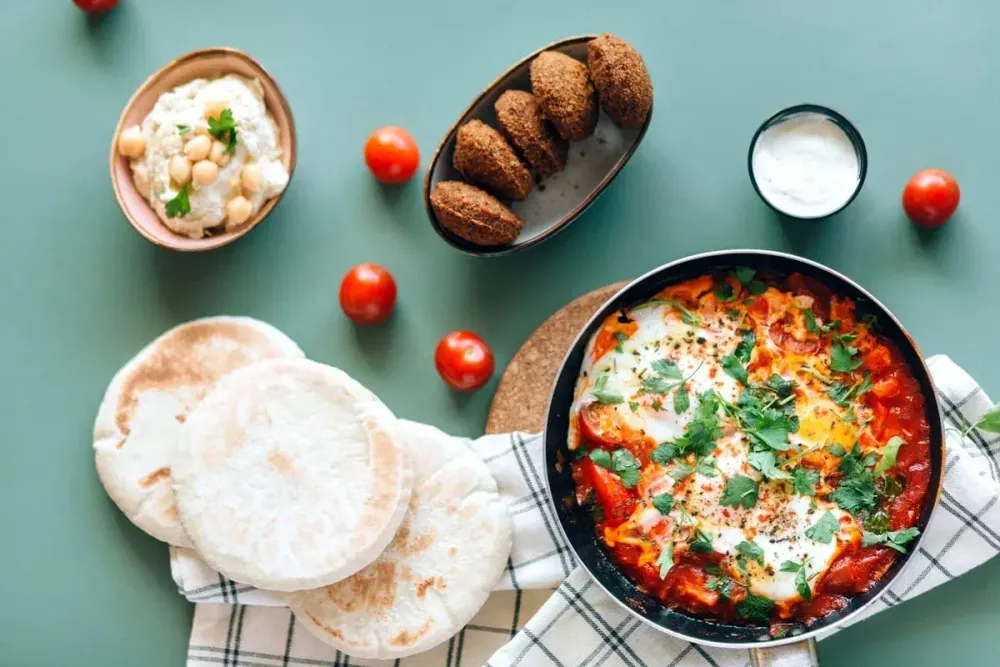
Zhug (also spelled zhoug, schug, or sahawiq) is the Yemeni hot sauce that spread throughout the Levant with the Yemeni Jewish diaspora and became a staple condiment in Israeli and Levantine cooking. It is made by pounding fresh coriander and parsley with green chillies, garlic, and warming spices — cardamom and cumin are the defining aromatics that make zhug unmistakably itself — then emulsifying everything with olive oil into a bright green, intensely flavoured paste. It goes on eggs, on bread, alongside meat, stirred into rice, spooned over fish.
Green vs Red Zhug
Green zhug (made with green chillies and fresh herbs) is the most common variety. Red zhug is made with dried red chillies and has a deeper, more smoky heat. Both are Yemeni traditions. The cardamom is the ingredient that surprises people unfamiliar with Yemeni cooking — it bridges the gap between the savoury herbs and the hot chilli in a way that no other spice does.
Makes 1 jar · Prep 15 min
Ingredients
- Large bunch fresh coriander, roughly chopped
- Small bunch fresh parsley, roughly chopped
- 4-6 green chillies (adjust to heat preference), roughly chopped
- 6 garlic cloves
- 1 tsp ground cardamom
- 1/2 tsp ground cumin
- 1/2 tsp black pepper
- 1/2 tsp salt
- 100ml extra virgin olive oil
- Juice of 1/2 lemon
Method
- Place all ingredients except olive oil in a food processor.
- Pulse to a rough paste — do not over-blend. Texture should be chunky, not smooth.
- Add olive oil. Pulse briefly to incorporate.
- Taste and adjust heat, seasoning, and lemon.
- Transfer to a jar. Cover with a thin layer of olive oil to preserve.
- Keeps refrigerated for 2 weeks.
How to Use Zhug
- Alongside eggs — fried in ghee or scrambled, a spoonful of zhug on top
- As a bread dip with good olive oil
- Stirred into hummus or labneh
- Alongside grilled meat — lamb, chicken, or fish
- Mixed into rice or couscous as a finishing herb oil
- On top of shakshuka just before serving
How hot is zhug?
Very — the standard version uses 4-6 green chillies per batch. Reduce to 1-2 for a milder version, or remove the seeds from the chillies.
Why cardamom in a savoury sauce?
Cardamom is central to Yemeni cooking, appearing in both sweet and savoury preparations. In zhug it bridges the gap between the fresh herbs and the heat. Once you taste it, it is difficult to imagine zhug without it.
Can I use a mortar and pestle?
Traditional zhug is made in a mortar. The texture is coarser and more rustic than the food processor version, with more distinct herb and spice pieces.
Follow Savannah: @theefoodiekitchen · Facebook · All Links
African, Hawaiian, Indian, Mediterranean, Asian, Exotic, Chicken, Rice, Cookies, Coffee, Spices, Plants, World Cuisine, 30-Minute Dinners and more.
View All 23 Books on Amazon →