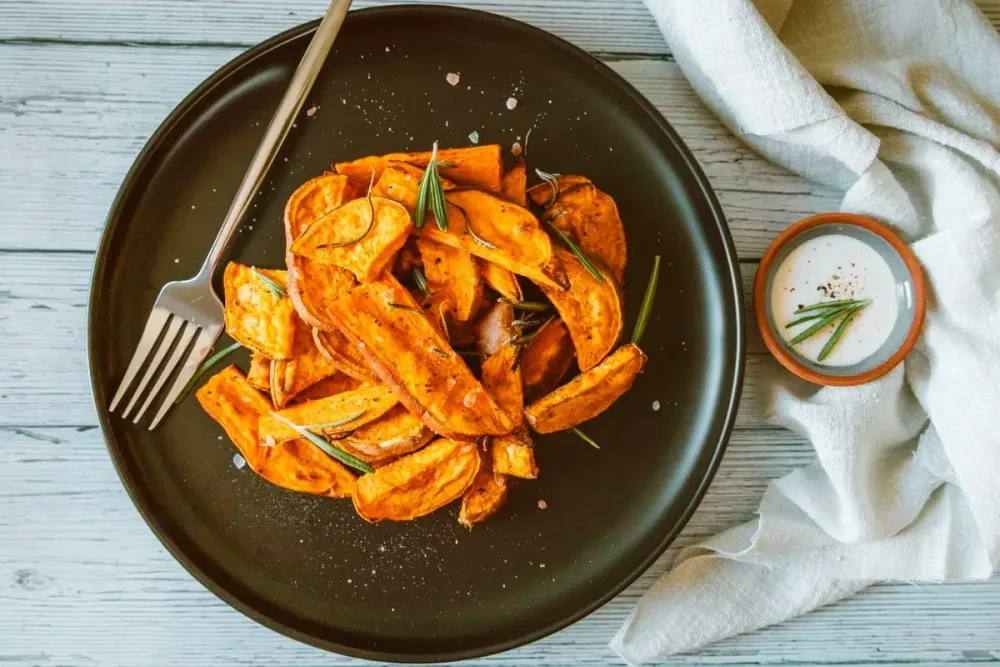
Sweet potatoes roasted in ghee are one of the most straightforward demonstrations of what ancestral fat does to vegetables. The ghee's milk solids brown at the edges of the sweet potato chunks, adding caramelised, nutty notes that complement the potato's natural sweetness. Spiced with cumin, coriander, and cinnamon — a North African and Middle Eastern flavour combination — the result is a side dish of considerable depth that takes 35 minutes and one bowl to prepare.
Why Ghee Works Here
Sweet potatoes have a high natural sugar content. At high roasting temperatures, those sugars caramelise to produce complex flavour. Ghee, with its milk solids intact (unlike refined fats), contributes its own Maillard reaction products to the caramelisation happening at the surface of each chunk. The result is a convergence of two browning processes — sugar caramelisation and fat Maillard browning — that vegetable oil cannot produce because oil undergoes only minimal Maillard reactions with the vegetable's surface.
Cutting for Even Roasting
Cut sweet potatoes into chunks of equal size — 3-4cm cubes is standard. Smaller pieces brown faster but can dry out before the interior becomes fluffy. Larger pieces stay moist inside but take longer to develop colour on the outside. Uniform size ensures everything finishes at the same time. Toss the chunks to ensure complete coating in ghee and spices before they go in the oven.
Serves 4 · Prep 10 min · Cook 30 min
Ingredients
- 800g sweet potatoes, peeled and cut into 3-4cm chunks
- 3 tbsp ghee, melted
- 1 tsp ground cumin
- 1 tsp ground coriander
- 1/2 tsp cinnamon
- 1/2 tsp smoked paprika
- 1/4 tsp cayenne (optional)
- Salt and pepper
- Fresh coriander and a squeeze of lime to serve
- Optional: 2 tbsp tahini drizzle
Method
- Preheat oven to 220°C. Line a large baking tray with parchment.
- Combine melted ghee with all spices, salt, and pepper. Toss sweet potato chunks in the spiced ghee until completely coated.
- Spread in a single layer on the baking tray. Do not crowd — use two trays if necessary.
- Roast 25-30 minutes until tender and caramelised at the edges, turning once halfway through.
- Scatter with fresh coriander and a squeeze of lime. Drizzle with tahini if using.
The Single Layer Rule
Vegetables roast, they do not steam, only when spread in a single layer with space between the pieces. Crowded vegetables release moisture that cannot escape, producing steamed, pale vegetables that lack colour and depth. If you are making a large batch, use two baking trays rather than crowding one. The investment in an extra tray is worthwhile.
Can I use butter instead of ghee?
Butter works but may burn at 220°C because of its lower smoke point. Reduce oven temperature to 200°C if using butter. Ghee is preferred for high-heat roasting.
What else can I roast this way?
The same technique and spice blend works with butternut squash, carrots, parsnips, and cauliflower. Root vegetables with natural sweetness benefit most from the ghee-caramelisation combination.
Can I add chickpeas?
Yes — drain and dry canned chickpeas and toss with the same spiced ghee. They take 25-30 minutes at 220°C and become crispy. A combination of sweet potato and chickpeas on the same tray is a complete vegetarian meal.
Follow Savannah: @theefoodiekitchen · Facebook · All Links
African, Hawaiian, Indian, Mediterranean, Asian, Exotic, Chicken, Rice, Cookies, Coffee, Spices, Plants, World Cuisine, 30-Minute Dinners and more.
View All 23 Books on Amazon →