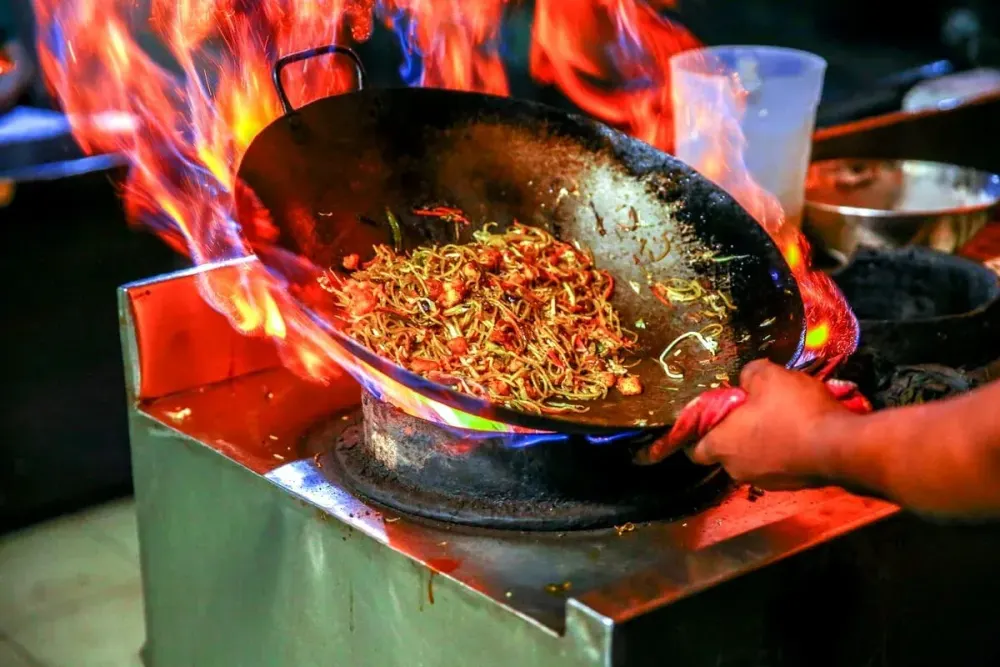
A wok cooked in lard is a fundamentally different object from a wok cooked in vegetable oil. The lard seasons the carbon steel with each use, building a black, slick patina that is genuinely non-stick and produces the wok hei — the smoky, slightly charred quality of restaurant stir fry — that vegetable oil cannot achieve at domestic hob temperatures. If you cook Chinese food, Thai food, or any stir fry regularly, a carbon steel wok seasoned in lard is the most important equipment upgrade available to you.
Carbon Steel vs Cast Iron
Carbon steel is the correct choice for a wok. Cast iron woks exist and work, but carbon steel heats faster, responds to temperature changes more quickly, and is significantly lighter than cast iron at wok size. A 14-inch cast iron wok weighs over 8kg — difficult to manoeuvre. A 14-inch carbon steel wok weighs under 2kg. The seasoning behaviour is identical: both build a patina from animal fat, both become non-stick over time, both require the same care.
How to Season a Wok With Lard
New carbon steel woks have a factory coating (machine oil) that must be removed before use. Wash with dish soap and steel wool, rinse completely, dry over high heat until all moisture evaporates. The metal will start to change colour — that is normal. Remove from heat. Add 1 tablespoon lard. With tongs and a folded cloth, wipe the lard all over the interior, including the sides, until the pan is evenly coated with a thin film. Return to medium heat for 2 minutes. Wipe again. Repeat 3-4 times. The wok is now seasoned and ready.
Wok Hei at a Home Hob
Restaurant wok hei comes from burner outputs of 50,000-150,000 BTU — roughly 10x the output of a domestic gas hob. Achieving true wok hei at home requires compensating with technique: extremely high heat, small batches (never fill the wok more than half), dry ingredients (no moisture), and lard rather than vegetable oil (lard handles the temperature without smoking immediately). It is not identical to restaurant wok hei but it is significantly closer than any non-stick pan at any temperature.
What size wok do I need?
14 inches for cooking for 2-4 people. 12 inches for 1-2. Never go smaller than 12 — smaller woks prevent the tossing motion that prevents steaming.
Can I use a wok on an induction hob?
Only flat-bottomed woks with a magnetic base work on induction. Most carbon steel woks are magnetic. Check the product listing before buying.
How do I prevent rust on my carbon steel wok?
After every wash, dry over high heat until completely dry, then wipe with a thin film of lard or tallow. Never store damp.
Follow Savannah: @theefoodiekitchen · Facebook · All Links
African, Hawaiian, Indian, Mediterranean, Asian, Exotic, Chicken, Rice, Cookies, Coffee, Spices, Plants, World Cuisine, 30-Minute Dinners and more.
View All 23 Books on Amazon →