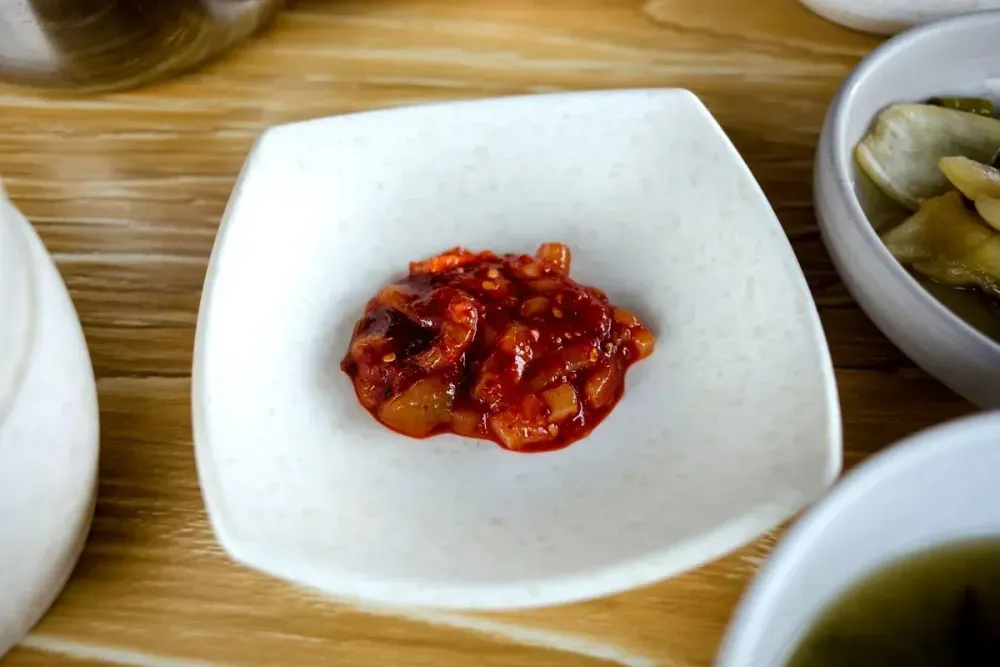
Gochujang is as fundamental to Korean cooking as miso is to Japanese cooking or fish sauce to Thai cooking — a fermented paste with an umami depth that no combination of fresh ingredients can replicate. It is made from dried gochugaru chilli flakes, fermented soybeans, glutinous rice, and salt, fermented together for months or years in traditional earthenware jars. The result is a thick, dark red paste that is simultaneously hot, sweet, savoury, and complex.
Gochujang vs Gochugaru
These are related but different products. Gochugaru is Korean dried red pepper flakes — the raw material used to make gochujang and also used as a seasoning in its own right (in kimchi, dubu jorim, yukgaejang). Gochujang is a fermented paste made from gochugaru plus soybeans, glutinous rice, and salt. They are not interchangeable — gochugaru is a fresh heat, gochujang is a fermented complexity.
How to Use Gochujang
- Bibimbap sauce — mix 2 tbsp gochujang, 1 tbsp sesame oil, 1 tsp honey, 1 tsp rice vinegar
- Bulgogi marinade — 1 tbsp in the soy and pear marinade
- Dipping sauce — thin with sesame oil and rice vinegar
- Fried chicken glaze — mix with tallow and brush onto fried chicken
- Shakshuka variation — 1 tbsp in the tomato sauce for Korean-spiced eggs
- Ramen broth seasoning — 1 tbsp per bowl of tallow bone broth
How hot is gochujang?
Moderately hot — significantly less than sriracha, more than sweet paprika. Standard (medium) is suitable for most Western palates.
How long does gochujang keep?
Refrigerated in an airtight container: 1-2 years. It actually improves over time as the fermentation continues.
Can I substitute gochujang with sriracha?
No — sriracha is a fresh chilli sauce without fermentation. The flavour profile is completely different. Use miso paste plus cayenne as the closest substitute.
📌 Follow on Pinterest: Global Spice Guides on Pinterest
Follow Savannah: @theefoodiekitchen · Facebook · All Links
How to Cook With Gochujang
Bloom gochujang in fat — sesame oil as finishing oil or lard as cooking fat — before adding liquid. The capsaicin and fermented soybean compounds are fat-soluble and release more completely into the fat. Direct addition to water produces sharper, less integrated heat.
- Korean stews (jjigae): 1-2 tbsp per serving as the base paste, bloomed in sesame oil before adding water or stock
- Marinades: 2 tbsp plus soy, garlic, ginger, and sesame oil — the standard Korean BBQ marinade base for bulgogi, galbi, and dakgalbi
Storage
Store sealed in the refrigerator after opening — keeps 6-12 months. The paste darkens with age and the flavour becomes deeper and less sharp. The salt content prevents mold growth.
Substitutions
No direct Western substitute for gochujang. Closest approximation: red miso paste (for fermented depth) plus chilli flakes (for heat) plus a small amount of brown sugar (for sweetness).
African, Hawaiian, Indian, Mediterranean, Asian, Exotic, Chicken, Rice, Cookies, Coffee, Spices, Plants, World Cuisine, 30-Minute Dinners and more.
View All 23 Books on Amazon →