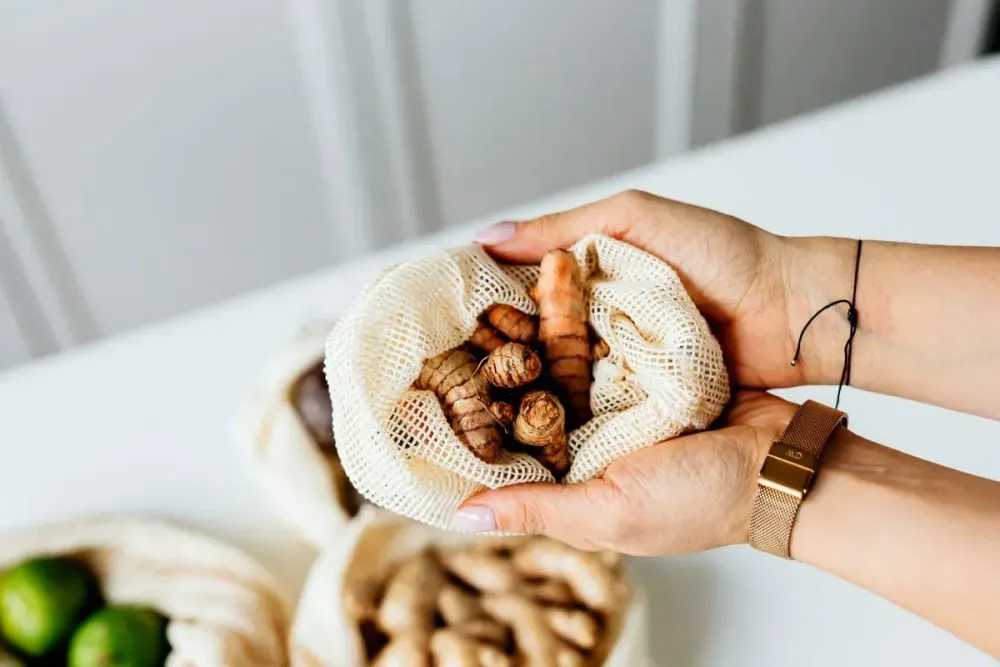
Ginger and turmeric are rhizomes — underground stems that grow horizontally just below the soil surface, producing upright leafy stems above and edible rhizomes below. Both are tropical plants that require warmth and humidity to thrive, but both can be grown successfully in temperate climates with some management: starting indoors in early spring, moving outside after the last frost, and harvesting before the first autumn frost.
Growing Ginger
Ginger (Zingiber officinale) is one of the easiest tropical rhizomes to grow in a container. Start with a piece of fresh ginger root from the supermarket or a garden centre — look for plump, firm pieces with visible growth buds (the pale, slightly pointed protrusions on the surface). Soak overnight in water, then plant in a wide, shallow pot with the growth buds pointing upward, barely covered with compost.
Growing Turmeric
Turmeric (Curcuma longa) grows in exactly the same way as ginger and can be started and harvested on the same schedule. The rhizomes are smaller and more compact than ginger, bright orange-yellow inside, and intensely pigmented — they will stain anything they touch. Start with fresh turmeric root from a South Asian grocery store or specialist supplier. Plant in the same conditions as ginger: warmth, humidity, dappled light.
Planting Both — Step by Step
Ingredients
- Fresh ginger or turmeric rhizomes with visible growth buds
- Wide, shallow pots (at least 30cm diameter)
- Well-draining compost mixed with perlite
- Warm indoor space or heated greenhouse
Method
- Soak rhizomes overnight in warm water.
- Fill pots with well-draining compost. Plant rhizomes just below the surface, growth buds pointing up, spaced 15-20cm apart.
- Place in a warm location — minimum 20°C. A heated propagator or warm windowsill works well.
- Shoots emerge in 2-6 weeks. Move to a bright position once growing.
- After last frost (May/June in UK), move pots outside to a sheltered, warm position.
- Water regularly but do not allow to sit in water. Feed monthly with a balanced fertiliser.
- In autumn, when the leaves yellow and begin to die back, stop watering.
- Harvest by tipping the pot out and carefully retrieving the rhizomes.
Harvesting and Storing
Ginger and turmeric can be harvested partially during the growing season — break off sections of rhizome from the edges of the pot while leaving the plant in place to continue growing. Full harvest happens when the leaves die back in autumn. Fresh harvested ginger and turmeric are significantly more pungent and aromatic than dried or powdered — use within 2-3 weeks or freeze (they grate excellently from frozen).
In the MAHA Kitchen
Fresh ginger bloomed in ghee — the first step of an Indian tadka — releases aromatics that dried ginger cannot match. Fresh turmeric grated into warm ghee for a golden milk base, or sliced into bone broth, has a flavour complexity that turmeric powder approaches but never quite achieves.
Can I grow ginger and turmeric outdoors in the UK?
In a sheltered, south-facing position in a warm summer they can grow outside in pots from June-October. They will not survive frost. Start indoors and bring back inside before temperatures drop below 10°C.
When is the best time to harvest?
When the leaves yellow and die back — typically October-November in a UK climate. At this point the rhizomes are mature and at maximum size.
Can I use supermarket ginger for planting?
Yes — look for fresh, plump pieces with growth buds. Organic ginger is preferable as it is less likely to have been treated with sprouting inhibitors.
📌 Follow on Pinterest: Grow Your Own Food on Pinterest
Follow Savannah: @theefoodiekitchen · Facebook · All Links
African, Hawaiian, Indian, Mediterranean, Asian, Exotic, Chicken, Rice, Cookies, Coffee, Spices, Plants, World Cuisine, 30-Minute Dinners and more.
View All 23 Books on Amazon →