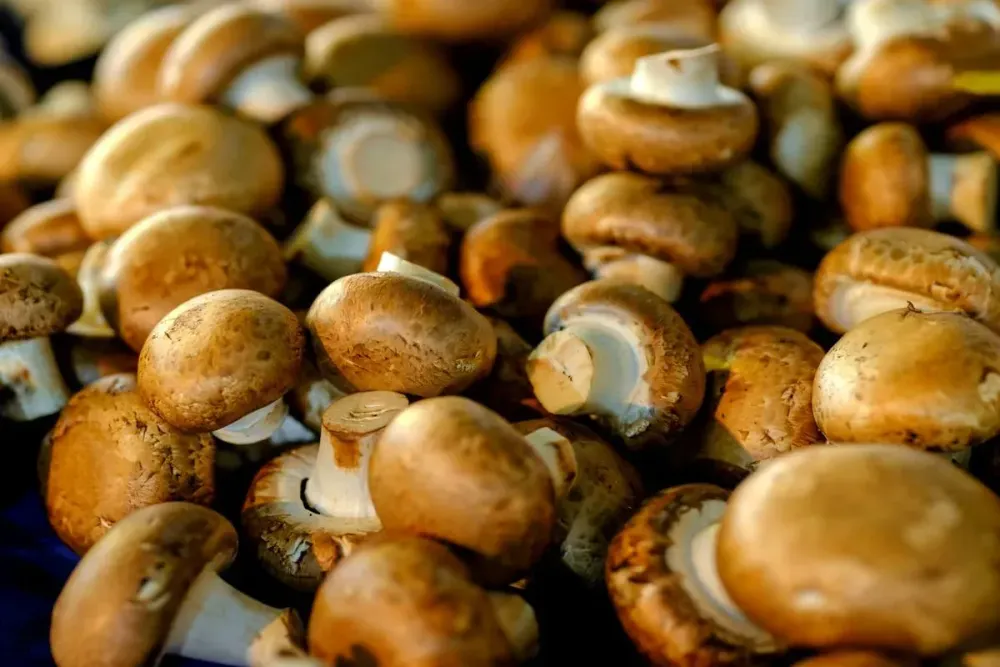
How to Grow Mushrooms is Savannah Ryan's step-by-step guide to growing mushrooms at home — Indoor growing on straw or sawdust substrates — oyster, shiitake, and lion's mane — from inoculation through to harvest and successive flushes. The book covers the complete growing cycle from seed or rhizome to harvest.
What the How to Grow Mushrooms Guide Covers
The guide walks through every stage of growing mushrooms at home: variety selection for your climate, soil preparation and potting mixes, planting technique, watering and feeding schedules, common problems and how to fix them, harvesting at the right stage, and storage to maximise shelf life.
Why Grow Your Own Mushrooms
Homegrown mushrooms is harvested at peak ripeness and nutritional density. Supermarket mushrooms is often harvested early and stored for weeks before reaching the consumer. For MAHA cooking, where the quality of ingredients matters as much as the quality of fat, homegrown mushrooms is a meaningful upgrade.
About the MAHA Kitchen Garden Series
The MAHA Kitchen Garden series covers 9 essential plants for the seed oil free kitchen — garlic, microgreens, ginger and turmeric, mushrooms, lettuce, potatoes, sweet potatoes, avocado, and strawberries. Each guide focuses on practical growing advice for home gardeners without requiring specialist equipment or experience.
Is this guide suitable for beginners?
Yes — the guide assumes no prior growing experience and covers every step in detail.
What format is available?
Available as Kindle ebook and paperback on Amazon.
Does this cover both indoor and outdoor growing?
Yes — the guide covers growing mushrooms both indoors (in pots and containers) and outdoors (in beds and gardens).
Follow Savannah: @theefoodiekitchen · Facebook · All Links
Inside Grow Mushrooms — Logs and Buckets for Home Cultivation
Mushroom cultivation does not require a garden. It requires a cool, humid, low-light space — a basement, a shaded corner of a garage, a north-facing wall. The Grow Mushrooms guide covers two primary home cultivation methods: log inoculation (for oyster, shiitake, lion's mane, and reishi mushrooms grown on hardwood logs outdoors or in shaded conditions) and bucket cultivation (the faster indoor method using pasteurized straw or hardwood sawdust substrate packed into modified 5-gallon buckets). Each method has its own yield profile, time to first harvest, and ongoing maintenance requirements.
Log inoculation produces mushrooms for 3-7 years from a single log. The setup time is higher, but the ongoing maintenance is minimal — periodic soaking to stimulate fruiting and protection from direct sun. Bucket cultivation produces a first harvest in 10-21 days and can be run continuously with sequential substrate batches. The guide covers substrate preparation, spawn sourcing, contamination prevention, and troubleshooting for the most common failure modes (green mold, pin abort, contaminated substrate).
Mushrooms in the Seed Oil Free Kitchen
Mushrooms cooked in grass-fed butter or beef tallow are a categorically different product from mushrooms cooked in olive oil or canola. The Maillard reaction at the butter-mushroom interface produces a flavor compound called 3-methylbutanal that is specific to the dairy fat reaction — it is the flavor that makes a mushroom risotto or a mushroom pan sauce taste like restaurant food rather than home cooking. The guide connects cultivation to cooking: each variety section ends with the two or three cooking methods that produce the best result for that specific mushroom, and the fat that belongs in each preparation.
African, Hawaiian, Indian, Mediterranean, Asian, Exotic, Chicken, Rice, Cookies, Coffee, Spices, Plants, World Cuisine, 30-Minute Dinners and more.
View All 23 Books on Amazon →