
As an Amazon Associate I earn from qualifying purchases. Affiliate disclosure.
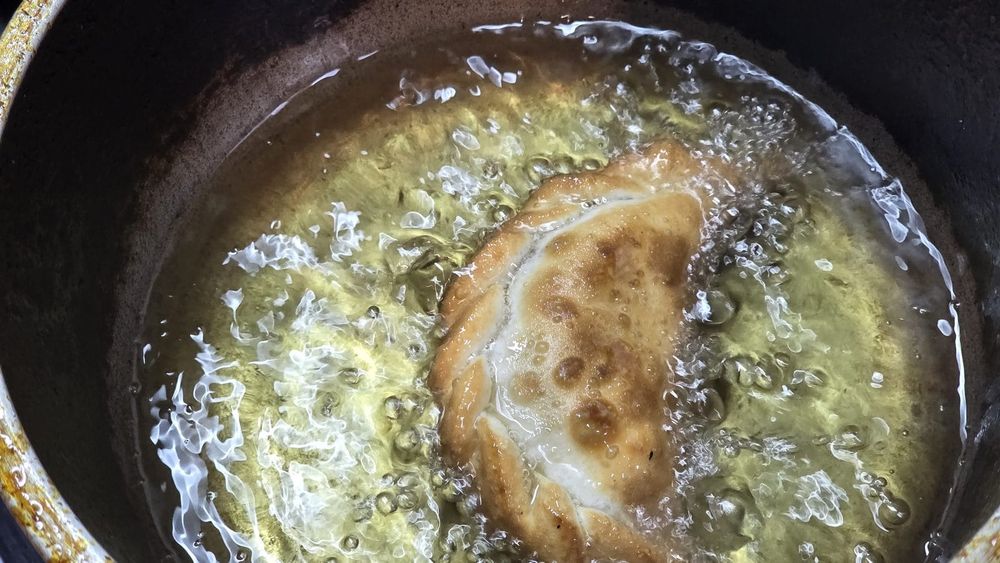
Beef tallow was the standard frying fat in American kitchens and fry shops for generations, and it's coming back as people cut seed oils out of their cooking. It's firm at room temperature, mild and a little beefy in flavour, and it handles deep-frying heat well. This guide walks through doing it at home, step by step: which pot to use, how much tallow you need, what temperature to fry at, how to stay safe, and what to do with the fat afterwards.
Why fry in tallow?
Tallow is rendered beef fat. It is mostly saturated and monounsaturated fat, which is why it's solid in the jar and why it holds up to high heat. Nebraska Extension's 2026 fact sheet on tallow, butter and seed oils lists tallow's smoke point at 400 °F and names frying, roasting and high-heat cooking as its best uses. A 2026 review in Frontiers in Food Science and Technology gives a range of 200–216 °C (about 392–421 °F) for tallow.
It's also very low in linoleic acid, the main omega-6 fat in seed oils. USDA FoodData Central lists about 3.1 g of linoleic acid per 100 g of beef tallow, against about 51 g in soybean oil. If you want the full side-by-side with lard, ghee and avocado oil, see our best oil for frying without seed oils guide.
What you need
- Tallow. Store-bought jars are already rendered and ready to melt. You can also render your own tallow from beef suet or trimmings.
- A deep, heavy pot or a deep fryer. USDA's Food Safety and Inspection Service (FSIS) says to read your fryer's manual first. If you don't own a fryer, FSIS suggests a deep, heavy pan, but advises avoiding bare cast iron because it breaks down oil faster than other metals. An enamelled Dutch oven or a heavy stainless-steel pot is a good alternative, since the fat touches enamel or steel rather than bare iron. Comparing electric fryers? See the best deep fryer for tallow or lard.
- A deep-fry (candy) thermometer that clips to the side of the pot, so you can watch the fat temperature the whole time.
- An instant-read food thermometer for checking that chicken, fish and other meat are cooked through.
- A slotted spoon, spider or metal tongs. FSIS warns never to use plastic in hot fat, because some plastic melts.
- A tray lined with paper towels for draining.
- A metal lid or baking sheet and a kitchen fire extinguisher within reach.
How much tallow do you need?
Iowa State University's food preparation lab manual says to fill the fry kettle only one-third to one-half full of fat. That headroom matters: food displaces fat and the fat bubbles up when wet food goes in. A Naval Postgraduate School handout of the same FSIS guidance adds that in a skillet, the fat should come no higher than 2 inches from the top.
As a rough guide, a 6-quart pot filled one-third of the way holds about 2 quarts of melted fat. Fats are lighter than water, so that's more than a single 42-ounce jar of tallow; plan on buying at least two jars, or rendering a big batch, for a pot that size. A smaller pot needs less tallow but also fits less food per batch.
What temperature to fry at
Use a thermometer rather than guessing. These are FSIS's suggested oil temperatures and approximate times, along with its safe minimum internal temperatures. They sit well below tallow's roughly 400 °F smoke point.
| Food | Fat temperature | Approx. time | Safe internal temp |
|---|---|---|---|
| Chicken pieces | 375 °F | 13–20 min | 165 °F |
| Chicken fingers | 350 °F | 6–8 min | 165 °F |
| Fish fillets | 320 °F | 3–5 min | 145 °F |
| Shrimp | 320 °F | 4–6 min | 145 °F |
Source: USDA FSIS, Deep Fat Frying and Food Safety. Times are approximate; always check the internal temperature.
For French fries, most cooks use a two-stage method: a lower-temperature fry to cook the potato through, then a hotter fry to crisp it. Our tallow-fried fries recipe walks through it.
Step by step: deep frying in tallow
- Set up a dry, clear station. FSIS says the fryer or pot should be off, dry and away from water before you add fat. Put the pot on a back burner with the handle turned in, so nobody can bump it.
- Melt the tallow gently. Spoon the solid tallow into the cold pot and melt it over low to medium heat. Once it's liquid, check the level: one-third to one-half full.
- Clip on the thermometer and heat to temperature. Raise the heat gradually and watch the reading. If you see smoke, turn the burner off. The U.S. Fire Administration's advice is the same: if the grease starts to smoke or boil, turn the burner off.
- Prepare the food. Pat it dry. FSIS explains that water hitting fat at about 350 °F turns instantly into steam, which makes hot fat spatter. Shake off extra batter or flour before frying.
- Fry in small batches. Lower food in gently with a spider or tongs, away from you. Overcrowding drops the temperature, cooks food unevenly and can make the fat overflow. Let the thermometer climb back to temperature between batches.
- Drain and check. Lift the food out onto paper towels. Check meat, poultry and seafood with a clean food thermometer once it's out of the fat, since FSIS notes a reading taken in the fat is inaccurate. If it's under temperature, fry it a little longer.
- Turn off the heat when you're done and let the tallow cool in the pot, out of the way. FSIS suggests waiting about 2 hours before handling or cleaning a fryer.
Grease fire safety
Hot fat burns people and starts fires, and tallow is no exception. FSIS and the U.S. Fire Administration agree on the basics:
- Never leave the pot unattended. Frying is fast, and food can burn and become a fire hazard within minutes.
- Never use water on a grease fire. It makes burning fat spatter and spread.
- Smother it. Turn off the burner and slide a metal lid or baking sheet over the pot, or use a kitchen fire extinguisher. Call 911 if the fire isn't out right away.
- Keep children and pets clear of the stove while you fry, and keep the pot handle turned toward the back.
Straining, storing and reusing tallow
One of the nicest things about frying in tallow is that you don't have to throw it out after one use. Once it has cooled to a safe, warm-liquid stage, strain it through a fine sieve or cheesecloth into a clean, dry container. FSIS says strained frying oil can be stored in a sealed, light-proof container for up to 3 months, and that refrigerating it keeps the best quality. Tallow sets solid in the fridge, which makes it easy to scoop back into the pot next time.
Throw it out if it looks cloudy, foams, or smells or tastes off. Never pour it down the sink: FSIS warns it congeals in drains and sewers. Let it set, then put it in a sealed container in the trash, or take it to a used-cooking-oil recycling point if your area has one.
Tallow vs other frying fats
Lard is the closest swap: it's another traditional animal fat that Nebraska Extension also credits with a high smoke point, and it has a more neutral flavour. See lard vs tallow for when to choose each. If you're wondering about the raw fat you'd render it from, our tallow vs suet guide explains the difference. For every fat's smoke point in one place, see the cooking fat smoke points guide.
A note on health: this guide is about cooking technique, not medical advice. If you're watching saturated fat or managing a heart condition, check with your doctor or a registered dietitian about how fried foods fit your diet.
Frequently asked questions
What temperature do you deep fry in beef tallow?
Usually 320–375 °F, depending on the food. USDA FSIS suggests 375 °F for chicken pieces, 350 °F for chicken fingers and 320 °F for fish fillets and shrimp. Tallow's published smoke point is about 400 °F, so these temperatures sit below it.
Can you deep fry in a cast iron Dutch oven?
USDA FSIS advises avoiding cast iron for deep frying because it breaks down oil faster than other metals. An enamelled Dutch oven, a heavy stainless-steel pot or an electric deep fryer is a better choice.
How full should the pot be when deep frying?
Only one-third to one-half full, according to Iowa State University's food preparation lab manual. The headroom stops the fat from bubbling over when food goes in.
How many times can you reuse tallow for frying?
There's no fixed number. Strain it after each use and store it sealed and away from light, refrigerated for best quality, for up to 3 months (USDA FSIS). Throw it out if it turns cloudy, foams, or smells or tastes off.
What do you do if tallow catches fire?
Turn off the burner and cover the pot with a metal lid or baking sheet, or use a kitchen fire extinguisher. Never use water, which makes burning fat spatter and spread. Call 911 if the fire doesn't go out.
Does food fried in tallow taste like beef?
Tallow has a mild beefy flavour, which suits fries, fried chicken and fish. If you want a more neutral flavour, lard is the closest swap.
Sources
- USDA Food Safety and Inspection Service, Deep Fat Frying and Food Safety
- U.S. Fire Administration, Cooking Fire Safety
- Iowa State University, Food Preparation Lab Manual (FSHN 1150), 6.2 Deep Fat Frying
- Naval Postgraduate School (reproducing USDA FSIS guidance), Deep Fat Frying and Food Safety
- Curry & Yates, The Big Fat Comparison: Tallow, Butter, & Seed Oils as Culinary Options, Nebraska Extension G2369, April 2026
- Kumar & Jadhav, Understanding the techno-functionality of ghee as a cooking medium, Frontiers in Food Science and Technology, 2026
- USDA FoodData Central: Fat, beef tallow (FDC 171400)
- USDA FoodData Central: Oil, soybean, salad or cooking (FDC 171411)
Part of: Traditional Cooking Fats Guide — Tallow, Ghee, Lard, Butter · Shop the pantry →
African, Hawaiian, Indian, Mediterranean, Asian, Exotic, Chicken, Rice, Cookies, Coffee, Spices, Plants, World Cuisine, 30-Minute Dinners and more.
View All Books on Amazon →