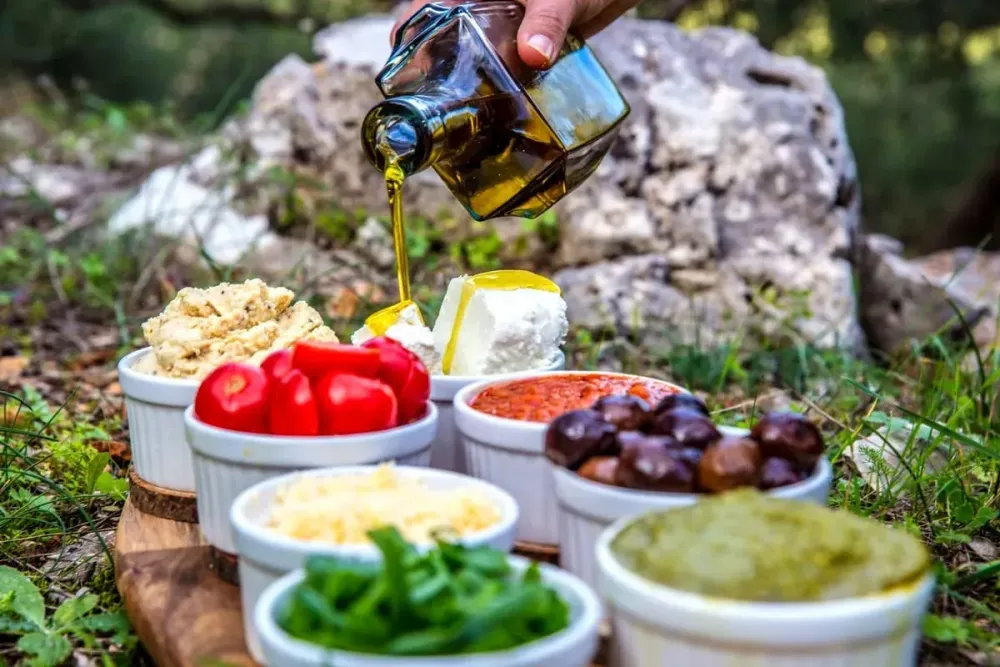
Mediterranean cooking has never left ancestral fats behind. Olive oil and butter have been the primary cooking fats of the Mediterranean basin since antiquity. The Mediterranean diet — studied for decades as a model of longevity and metabolic health — is built on these fats, not on industrial seed oils. The Foodie Kitchen's Mediterranean recipe collection covers Greece, Italy, Turkey, Morocco, and the Levant.
Greek Recipes
Greek cooking uses olive oil generously and butter for pastry and some meat preparations. Lamb kleftiko — slow-braised in olive oil and butter with lemon and oregano. Garlic butter shrimp. Greek-style roasted vegetables with olive oil and herbs. The tradition is ancient and consistent: real fat, real flavour.
Moroccan Recipes
Moroccan cooking combines olive oil, butter, and smen — fermented aged butter — with the most complex spice palette in North African cooking. Ras el hanout in tagines. Preserved lemons. Saffron-scented braises. All of it built on fat that can carry the aromatics of the spice blend throughout the slow cook.
Italian Recipes
Italian cooking distinguishes rigorously between applications for olive oil and butter: olive oil for the south, butter for the north, both for the centre. Pasta with butter and Parmesan. Cacio e pepe. Osso buco braised in butter. The Italian fat tradition is as specific as any in the world and entirely seed oil free.
Follow Savannah: @theefoodiekitchen · Facebook · All Links
The Mediterranean Diet Was Always Built on Animal Fats
The popular version of the Mediterranean diet — promoted in nutrition guidelines and diet books since the 1990s — centers olive oil as the defining fat. This is partly accurate and partly revisionist. Olive oil has been used across the Mediterranean basin for cooking, preservation, and finishing for thousands of years. But the traditional Mediterranean table also included lamb tallow, beef tallow, lard, and grass-fed butter depending on the region, the season, and what was available.
Greek mountain villages rendered lamb fat and used it for roasting potatoes and braising vegetables through winter when olive oil was precious. Moroccan cooking built on both olive oil and smen — a fermented clarified butter aged for months, prized for its sharp, complex flavor. Italian cooking varied dramatically by region: the north used butter; Tuscany used lard alongside olive oil for pasta; the south used olive oil as its primary fat. Spanish cooking used lard extensively for pastry, bread, and the base fats in sofrito before adding olive oil for finishing.
The seed oil free approach to Mediterranean cooking honors this full picture — using olive oil where it belongs (raw applications, low-heat sautéing, finishing), using animal fats where they belong (high-heat roasting, braising, pastry), and eliminating the canola and sunflower oils that crept into Mediterranean recipes during the processed food era.
Key Fats in Mediterranean Cooking
- Extra virgin olive oil — the essential Mediterranean fat. Best for raw dressings, cold applications, low-heat vegetable cooking, and finishing dishes. Smoke point around 375°F.
- Grass-fed butter — used across northern Italy, France, and the Levant. For braised dishes, sauces, pastry, and anywhere you need richness without the pronounced flavor of olive oil.
- Lamb tallow — the traditional fat of Greek and Middle Eastern cooking. Used in slow-roasted lamb dishes, pilaf, and stuffed vegetables. Renders from lamb fat trimmings.
- Lard — used in Spanish empanadas, Italian lardo applications, and North African pastry. The original shortening fat for any Mediterranean baked good.
What These Recipes Cover
This collection covers the Mediterranean in its geographic and culinary breadth — not just Italy and Greece, but Morocco, Lebanon, Turkey, Spain, southern France, and the Levant. Each recipe uses the fat that belongs in it by regional tradition. Technique notes explain why a specific fat was chosen and what it does to the dish that a neutral oil cannot replicate. Every recipe is tested for home kitchen equipment: a heavy-bottomed pot, a cast iron skillet, and a good knife will handle everything here.
African, Hawaiian, Indian, Mediterranean, Asian, Exotic, Chicken, Rice, Cookies, Coffee, Spices, Plants, World Cuisine, 30-Minute Dinners and more.
View All 23 Books on Amazon →