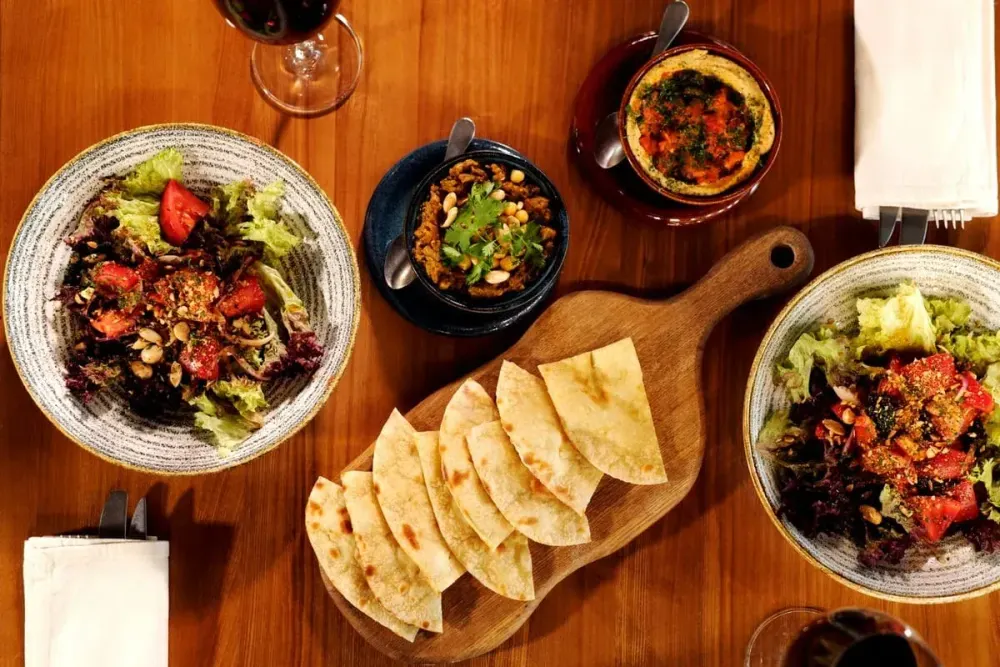
Savor Mediterranean covers Greece, Italy, Turkey, Morocco, and the Levant — the five Mediterranean food cultures that have the most developed and consistent ancestral fat traditions. Olive oil for dressings and low-heat cooking. Butter for northern Italian and French-influenced dishes. Ghee where the trade routes brought Indian influence. Every recipe is seed oil free by design and by historical accuracy.
What's Inside
Savor Mediterranean covers 20 Mediterranean recipes in olive oil and butter. Every recipe is built on butter, ghee, tallow, lard, coconut oil, or olive oil. No seed oils anywhere in the book.
Standout Recipes
- Moroccan Lamb Tagine with preserved lemon and olives
- Greek Lamb Kleftiko — slow-roasted in parchment
- Cacio e Pepe — the Roman pasta in butter
- Garlic Brown Butter Shrimp
- Turkish Stuffed Vegetables in Olive Oil
- Levantine Mezze Dishes in Olive Oil
Who It's For
Anyone who loves Mediterranean food. Anyone following a Mediterranean-style eating pattern who wants it truly seed oil free. Anyone who wants the definitive seed oil free take on the world's most studied healthy diet.
What countries are covered in Savor Mediterranean?
Greece, Italy, Turkey, Morocco, Lebanon, and other Mediterranean countries.
Are there fish and seafood recipes?
Yes — the Mediterranean diet is strong in seafood. Multiple recipes feature fish, shrimp, and other seafood cooked in olive oil and butter.
Is it suitable for vegetarians?
Many recipes are vegetarian. The Mediterranean tradition includes a strong plant-forward element.
Follow Savannah: @theefoodiekitchen · Facebook · All Links
Inside Savor Mediterranean — What the Book Covers
Mediterranean cuisine is both the most studied and the most misrepresented food culture in modern nutritional science. The Mediterranean diet as described in academic literature is not quite the same thing as how people actually eat across the Mediterranean basin. Real Mediterranean cooking — in Greek villages, Moroccan medinas, southern Italian farmhouses, and Lebanese homes — uses olive oil as one fat among several, not as the exclusive fat for all applications. Butter appears throughout French Provençal cooking. Lamb tallow is used in Greek and Turkish pilaf. Lard appears in Spanish empanadas and Italian lardo preparations. Smen — fermented clarified butter — is a staple flavoring across Morocco and Algeria.
Savor Mediterranean covers 20 recipes from across the basin's major food cultures. The selection spans southern French (Provençal chicken braised in olive oil and white wine), Italian (Osso Buco finished with butter gremolata, Ribollita in extra virgin olive oil), Greek (Lamb Kleftiko slow-roasted in butter and parchment), Moroccan (Bastilla in butter filo, Harira soup in olive oil), Turkish (Advieh rice pilaf in ghee, Çılbır poached eggs in brown butter), and Lebanese (Shakshuka in olive oil and butter).
The Fat Philosophy Behind This Collection
Each recipe uses the fat that belongs in it by regional tradition and cooking chemistry — not a single "Mediterranean" fat applied universally. Olive oil goes where olive oil belongs: raw dressings, low-heat vegetables, finishing. Butter and tallow go where high heat or richness is needed. The book explains the choice explicitly in each recipe introduction, so the reader understands not just what to use but why a particular fat produces a particular result. This is the difference between following a recipe and understanding a cuisine.
African, Hawaiian, Indian, Mediterranean, Asian, Exotic, Chicken, Rice, Cookies, Coffee, Spices, Plants, World Cuisine, 30-Minute Dinners and more.
View All 23 Books on Amazon →