As an Amazon Associate I earn from qualifying purchases. Affiliate disclosure.
At a glance: Miso Soup in Dashi Broth — The Japanese Daily Medicinal: serves 4, cooked in butter, with no seed oils.
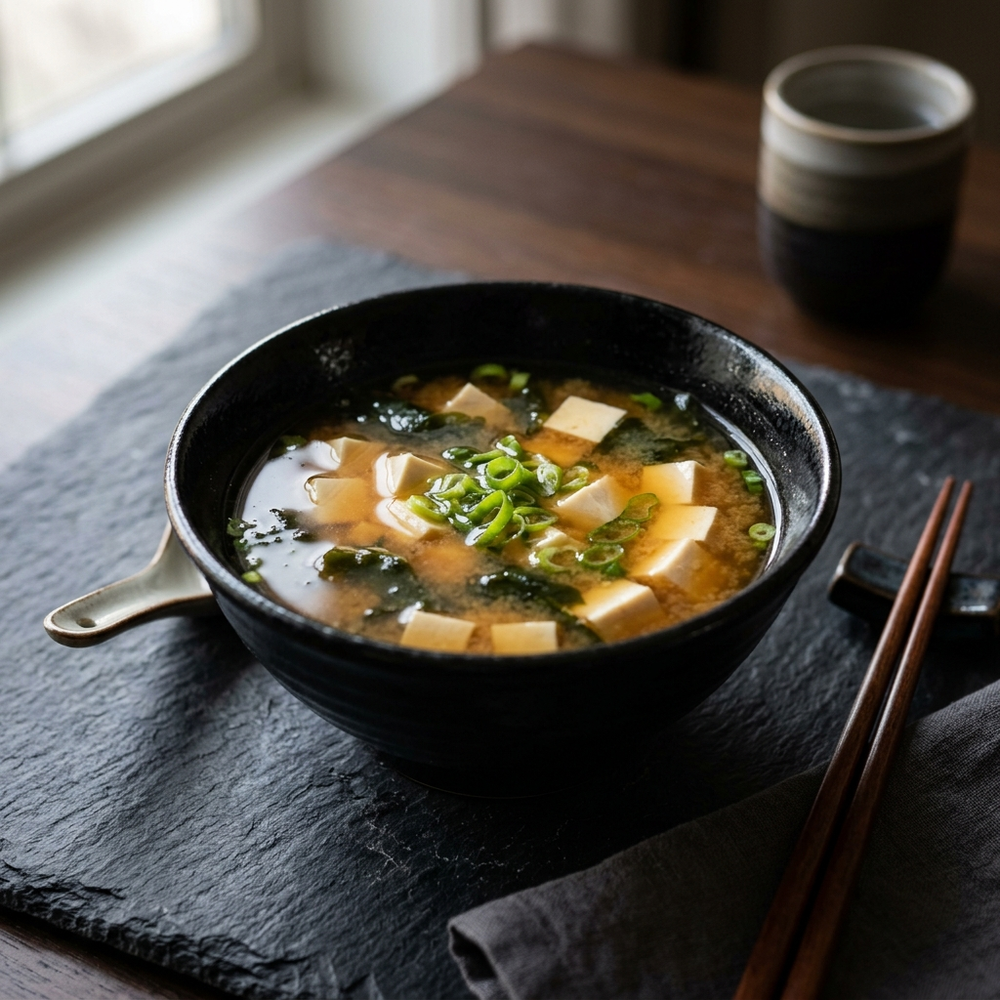
Miso soup is the Japanese equivalent of the daily vitamin. It is consumed at breakfast, lunch, and dinner across Japan — not as a special health food but as an unremarkable daily staple. Miso is traditionally eaten in small amounts every day rather than in large servings.
Miso Soup — Recipe
Serves: 4 · Prep: 10 min · Cook: 10 min
Ingredients
- 4 cups dashi stock (kombu + bonito) or chicken bone broth
- 3 tbsp white or red miso paste
- 150g firm silken tofu, cubed
- 10g dried wakame seaweed, rehydrated
- 2 green onions, thinly sliced
- 1 tsp butter (finishing)
Method
- Heat the dashi or bone broth to just below a simmer (80–85°C / 175–85°F). Do not boil.
- Place miso paste in a small bowl. Ladle 2–3 tablespoons of hot broth over the miso and whisk until completely dissolved. This prevents lumps.
- Pour the dissolved miso back into the broth. Stir gently to combine. The broth should now be savoury and slightly cloudy.
- Add tofu cubes and rehydrated wakame. Warm gently for 2 minutes. Do not boil at any point after the miso is added.
- Ladle into bowls. Top with sliced green onion and a small knob of butter.
- Serve immediately — miso soup does not hold well as the probiotics degrade with continued heat.
Japanese, Korean, Chinese, and Thai recipes in ancestral fats.
This page contains affiliate links. As an Amazon Associate I earn from qualifying purchases. Affiliate disclosure.
See the book on Amazon →Does miso soup have seed oils?
Traditional miso soup contains no seed oils. Miso paste is made from fermented soybeans, salt, and koji mould — no added oils. Dashi stock is just kombu and dried fish. This recipe contains no seed oils; the teaspoon of butter is stirred in at the end to finish.
Can I use bone broth instead of dashi?
Yes. Chicken bone broth makes an excellent base for miso soup and adds more protein and collagen than dashi. The flavour profile shifts slightly — less oceanic, more savoury — but the medicinal properties of the miso are unchanged.
Why shouldn’t you boil miso?
Boiling destroys the live probiotic cultures (Aspergillus oryzae and lactic acid bacteria) in unpasteurised miso. Always add miso to liquid that is below a simmer (below 85°C/185°F) and never reheat miso soup to boiling.
All links: linktr.ee/theefoodiekitchen · Instagram: @theefoodiekitchen
Find more in: Asian recipes · Dinner & Main Dishes recipes · Butter recipes · All recipes
African, Hawaiian, Indian, Mediterranean, Asian, Exotic, Chicken, Rice, Cookies, Coffee, Spices, Plants, World Cuisine, 30-Minute Dinners and more.
View All Books on Amazon →