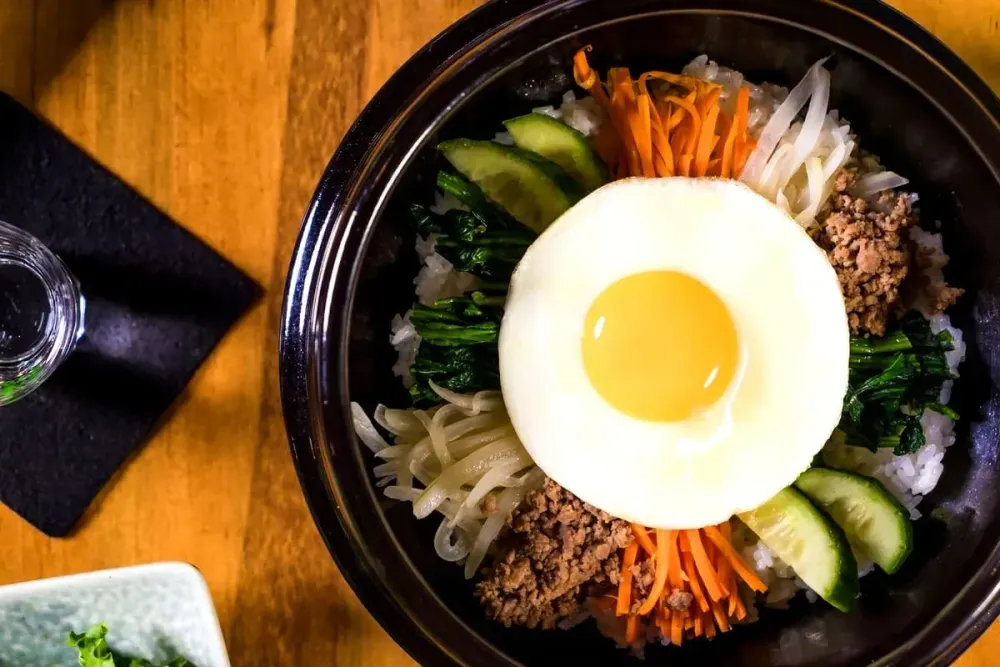
Bibimbap — 'mixed rice' in Korean — is one of the most complete and satisfying meals in any cuisine. A bed of steamed rice in a hot stone bowl (dolsot) with individually prepared vegetables, sliced marinated beef (often bulgogi), a runny-yolked fried egg, and a spoonful of gochujang (Korean chilli paste), all mixed together at the table. The hot stone bowl creates a crispy rice crust at the bottom — nurungji — that is the most prized part of the dish. A cast iron pan with tallow achieves the same crust at home.
The Nurungji — Crispy Rice Bottom
The crispy rice crust that forms in the dolsot bibimbap bowl is achieved by heating the cooked rice in the vessel with a film of fat on the base. The moisture in the rice evaporates at the hot surface and the starch caramelises into a golden, crunchy crust. In a cast iron pan with tallow, this takes 5-7 minutes over medium-high heat. The nurungji adds a toasted, slightly nutty layer to the bibimbap that is worth pursuing.
Serves 2 · Prep 40 min · Cook 20 min
Ingredients
- 300g cooked short-grain rice (warm)
- Toppings: 150g beef sirloin sliced thin (marinated in soy, garlic, sesame), 1 carrot julienned, 100g spinach blanched, 100g bean sprouts blanched, 100g shiitake mushrooms, 2 eggs
- Seasoning per vegetable: soy sauce, sesame oil, garlic, toasted sesame seeds
- 2 tbsp tallow
- Gochujang sauce: 3 tbsp gochujang, 1 tbsp sesame oil, 1 tsp honey, 1 tsp rice vinegar
Method
- Season each vegetable separately: carrot and spinach with garlic, sesame oil, soy, sesame seeds. Do not mix.
- Sauté mushrooms in tallow. Season with soy and sesame.
- Sear marinated beef in tallow over high heat 2 min. Set aside.
- Heat cast iron pan over high heat. Add tallow. Add warm rice. Press flat.
- Cook 5-7 minutes without stirring until a crust forms on the base.
- Fry eggs sunny side up in tallow in a separate pan.
- Top the rice with arranged vegetables, beef, and egg.
- Serve with gochujang sauce. Mix at the table.
What is gochujang?
Korean fermented chilli paste — thick, slightly sweet, deeply savoury, and moderately hot. Available at all Asian grocery stores. Central to Korean cooking. Sriracha is a poor substitute — gochujang has a completely different fermented depth.
Can I make bibimbap vegetarian?
Yes — skip the beef and add more vegetables. Tofu sautéed in tallow with gochujang is an excellent substitute.
What vegetables are traditional?
Spinach, bean sprouts, carrots, zucchini, mushrooms, radish, and bellflower root (doraji) are common. The rule is variety of colour and texture, not any specific vegetables.
Related guides: Vegetable Oil Substitute Guide · Cooking With Beef Tallow
📌 Follow on Pinterest: Asian Seed Oil Free Recipes on Pinterest
Follow Savannah: @theefoodiekitchen · Facebook · All Links
African, Hawaiian, Indian, Mediterranean, Asian, Exotic, Chicken, Rice, Cookies, Coffee, Spices, Plants, World Cuisine, 30-Minute Dinners and more.
View All 23 Books on Amazon →