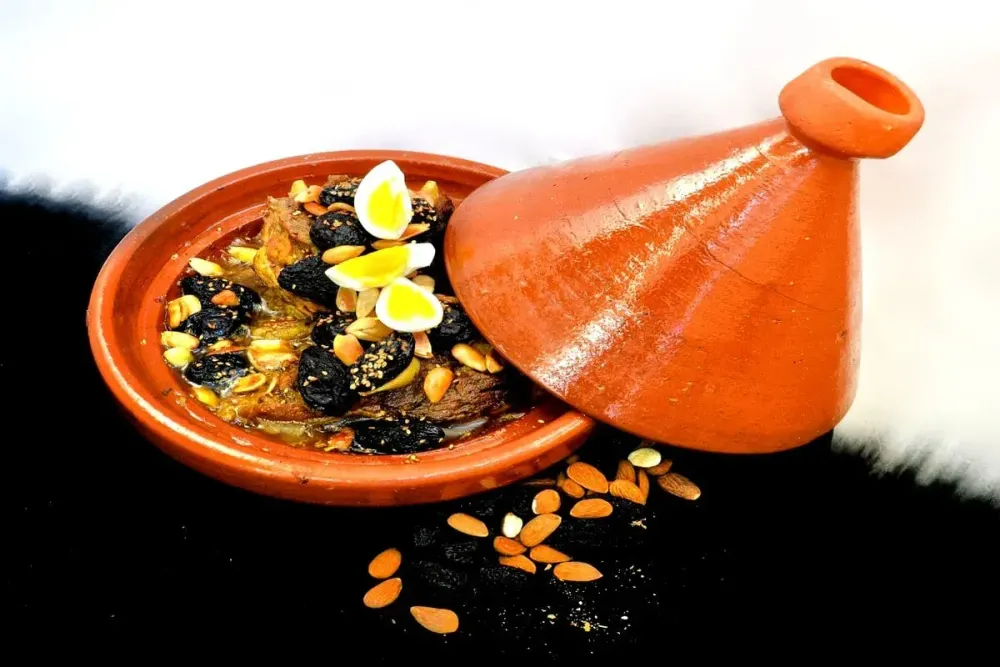
The tagine question comes up every time someone reads a Moroccan lamb tagine recipe: do I actually need a tagine pot, or can I use my Dutch oven? The honest answer is that a Dutch oven produces an excellent result and a genuine tagine produces a different — and for certain dishes, distinctly better — one. The conical lid is not decorative. It creates a specific steam circulation pattern that bastes ingredients from above without requiring any liquid in the pot. This produces a different texture in slow-cooked vegetables and a more concentrated sauce.
What a Tagine Does Differently
The conical lid of a tagine channels steam upward, where it condenses on the cooler upper surfaces, then runs back down the sides onto the ingredients. This creates a continuous, self-basting cycle. The result is slower, more even cooking with less liquid loss than a Dutch oven. Moroccan recipes cooked in a tagine often use no added liquid at all — the condensation from the vegetables themselves is sufficient. The same recipe in a Dutch oven requires added stock or water.
When to Use Each
Use an actual tagine for: Moroccan lamb tagine (the flagship dish), chicken tagine with preserved lemon and olives, bastilla (the pastry needs the even heat), vegetable tagines where no liquid is added. Use a Dutch oven for: harira (a soup, not a tagine), bastilla (it works), any recipe where you need to sear before braising (most tagines do not require searing).
The Clay vs Ceramic Question
Traditional Moroccan tagines are unglazed clay — porous, absorbent, imparting a subtle earthiness to the food. They must be soaked in water before first use, cannot be used on induction, and crack if subjected to thermal shock. Emile Henry and Le Creuset are glazed ceramic — dishwasher safe, induction compatible, and without the seasoning requirement. For home cooks outside Morocco, glazed ceramic is the practical choice.
Can I use a tagine on an induction hob?
Only glazed ceramic tagines (Emile Henry, Le Creuset) work on induction. Traditional clay and unglazed ceramic do not.
How do I clean a tagine?
Hand wash with warm water and a soft brush. No soap on unglazed clay (it absorbs soap). Glazed ceramic tagines can go in the dishwasher.
Is bastilla better in a tagine?
The oven-baked version of bastilla uses a regular baking dish or oven-safe pan. The tagine is not required for bastilla — a Dutch oven or oven dish works perfectly.
Follow Savannah: @theefoodiekitchen · Facebook · All Links
African, Hawaiian, Indian, Mediterranean, Asian, Exotic, Chicken, Rice, Cookies, Coffee, Spices, Plants, World Cuisine, 30-Minute Dinners and more.
View All 23 Books on Amazon →