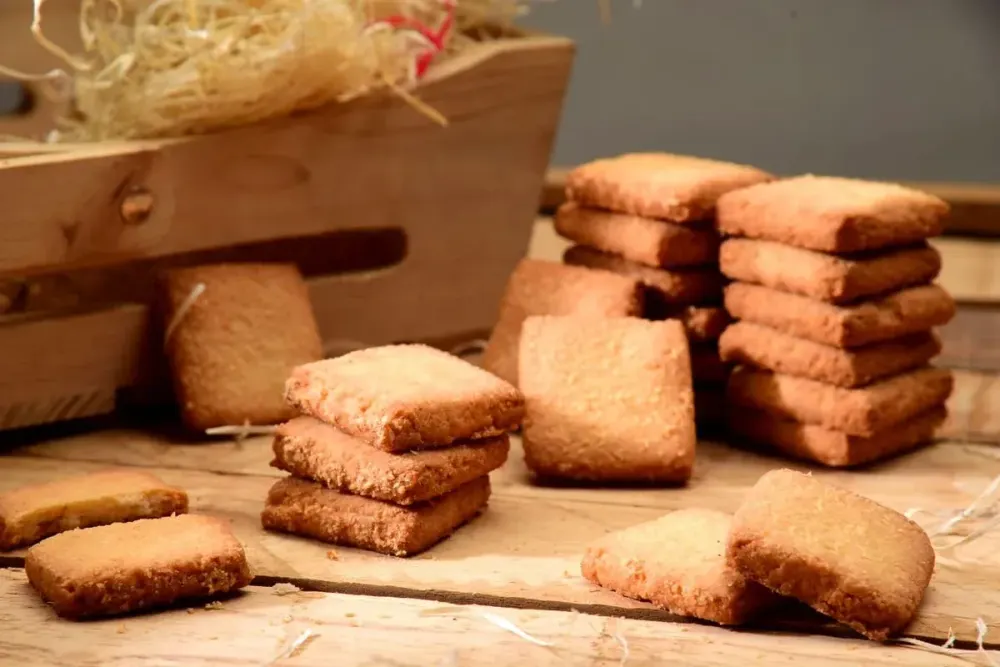
Scottish shortbread has three ingredients — butter, flour, sugar — and the quality of the butter is the only variable that matters. There is nowhere to hide in a recipe this simple. A shortbread made with 84% fat European-style butter from grass-fed cows is a completely different thing from one made with standard 80% fat butter, and both are incomparably better than anything made with vegetable shortening. This is the clearest argument for ancestral fats in baking: the recipe has not changed in 500 years because nothing needs to be added.
Why Shortbread Works
Shortbread is a crumbly, sandy-textured biscuit because butter coats the flour particles before any water can form gluten. Standard pastry and bread develop gluten because water is present during mixing — the water allows gluten proteins to link together into stretchy networks. Butter prevents this by coating the flour first. The result is a dough with almost no gluten development, which produces the characteristic crumbly, melt-in-the-mouth texture. This is also why using oil in shortbread does not work — oil coats more completely and produces a greasy, flavourless result.
The Three Ratios
Classic shortbread follows a simple ratio by weight: 3 parts flour, 2 parts butter, 1 part sugar. Different styles of shortbread adjust this slightly — Petticoat Tails (the round, scored version) use rice flour in addition to plain flour for extra crunch. Fingers use plain flour only. Rounds can use either. All three versions use the same 3:2:1 foundation.
Makes 20 fingers · Prep 15 min + chill · Cook 20 min
Ingredients
- 225g unsalted butter, at room temperature (European-style 84% fat if possible)
- 110g caster sugar, plus extra for sprinkling
- 225g all-purpose flour
- 110g rice flour (or substitute with additional plain flour)
- Pinch of fine salt
Method
- Beat butter and sugar together until pale and fluffy, about 3 minutes.
- Sift in both flours and salt. Mix until the dough just comes together — do not overwork.
- Press into a lined square tin (20x20cm) to a depth of about 1cm, or roll out and cut into fingers.
- Refrigerate for 30 minutes.
- Preheat oven to 160°C. Prick the surface all over with a fork.
- Bake 18-22 minutes until very pale golden at the edges. The centre should still look pale — shortbread should not colour deeply.
- Sprinkle with caster sugar immediately from the oven. Score into fingers while warm. Cool completely before breaking.
Temperature and Texture
Shortbread should be eaten at room temperature, not warm from the oven. Warm shortbread is soft and crumbly in an unpleasant way. Cool shortbread has the characteristic sandy, snapping texture that melts on the tongue. The low baking temperature (160°C vs the 180-200°C of most biscuits) prevents browning and keeps the texture pale and delicate. High heat produces a tougher, browner biscuit that misses the point.
Why does my shortbread spread and lose its shape?
The butter was too warm or too much butter relative to flour. Ensure the butter is properly at room temperature (cool, not greasy) and chill the shaped dough before baking.
Can I flavour shortbread?
Yes — lavender, lemon zest, vanilla, rosemary, or cardamom all work. Add to the butter and sugar at the beginning. Keep flavours subtle — shortbread is delicate and strong flavours can overwhelm it.
How long does shortbread keep?
In an airtight tin at room temperature for 2-3 weeks. It improves slightly over the first few days as the texture firms up.
📌 Follow on Pinterest: Seed Oil Free Cookies & Sweets on Pinterest
Also see: Seed Oil Free Desserts
Follow Savannah: @theefoodiekitchen · Facebook · All Links
African, Hawaiian, Indian, Mediterranean, Asian, Exotic, Chicken, Rice, Cookies, Coffee, Spices, Plants, World Cuisine, 30-Minute Dinners and more.
View All 23 Books on Amazon →