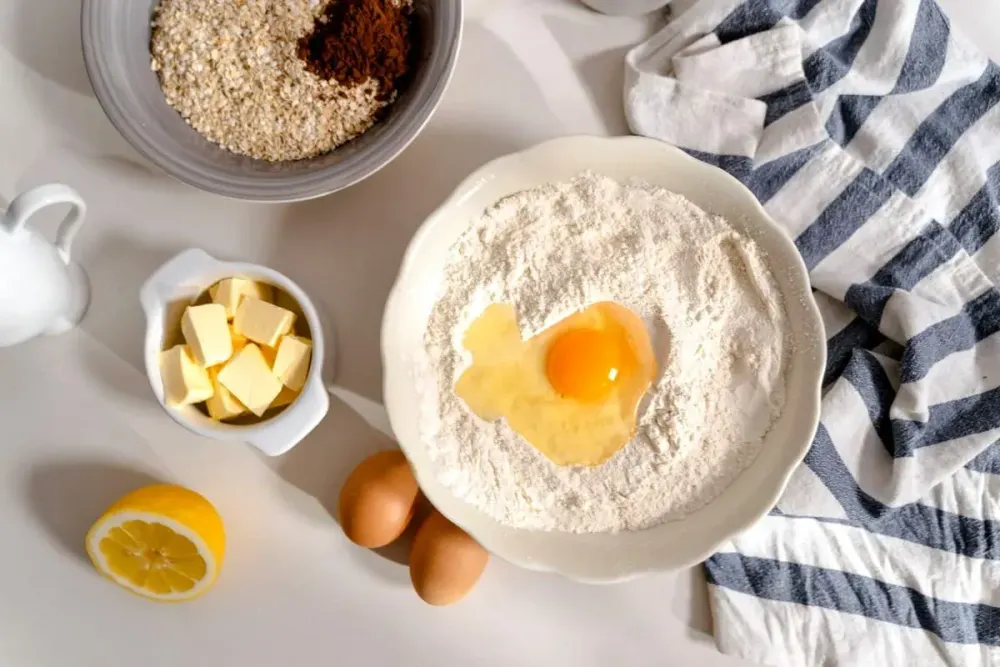
Seed oil free baking is simpler than most people expect because most great baking — before the industrial food system replaced butter with vegetable shortening in the mid-20th century — was always made with real fat. Scottish shortbread, French sablés, Italian biscotti, German Lebkuchen, British scones — every one of these was built on butter, lard, or olive oil, not vegetable oil. Removing seed oils from baking is not an adaptation: it is a restoration.
Using Butter as the Substitute — Baking Ratios
When a recipe calls for vegetable oil, canola oil, or any seed oil, here is the exact ratio for each ancestral fat substitute:
| If Recipe Calls For | Use Butter | Use Coconut Oil | Use Ghee |
|---|---|---|---|
| 1 cup vegetable oil | ¾ cup melted | 1 cup (1:1) | ¾ cup melted |
| ½ cup vegetable oil | 6 tbsp melted | ½ cup (1:1) | 6 tbsp melted |
| ¼ cup vegetable oil | 3 tbsp melted | ¼ cup (1:1) | 3 tbsp melted |
| 1 tbsp vegetable oil | ¾ tbsp melted | 1 tbsp (1:1) | ¾ tbsp melted |
Note: Butter and ghee use a ¾ ratio (not 1:1) because they have a higher water content than pure oil. Coconut oil is pure fat like vegetable oil, so it substitutes 1:1.
The Four Ancestral Baking Fats
Specific Substitutions
| Recipe calls for | Replace with | Ratio | Notes |
|---|---|---|---|
| Vegetable oil (in muffins, cakes) | Melted butter | 1:1 | Richer result, slightly denser crumb |
| Vegetable shortening (Crisco) | Butter or lard | 1:1 | Lard produces flakier pastry; butter produces richer flavour |
| Canola oil (in boxed cake mix) | Melted coconut oil or butter | 1:1 | Coconut oil for moist, neutral result |
| Margarine (cookies, pastry) | Butter | 1:1 | No adjustment needed; result strictly better |
| Vegetable oil (in bread) | Olive oil or melted butter | 1:1 | Olive oil for Mediterranean breads; butter for enriched breads |
| Non-stick cooking spray | Butter (rubbed on pan) or tallow | Enough to coat | Butter prevents sticking as well as spray for all baked goods |
The One Thing That Changes
The only consistent change when replacing vegetable oil with butter in recipes that were designed for oil is that the finished product is slightly denser and richer. Vegetable oil is 100% fat; butter is 80% fat and 16-18% water. The water in butter creates steam during baking which contributes to rise. If you want to maintain the light crumb of an oil-based muffin when switching to butter, add 1 tablespoon of extra liquid (milk or water) per 100g of butter to compensate for the water the oil provided.
Will my baking taste different without seed oils?
Better. Butter, lard, and coconut oil all have more complex, more pleasant flavours than the vegetable oils they replace. The difference is most obvious in shortbread and pastry.
Can I use ghee in baking?
Yes — ghee is 100% fat (no water like butter), which produces a slightly crispier, more flavourful result in cookies and shortbread. Reduce quantity by 20% compared to butter.
What about baking powder and baking soda — do those change?
No — neither the leavening agents nor the flour quantities change when switching fats.
Related guides: Vegetable Oil Substitute Guide · Seed Oil Free Margarine · Is Butter a Seed Oil?
📌 Follow on Pinterest: Seed Oil Free Cookies & Sweets on Pinterest
Also see: Seed Oil Free Desserts
Follow Savannah: @theefoodiekitchen · Facebook · All Links
African, Hawaiian, Indian, Mediterranean, Asian, Exotic, Chicken, Rice, Cookies, Coffee, Spices, Plants, World Cuisine, 30-Minute Dinners and more.
View All 23 Books on Amazon →