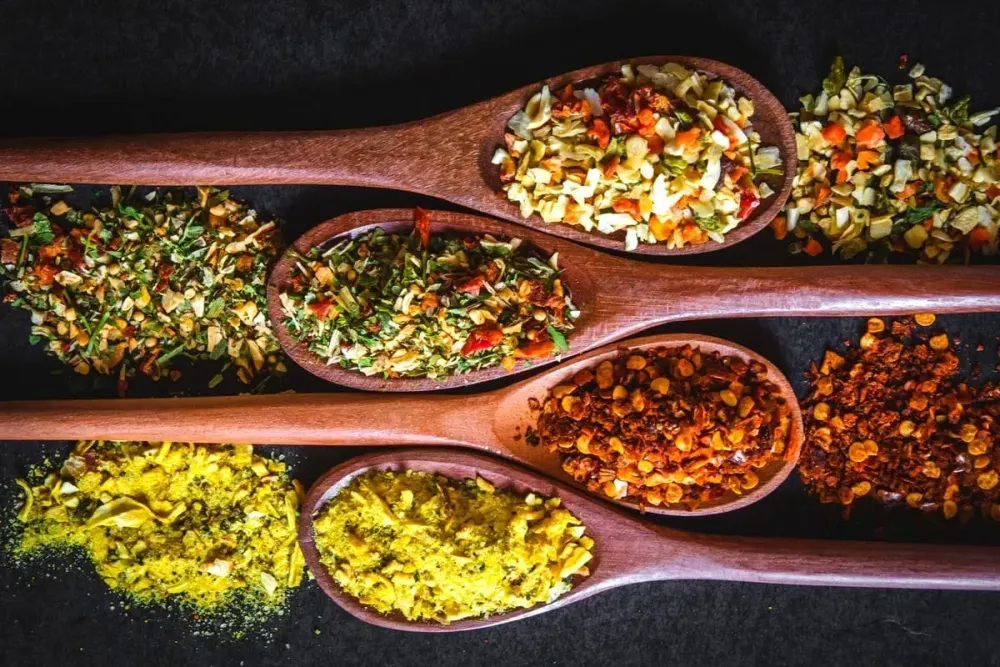
Berbere is to Ethiopian cooking what garam masala is to Indian cooking — the complex spice blend without which the cuisine does not taste like itself. It is built on a foundation of dried red chillies (usually a combination of bird's eye and milder varieties), with layers of cardamom, black cumin (nigella), fenugreek, ginger, coriander, rue, korarima (Ethiopian cardamom), cinnamon, allspice, and black pepper. The result is hot, complex, slightly sweet, and unmistakably Ethiopian.
Berbere vs Mitmita
Berbere and mitmita are both Ethiopian spice blends but serve different purposes. Berbere is used in cooked dishes — doro wat, misir wot, berbere chicken — as a base spice that cooks in niter kibbeh for several minutes. Mitmita is a finishing spice applied after cooking — dusted on kitfo, sprinkled on ful (fava bean stew), used at the table like chilli flakes. Mitmita is hotter, more cardamom-forward, and never cooked.
How to Use Berbere
Berbere must be cooked in fat before other ingredients are added — this is the technique that activates its aromatic compounds. Add 2 tablespoons of berbere to hot niter kibbeh and stir for 3 minutes before adding any liquid. The berbere will darken slightly and the kitchen will fill with a complex, warm, slightly hot aroma. This 3-minute cook in fat is what distinguishes a properly made Ethiopian stew from one where the spices taste raw.
Making Berbere From Scratch
If commercial berbere is unavailable: combine 4 dried red chillies (seeded), 1 tsp cardamom pods, 1 tsp coriander seeds, 1/2 tsp fenugreek seeds, 1/2 tsp black pepper, 1/4 tsp allspice, 1/4 tsp cinnamon, pinch of clove. Toast lightly in a dry pan. Grind to a powder. This produces a simplified but functional berbere.
How hot is berbere?
Moderately hot — hotter than paprika, milder than cayenne. The heat level varies by brand and recipe. Start with 1 tablespoon and taste.
Can I substitute berbere with something I already have?
Not directly — berbere's character comes from the korarima and rue combination that no Western spice blend replicates. A mixture of paprika, cayenne, cardamom, and cumin approximates the flavour but is not berbere.
Does berbere expire?
Ground berbere loses potency after 6-9 months. Buy in small quantities and store in an airtight container away from light and heat.
📌 Follow on Pinterest: Global Spice Guides on Pinterest
Follow Savannah: @theefoodiekitchen · Facebook · All Links
How to Cook With Berbere
Always bloom berbere in fat before adding liquid. Add to hot niter kibbeh or coconut oil and stir for 60-90 seconds over medium heat until fragrant and the oil darkens slightly. The fat-soluble compounds in dried chillies, korarima, and fenugreek release into the fat and distribute evenly through the stew.
- Ethiopian stews (wat): 2-4 tablespoons per batch as the primary spice base, bloomed in niter kibbeh
- Spice rub for grilled meat: 1 tbsp plus salt and olive oil as a dry rub for lamb or chicken — berbere compounds caramelise on the meat surface during grilling
Storage
Store in an airtight jar away from light — keeps 6-12 months. The dried chilli component loses potency fastest. Make or buy small quantities and replace every 6 months for maximum flavour.
Substitutions
No direct substitute exists. Closest approximation: equal parts cumin and coriander, twice the amount of paprika, and a pinch each of cinnamon, cloves, cardamom, and cayenne.
African, Hawaiian, Indian, Mediterranean, Asian, Exotic, Chicken, Rice, Cookies, Coffee, Spices, Plants, World Cuisine, 30-Minute Dinners and more.
View All 23 Books on Amazon →