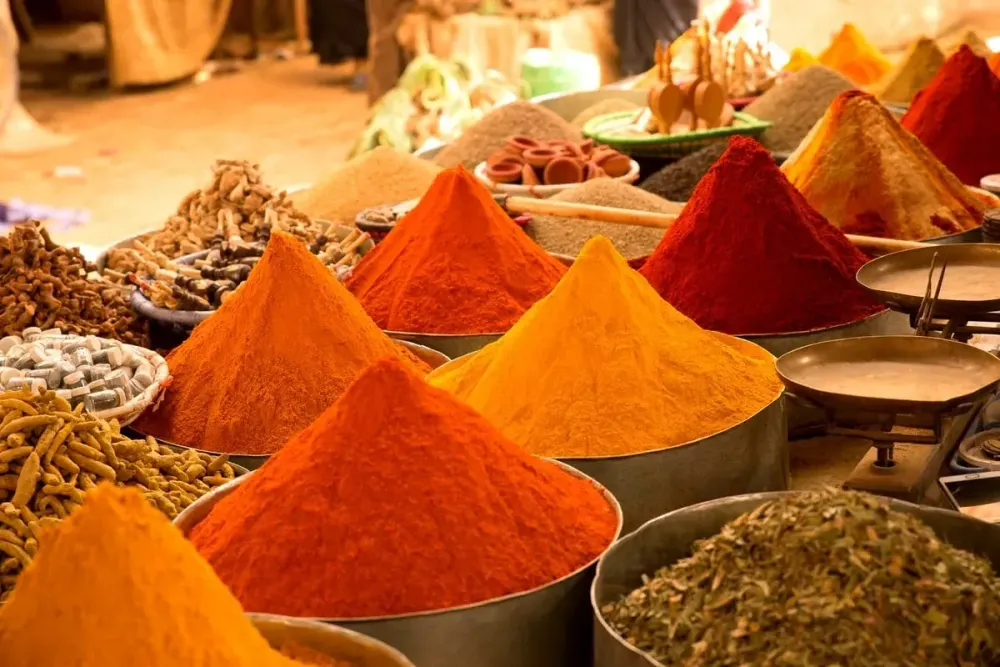
African spice traditions are some of the most complex and regionally specific in the world. West African suya spice, North African ras el hanout and harissa, East African berbere and mitmita — each spice blend developed in a specific climate, culture, and culinary tradition, and each is designed to be bloomed in a specific ancestral fat.
West African Spices
Suya spice — the dry rub of northern Nigeria and the Sahel — is built on ground peanuts, paprika, ginger, garlic, and dried chilli. It is applied to skewered beef that is grilled over charcoal and served with sliced onion and tomato. The fat carrier is groundnut oil or tallow. Grains of Selim (hwentia) adds a woody, pepper-like depth to many West African dishes. Uziza leaves, fermented locust bean (iru/dawadawa), and ogiri (fermented sesame paste) are the umami-rich seasonings that give West African stews their depth.
North African Spices
Ras el hanout — 'head of the shop' in Arabic — is the signature Moroccan and North African spice blend, containing up to 35 individual spices. Standard components include cardamom, nutmeg, cinnamon, turmeric, ginger, rose petals, and Grains of Paradise. It is bloomed in olive oil and butter at the start of tagines and couscous preparations. Harissa — the Tunisian and Libyan chilli paste — is made from dried red chillies, caraway, coriander, garlic, and olive oil. Both represent North Africa's position at the intersection of Sub-Saharan African, Middle Eastern, and Mediterranean trade routes.
East African Spices
Berbere — the Ethiopian and Eritrean spice blend — combines fenugreek, coriander, korarima (Ethiopian cardamom), rue, ajwain, long pepper, cinnamon, clove, and dried chilli. It is the base flavour of Ethiopian wot (stew) and is always bloomed in niter kibbeh — spiced clarified butter. The fat is inseparable from the spice in Ethiopian cooking.
How Fat Activates Spice
Every spice tradition in Africa blooms its key spices in fat before other ingredients are added. This is not tradition for tradition's sake — the aromatic compounds in spices are fat-soluble, not water-soluble. A spice added to water or a water-based sauce releases only a fraction of its flavour potential. The same spice bloomed in hot ghee, tallow, or palm oil releases almost all of its aromatic compounds in 30-60 seconds. The fat is the mechanism by which spice becomes flavour.
Where to buy African spices?
African grocery stores carry most West and East African spices. Online retailers specialising in African and international ingredients stock ras el hanout, berbere, suya spice, and grains of Selim.
Can I make these spice blends at home?
Yes — whole spice blends ground fresh are significantly better than pre-ground versions. Toast whole spices in a dry pan before grinding.
What fat should I use with each?
West African: groundnut oil, red palm oil, or tallow. North African: olive oil and butter. East African: niter kibbeh (spiced clarified butter).
Related guides: West African Cooking Fats Guide
📌 Follow on Pinterest: Global Spice Guides on Pinterest
📌 Follow on Pinterest: African Seed Oil Free Recipes on Pinterest
Follow Savannah: @theefoodiekitchen · Facebook · All Links
African, Hawaiian, Indian, Mediterranean, Asian, Exotic, Chicken, Rice, Cookies, Coffee, Spices, Plants, World Cuisine, 30-Minute Dinners and more.
View All 23 Books on Amazon →