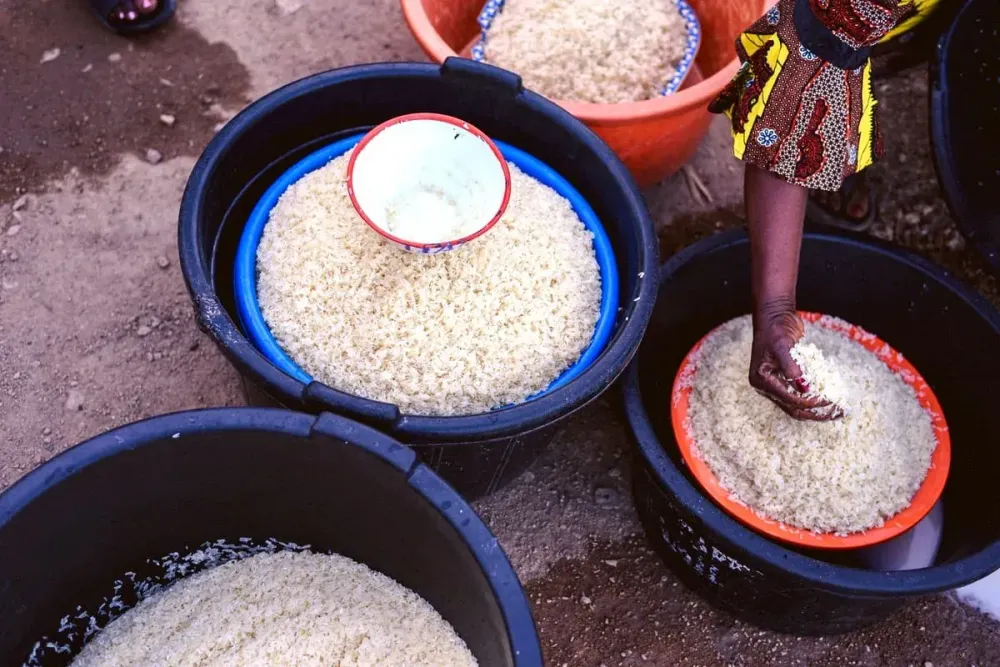
Nigerian jollof rice is the dish at the centre of West Africa's most passionate food debate. Nigeria and Ghana both claim the definitive version. The Nigerian camp argues that their party jollof — cooked over firewood, developing a smoky bottom — is without peer. The Ghanaian camp counters that their version is more nuanced and less smoky. What is not disputed is the cooking method: long reduction of tomato and pepper sauce in fat, rice slow-cooked in that sauce until it develops the characteristic charred bottom. This version uses ghee.
Nigerian vs Ghanaian Jollof
The differences are genuine but subtle. Nigerian jollof typically uses long-grain parboiled rice and tomato paste in the base sauce. Ghanaian jollof uses basmati or long-grain rice and is often less intensely tomato-forward. Nigerian party jollof is cooked over high heat at the end to develop the smoky bottom — the 'party jollof' quality. Ghanaian jollof is generally cooked to a more uniform result. Both are excellent. This recipe is the Nigerian version.
Building the Tomato Base
The foundation of all jollof rice is the tomato and pepper sauce — blended Roma tomatoes, red bell peppers, scotch bonnet, and onion, cooked down in fat for 20-30 minutes until the raw tomato taste is gone and the sauce is thick, fragrant, and the fat is beginning to separate at the edges. This reduction cannot be rushed. Undercooked tomato base produces a raw, acidic rice. Properly cooked base produces the deep, sweet-savoury flavour that defines the dish.
Serves 6 · Prep 20 min · Cook 55 min
Ingredients
- 600g parboiled long-grain rice
- 500g Roma tomatoes
- 3 red bell peppers
- 2 scotch bonnet peppers
- 2 large onions (1 for blending, 1 sliced)
- 5 tbsp ghee or red palm oil
- 3 tbsp tomato paste
- 600ml chicken stock
- 1 tsp thyme
- 1 tsp curry powder
- 2 bay leaves
- Salt to taste
Method
- Blend tomatoes, red peppers, scotch bonnet, and one onion until smooth.
- Heat ghee in a large heavy pot. Fry sliced onion 5 minutes until golden.
- Add blended tomato mixture. Cook 20-25 minutes over medium heat, stirring regularly, until thick and dark and the raw smell has gone.
- Add tomato paste, thyme, curry powder, and salt. Cook 5 more minutes.
- Add stock. Bring to a simmer. Taste for seasoning.
- Rinse rice and add to the pot. The liquid should just cover the rice.
- Stir once. Cover tightly. Cook on lowest heat 25-30 minutes.
- Check at 20 minutes. Add a splash of water if catching. For party jollof: increase heat briefly at the end until you hear a dry crackling from the bottom.
- Rest covered 10 minutes before serving.
Party Jollof — The Smoky Bottom
The celebrated smoky bottom of party jollof — cooked traditionally over firewood at outdoor celebrations — is achieved at home by briefly increasing the heat at the end of cooking until the rice at the bottom of the pot starts to dry and char lightly. Listen for the sound to change from simmering to a dry crackle. Remove from heat immediately. The charred bottom is scraped up and served as a crispy treat — the most prized part of the pot.
What makes Nigerian jollof different from others?
The parboiled long-grain rice, the intensity of the tomato reduction, and the characteristic smoky bottom from the high-heat finish. Tomato paste in the base is also more common in Nigerian than Ghanaian versions.
Can I use regular long-grain rice instead of parboiled?
Yes, but reduce cooking liquid slightly and watch the texture — regular rice can become mushy if overcooked. Parboiled rice holds its shape better.
What to serve with jollof rice?
Fried plantain, moi moi (steamed bean pudding), coleslaw, fried chicken, and beef suya are the standard accompaniments for a Nigerian celebration spread.
📌 Follow on Pinterest: African Seed Oil Free Recipes on Pinterest
Follow Savannah: @theefoodiekitchen · Facebook · All Links
African, Hawaiian, Indian, Mediterranean, Asian, Exotic, Chicken, Rice, Cookies, Coffee, Spices, Plants, World Cuisine, 30-Minute Dinners and more.
View All 23 Books on Amazon →