
As an Amazon Associate I earn from qualifying purchases. Affiliate disclosure.
Butter is 80% fat, 16–18% water, and 2–3% milk solids (primarily lactose and milk proteins). When you heat butter, the water evaporates first (which causes the sputtering), and then the milk solids begin to brown and eventually burn. This browning is the process that gives beurre noisette (brown butter) its flavour — and it is also what limits whole butter's use at high heat.
The milk solids burn at approximately 300–350°F depending on the butter. At temperatures above this, butter will smoke and develop an acrid, burned flavour. This makes it unsuitable for deep frying (which requires oil at 350°F), searing at high heat, or any cooking method that pushes past medium-high on a typical gas burner.
Clarified Butter (Ghee) Solves the Smoke Point Problem
Clarifying butter removes the water and milk solids, leaving behind pure butterfat. This pure fat is what we call ghee or clarified butter. Without the milk solids, the smoke point rises to approximately 485°F — higher than most seed oils and suitable for all frying applications including deep frying and wok cooking.
| Fat | Smoke Point | Best For |
|---|---|---|
| Ghee (clarified butter) | 485°F | All frying, high-heat sauté |
| Beef tallow | 420°F | Deep frying, roasting, searing |
| Lard | 375°F | Frying, sautéing, pan frying |
| Whole butter | 300–350°F | Sautéing, basting, finishing |
When to Use Whole Butter for Frying
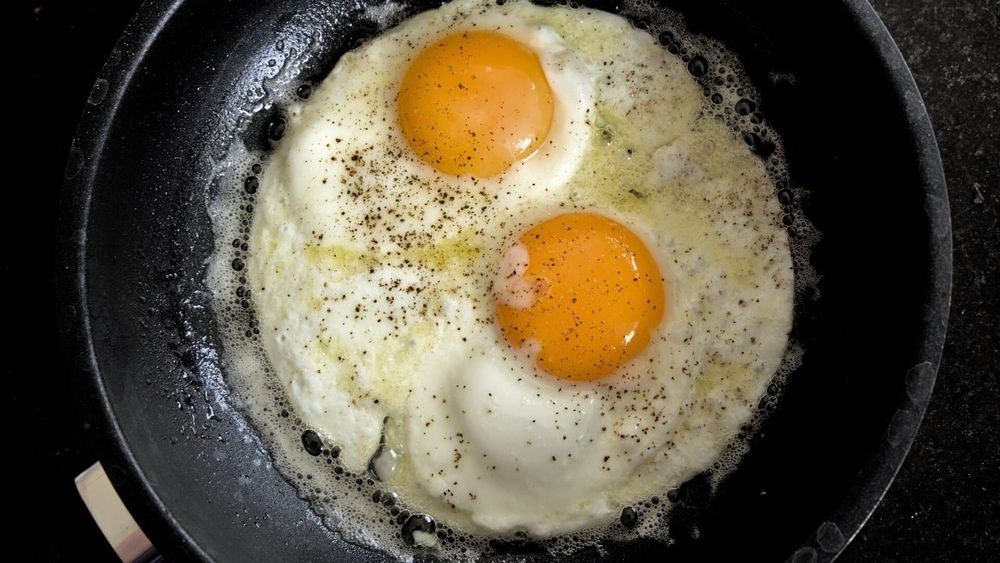
Whole butter works well for sautéing vegetables, pan-frying eggs at medium heat, and making pan sauces. The milk solids that limit its smoke point also contribute flavour — the slight nutty, dairy note that butter gives to scrambled eggs, sautéed mushrooms, and pan sauces comes from those solids. For any cooking under medium-high heat, whole butter is the correct choice.
The technique for frying in whole butter without burning it is to keep the temperature below 300°F and watch the colour of the foam on the surface. When the foam turns from white to golden and the milk solids start to turn amber, you are approaching beurre noisette. Pull the pan off the heat or add the next ingredient before it darkens further.
Can you fry in butter?
Yes, you can fry in butter, but butter's smoke point (350°F for whole butter, 300°F for low and slow) limits its use for high-heat frying. The milk solids in butter burn before the fat does. Clarified butter (ghee) removes those milk solids and has a smoke point of 485°F, making it suitable for all frying applications.
What is the smoke point of butter for frying?
Whole butter smokes at approximately 300–350°F. Clarified butter (ghee) has a smoke point of around 485°F. For deep frying (350°F oil temperature), whole butter will burn; ghee will not.
What can I use instead of oil for frying?
Beef tallow (420°F smoke point), ghee (485°F), lard (375°F), and coconut oil (450°F refined) are all seed oil free alternatives for frying. Each brings a different flavour profile and is appropriate for different cuisine types.
All links: linktr.ee/theefoodiekitchen · Instagram: @theefoodiekitchen
Part of: Traditional Cooking Fats Guide — Tallow, Ghee, Lard, Butter
African, Hawaiian, Indian, Mediterranean, Asian, Exotic, Chicken, Rice, Cookies, Coffee, Spices, Plants, World Cuisine, 30-Minute Dinners and more.
View All Books on Amazon →