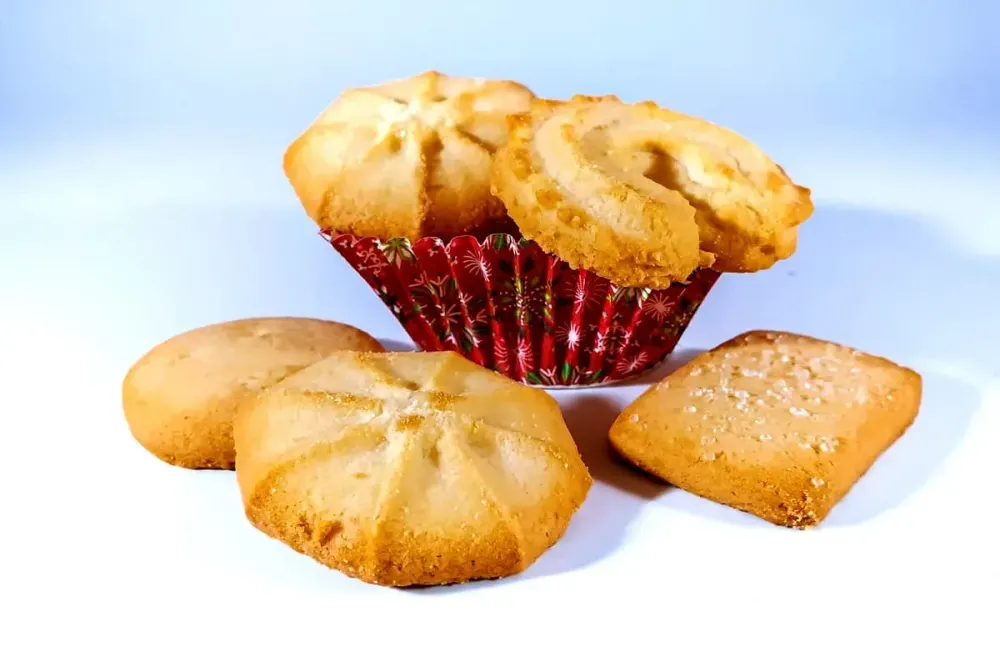
Sablés bretons come from Brittany — the northwestern French peninsula with a Celtic heritage and a dairy tradition built on some of the world's finest butter. The defining ingredient is Breton salted butter: butter made from the cream of cows grazing salt-marsh pastures, with large fleur de sel crystals incorporated. The contrast of rich butter and the crunch of salt crystals on the palate is what makes sablés bretons distinct from every other shortbread tradition.
Breton Salted Butter
Brittany was historically exempt from France's salt tax (the gabelle), which meant Breton cooks salted their butter generously when cooks elsewhere in France used unsalted butter out of economic necessity. The salted butter tradition became so embedded in Breton cooking that it defines the region's pastry and biscuit character. Use a good quality salted butter for this recipe — Kerrygold salted, or specifically a French brand if available.
Makes 20 biscuits · Prep 20 min · Chill 1 hour · Bake 15 min
Ingredients
- 200g salted butter, softened (use good quality)
- 150g caster sugar
- 4 egg yolks (3 for dough, 1 for glaze)
- 1 tsp vanilla extract
- 250g plain flour
Method
- Beat butter and sugar until pale and creamy, 4 minutes.
- Add 3 egg yolks and vanilla. Beat until combined.
- Add flour. Mix until just combined — do not overwork.
- Roll dough into a log 5cm diameter. Wrap in cling film. Refrigerate 1 hour.
- Preheat oven to 170°C. Slice log into 1cm rounds.
- Place on lined baking sheet. Brush tops with remaining egg yolk.
- Score tops with a fork in a crosshatch pattern.
- Bake 14-16 minutes until golden and firm at edges.
- Cool on the tray — they firm as they cool.
Can I use unsalted butter and add salt?
Use unsalted butter and add 1/2 tsp fleur de sel to the dough, plus a pinch on top of each biscuit before baking. The fleur de sel on top is important for texture.
Why rest the dough?
Resting allows the butter to firm up so the biscuits hold their shape during baking. Warm dough spreads too much in the oven.
How do I know when they're done?
The bottoms should be golden and the tops pale golden. They should feel firm at the edges and slightly soft in the centre. They firm completely as they cool.
Related guides: Vegetable Oil Substitute Guide
📌 Follow on Pinterest: Seed Oil Free Cookies & Sweets on Pinterest
Follow Savannah: @theefoodiekitchen · Facebook · All Links
African, Hawaiian, Indian, Mediterranean, Asian, Exotic, Chicken, Rice, Cookies, Coffee, Spices, Plants, World Cuisine, 30-Minute Dinners and more.
View All 23 Books on Amazon →