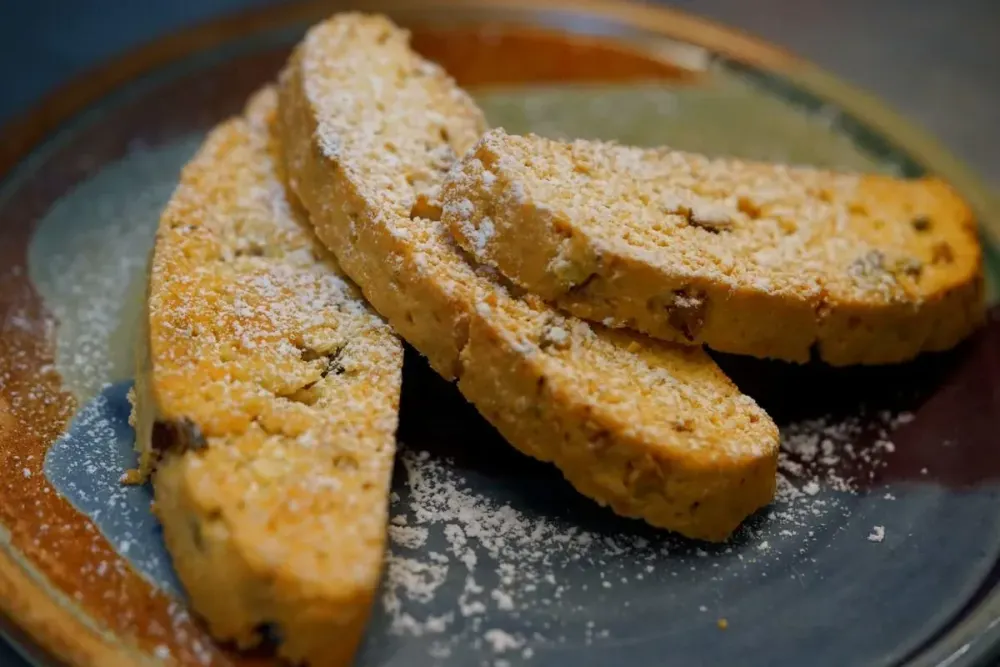
Biscotti means 'twice-cooked' in Italian. The original Tuscan version — cantucci di Prato — are hard, dry almond biscuits baked once as a log, sliced while still warm, then baked again until completely dry and crisp. They are made to last — the low moisture content means they keep for weeks — and to be dunked in vin santo (Tuscan dessert wine) or strong coffee, which softens them just enough. The fat in the original recipe is a combination of olive oil and butter, not butter alone, which gives cantucci their distinctive slightly crunchy, less crumbly texture compared to butter-only biscotti.
Olive Oil in Baking
Extra virgin olive oil in biscotti produces a crispier, more brittle texture than butter because olive oil contains no water (butter is approximately 16% water) and produces less gluten development. The result holds together more firmly during the second bake. Use a light, mild olive oil — not an assertively peppery one — so the biscotti have the subtle olive note without it dominating.
Makes 30 biscotti · Prep 20 min · Bake 45 min
Ingredients
- 250g plain flour
- 150g caster sugar
- 2 eggs
- 40ml extra virgin olive oil
- 30g unsalted butter, melted
- 150g whole almonds (skin on)
- 1 tsp vanilla extract
- 1/2 tsp baking powder
- Pinch of salt
Method
- Preheat oven to 180°C.
- Mix flour, sugar, baking powder, and salt.
- Beat eggs, olive oil, butter, and vanilla. Add to dry ingredients.
- Add almonds. Mix until a firm dough forms. Do not overwork.
- Divide into 2 logs on a lined baking sheet, 25cm long, 5cm wide.
- Bake 25 minutes until golden and firm. Remove and cool 10 minutes.
- Slice on the diagonal 1cm thick. Lay slices on the baking sheet.
- Bake 10 minutes per side at 160°C until dry and golden.
- Cool completely on a rack. They harden as they cool.
Why are biscotti hard?
The twice-baking removes almost all moisture. This is intentional — biscotti are designed to be dunked in wine or coffee, which provides the moisture. Eating a biscotto dry is an acquired taste.
Can I add flavourings?
Lemon zest and anise seeds are traditional. Orange zest and dark chocolate chips work well. Pine nuts replace almonds in some Tuscan versions.
How long do biscotti keep?
3-4 weeks in an airtight tin at room temperature. Their low moisture content makes them one of the longest-keeping baked goods.
Follow Savannah: @theefoodiekitchen · Facebook · All Links
Storage and Reheating
Store in an airtight tin at room temperature for up to 3 weeks — the low moisture content from double baking makes them one of the longest-lasting biscuits available. They do not soften over time the way most cookies do. Humidity is the only enemy — keep the tin sealed in a dry environment.
Recipe Variations
- Chocolate-dipped variation — dip one end of each cooled biscotto in melted 70% dark chocolate and allow to set on parchment — the combination of olive oil, almond, and dark chocolate is the Florentine confectionery version
- Orange and cardamom — replace the lemon zest with orange zest and add 0.5 tsp ground cardamom — a Sicilian-influenced biscotti variation with a warmer spice profile
- Adjust the fat — this recipe works equally well in ghee, lard, or grass-fed butter if extra virgin olive oil is unavailable. Each fat produces a slightly different flavour profile; extra virgin olive oil gives the most historically accurate result.
What to Serve With Biscotti
Biscotti are dunking cookies — the twice-baked process creates a density that does not absorb liquid instantly. Dip in espresso, Vin Santo (Tuscan dessert wine), or strong black tea and hold submerged for 3-4 seconds. They are traditionally served at the end of a meal as a simple dessert alongside a small glass of Vin Santo in Tuscany.
Why use olive oil in biscotti instead of butter?
The traditional Tuscan biscotto di Prato (the original biscotti) uses no fat at all — it relies on the egg for structure. The olive oil version produces a slightly richer, more tender crumb. Butter works too but olive oil is the correct ancestral fat for Tuscan baking — the region has always used olive oil rather than the butter that dominates northern Italian cooking.
Why are biscotti baked twice?
The first bake sets the log structure. The second bake (after slicing) removes almost all moisture from the cut surface, producing the characteristic hard, dry texture that makes biscotti suitable for dunking without crumbling. The Italian name means 'twice cooked'.
Can I substitute the almonds?
Yes — hazelnuts, pistachios, pine nuts, and dried cherries all work. The almond version is traditional (cantucci con le mandorle) but the technique applies to any nut or dried fruit combination.
African, Hawaiian, Indian, Mediterranean, Asian, Exotic, Chicken, Rice, Cookies, Coffee, Spices, Plants, World Cuisine, 30-Minute Dinners and more.
View All 23 Books on Amazon →