As an Amazon Associate I earn from qualifying purchases. Affiliate disclosure.
At a glance: Kitchari in Ghee — Ayurvedic Healing Porridge: serves 4, cooked in ghee, with no seed oils.
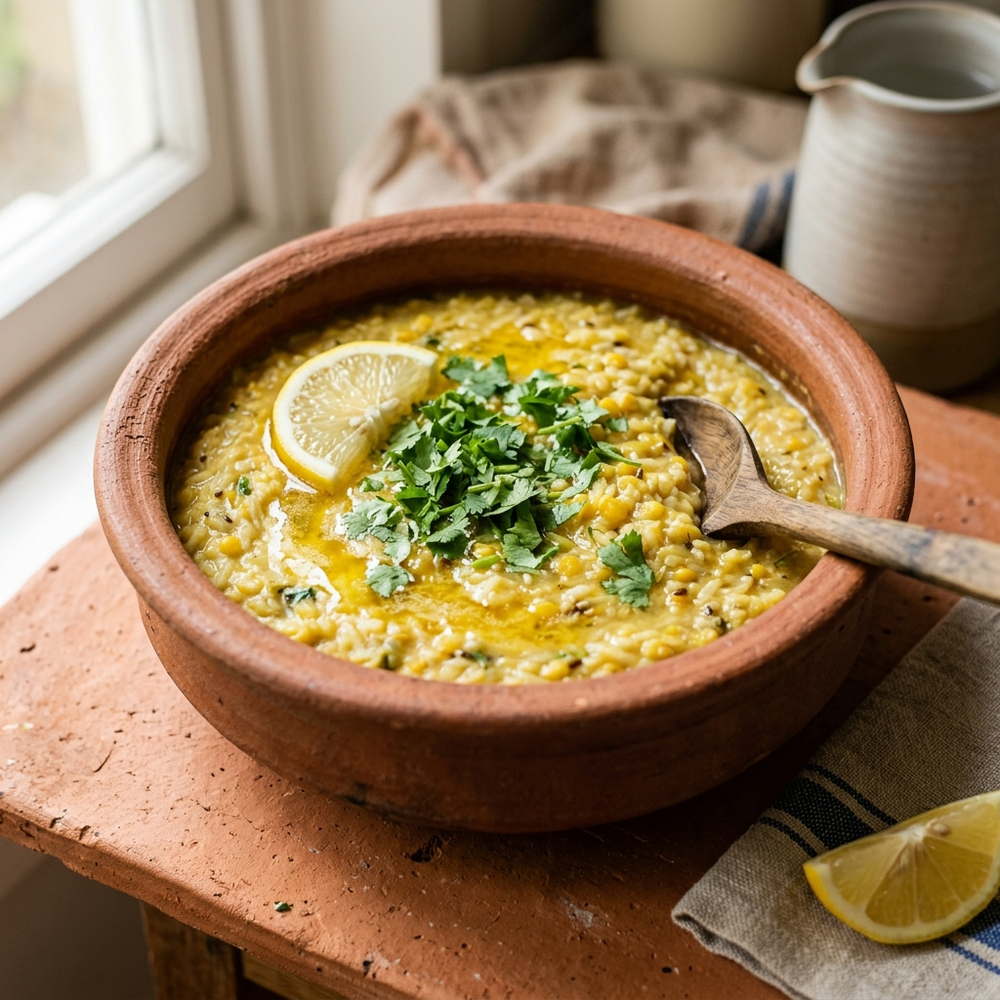
Kitchari is sometimes described as Ayurvedic “chicken soup” — the dish you eat when your digestion is compromised and you need nourishment without burdening the gut. The combination of split mung dal and white rice creates a complete protein profile and cooks to a porridge that sits very lightly in the digestive system. The ghee-tempered spice tadka (tempering) at the start of cooking is essential — it blooms the fat-soluble compounds in turmeric and cumin that are otherwise poorly absorbed.
Kitchari in Ghee — Recipe
Serves: 4 · Prep: 15 min (+ 30 min soak) · Cook: 40 min
Ingredients
- 1/2 cup split yellow mung dal (moong dal)
- 1/2 cup white basmati rice
- 3 tbsp ghee
- 1 tsp cumin seeds
- 1/2 tsp mustard seeds
- 1 tsp ground turmeric
- 1 tsp ground cumin
- 1 tsp ground coriander
- 1/2 tsp ground ginger
- 1/4 tsp asafoetida (hing)
- 5 cups water or vegetable broth
- 1 tsp salt
- Lemon juice and fresh cilantro to finish
Method
- Rinse mung dal and rice separately until water runs clear. Soak together in cold water for 30 minutes. Drain.
- Tadka (tempering): Melt ghee in a heavy pot over medium heat. Add cumin seeds and mustard seeds. When they begin to pop (30–60 seconds), add asafoetida and ground spices. Stir for 30 seconds until fragrant.
- Add the drained rice and dal to the spiced ghee. Stir to coat everything in the spiced fat.
- Pour in water or broth. Add salt. Bring to a boil, then reduce to a steady low simmer.
- Cook covered for 30–35 minutes, stirring every 10 minutes, until the dal and rice have cooked to a soft, porridge-like consistency. Add more water if it thickens too quickly.
- The finished kitchari should flow slowly off a spoon — neither thick nor watery. Adjust with water if needed.
- Serve hot with a squeeze of lemon juice, fresh cilantro, and an additional drizzle of ghee.
Curries, dals, biryanis, and breads cooked in ghee, mustard oil, and coconut oil — never canola.
This page contains affiliate links. As an Amazon Associate I earn from qualifying purchases. Affiliate disclosure.
See the book on Amazon →What is the difference between kitchari and dal?
Dal is a cooked lentil or legume dish. Kitchari specifically combines a legume (usually split mung dal) with rice, creating a complete protein. It is cooked to a porridge consistency and seasoned with a ghee-tempered spice tadka. Kitchari is specifically designed to be easy to digest — plain dal is not.
Can I add vegetables to kitchari?
Yes. Root vegetables (sweet potato, carrot, zucchini) can be added with the dal and rice. Ayurveda recommends adding vegetables appropriate to your constitution. During a digestive reset or illness, plain kitchari without vegetables is recommended to minimise digestive load.
Why does kitchari use ghee and not coconut oil or olive oil?
Ghee is the traditional Ayurvedic fat for kitchari. Ayurvedic medicine considers ghee particularly suited to blooming spices and carrying their properties into the body. The high smoke point of ghee (485°F) also allows proper tadka at high heat without burning.
All links: linktr.ee/theefoodiekitchen · Instagram: @theefoodiekitchen
Find more in: Indian recipes · Dinner & Main Dishes recipes · Ghee recipes · All recipes
African, Hawaiian, Indian, Mediterranean, Asian, Exotic, Chicken, Rice, Cookies, Coffee, Spices, Plants, World Cuisine, 30-Minute Dinners and more.
View All Books on Amazon →