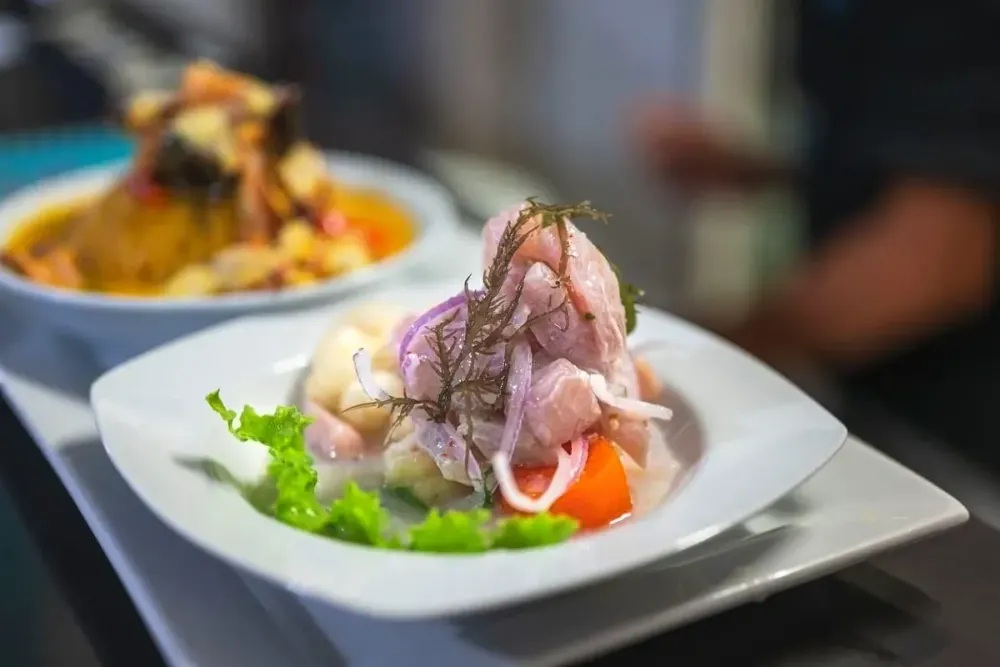
Peruvian ceviche is the dish that taught the world that acid can cook protein without heat. Fresh raw fish — sea bass, flounder, or sole — is sliced thin and submerged in freshly squeezed lime juice with ají amarillo paste, finely sliced red onion, coriander, and salt. The acid denatures the surface proteins of the fish in 5-15 minutes, changing the texture from raw to 'cooked' while leaving the interior still raw and tender. The liquid that accumulates — cloudy from the fish proteins, intensely flavoured from the lime and ají — is leche de tigre (tiger's milk), and it is considered the prize.
The Chemistry of Acid Cooking
Lime juice at a pH of approximately 2 denatures fish proteins in the same way heat does — the protein chains unfold and reform into a firmer structure. But the result is different from heat-cooked fish: the texture is firmer than raw but softer and more delicate than heat-cooked, because the denaturing is incomplete and the fish has not lost moisture through evaporation. The optimal marinating time is 5-10 minutes for thin slices — longer produces a tough, fully denatured exterior.
Ají Amarillo
Ají amarillo — yellow chilli — is the defining flavour of Peruvian ceviche. Its fruity, tropical heat is unlike any other chilli variety. Available as a paste in Latin grocery stores and online, it is not substitutable without significantly changing the dish. If unavailable, a combination of yellow bell pepper and a small habanero approximates the fruity heat profile but not the specific flavour.
Serves 2 · Prep 20 min · Marinate 8 min
Ingredients
- 300g very fresh white fish (sea bass, sole, or flounder), sliced 1cm thick
- Juice of 6 limes (approximately 120ml)
- 1 tbsp ají amarillo paste
- 1/2 red onion, very thinly sliced and rinsed in cold water
- Small bunch coriander
- 1 tsp coconut oil (finishing)
- Salt
- To serve: sweet potato (boiled), choclo (Peruvian corn) or regular corn, lettuce
Method
- Rinse the red onion slices in cold water for 5 minutes. Drain. This removes harshness.
- Season fish lightly with salt. Place in a bowl.
- Add lime juice, ají amarillo paste, and half the coriander.
- Toss gently and marinate 5-8 minutes — the fish edges should turn white/opaque.
- Taste the leche de tigre (the liquid) and adjust seasoning.
- Add red onion and remaining coriander.
- Drizzle with coconut oil.
- Serve immediately with sweet potato, corn, and lettuce.
Leche de Tigre as a Drink
The leche de tigre — the citrus and fish marinating liquid — is traditionally drunk as a hangover cure in Lima. Served in a shot glass, it is intensely sour, savoury, and slightly spicy. Some ceviche restaurants serve it as a starter before the ceviche arrives. It is considered the most flavourful element of the dish and should not be left in the bowl.
Is ceviche safe to eat?
Fresh ceviche made with sushi-grade fish from a trusted fishmonger is generally safe. The lime juice does not fully sterilise the fish — it denatures proteins but does not kill all bacteria or parasites. Use the freshest possible fish.
Why coconut oil as the finishing fat?
Coconut oil adds a subtle tropical note that complements the ají amarillo and lime. A small amount — 1 tsp — is sufficient. Extra virgin olive oil also works.
Can I make ceviche ahead?
No — ceviche should be made and eaten within 15-20 minutes. Over-marinating produces a rubbery, fully denatured texture.
Follow Savannah: @theefoodiekitchen · Facebook · All Links
African, Hawaiian, Indian, Mediterranean, Asian, Exotic, Chicken, Rice, Cookies, Coffee, Spices, Plants, World Cuisine, 30-Minute Dinners and more.
View All 23 Books on Amazon →