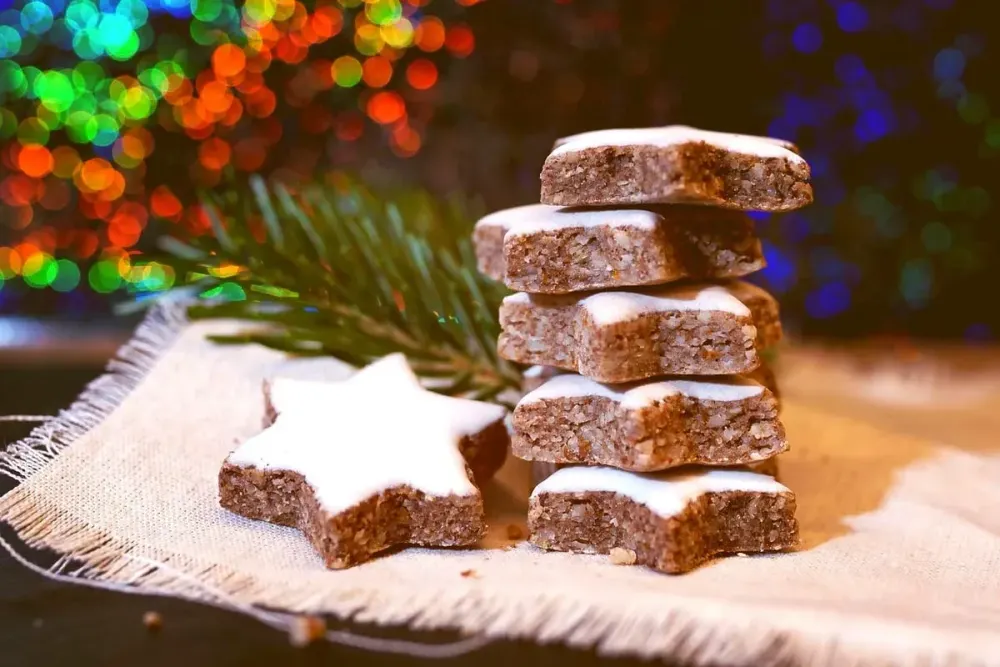
Lebkuchen are the spiced biscuits of German Advent — made since the 14th century in the monasteries around Nuremberg, where monks baked them in November for the Christmas market. The most famous Lebkuchen are the Nürnberger Lebkuchen — round biscuits baked on oblaten (thin edible rice paper wafers), intensely spiced with Lebkuchengewürz, sweetened with honey, and finished with either a chocolate glaze, a sugar glaze, or left unglazed. Their high spice content and low moisture means they improve over weeks — make them in early December for Christmas.
Lebkuchengewürz — The Spice Blend
Lebkuchengewürz is the spice blend that defines Lebkuchen. The standard blend: 2 tsp cinnamon, 1 tsp anise seeds (ground), 1/2 tsp each ginger powder, clove, cardamom, and allspice, 1/4 tsp each nutmeg and black pepper. Mix this dry blend and store separately — it keeps for months and is used across German Christmas baking including Stollen and Spekulatius.
Makes 24 · Prep 20 min · Chill overnight · Bake 12 min
Ingredients
- 300g plain flour
- 1 tsp baking powder
- 2 tbsp Lebkuchengewürz (see above)
- 150g runny honey
- 80g unsalted butter
- 80g dark brown sugar
- 1 egg
- Glaze: 150g icing sugar + 2-3 tbsp water; or 150g dark chocolate melted with 1 tbsp butter
Method
- Heat honey, butter, and brown sugar gently until melted. Cool to room temperature.
- Beat in egg.
- Add flour, baking powder, and spice blend. Mix to a firm dough.
- Refrigerate overnight — this develops the spice flavour.
- Preheat oven to 180°C. Roll dough 5mm thick. Cut into rounds or shapes.
- Place on lined baking sheets.
- Bake 11-13 minutes until set and very slightly darker at edges.
- Cool completely. Glaze with icing sugar glaze or chocolate.
Why refrigerate overnight?
The resting time allows the honey and butter to be fully absorbed into the flour and the spice flavours to develop. Freshly made dough produces a harsher, less integrated spice note.
Do Lebkuchen need to rest after baking?
Yes — they are better 24-48 hours after baking and best after a week. Store in a tin with an apple slice to add moisture if they become too hard.
What is the difference between Lebkuchen and Spekulatius?
Spekulatius is the Dutch/Belgian spiced biscuit traditionally rolled very thin and baked crispy. Lebkuchen is thicker, softer, and honey-sweetened rather than sugar-sweetened.
Follow Savannah: @theefoodiekitchen · Facebook · All Links
Storage and Reheating
Store in an airtight tin at room temperature for up to 4 weeks — they keep exceptionally well because of the honey content, which acts as a natural preservative. Layer between sheets of parchment paper. They do not freeze well — the icing cracks when frozen and the texture becomes gummy on thawing.
Recipe Variations
- Glazed variation — dip cooled lebkuchen in melted dark chocolate (70%+) for a Schokolebkuchen — the standard confectionery version sold throughout Germany in December
- Elisenlebkuchen — the premium version uses no flour — replace the flour entirely with ground almonds and hazelnuts for a gluten-free, nut-dense lebkuchen with a softer, more complex texture
- Adjust the fat — this recipe works equally well in ghee, lard, or grass-fed butter if grass-fed butter is unavailable. Each fat produces a slightly different flavour profile; grass-fed butter gives the most historically accurate result.
What to Serve With Lebkuchen
Lebkuchen are traditionally made in the weeks before Advent and improve significantly after 24-48 hours of resting — the spices meld and the texture shifts from firm to slightly chewy. Serve with strong black tea, filter coffee, or mulled wine (Glühwein). They are also the standard accompaniment to the German Christmas market hot chocolate.
What makes lebkuchen different from gingerbread?
The spice blend — lebkuchen uses a wider, more complex mix including cardamom, cloves, allspice, and star anise alongside ginger and cinnamon. The honey base (replacing sugar) and the use of potassium carbonate as leavening also produce a distinctly different texture and depth.
Can I use modern baking powder instead of potassium carbonate?
Yes. Substitute 1:1 with baking powder. Potassium carbonate (K2CO3) produces a slightly denser, more traditional texture — it releases its leavening more slowly during baking. Both produce good results.
Why use grass-fed butter in lebkuchen?
Grass-fed butter has a higher fat content (typically 84-85% vs 80% for standard butter) and a richer flavour. The butter content in lebkuchen is relatively small — it primarily adds tenderness to the dough — but higher-quality butter produces a noticeably more flavourful result.
African, Hawaiian, Indian, Mediterranean, Asian, Exotic, Chicken, Rice, Cookies, Coffee, Spices, Plants, World Cuisine, 30-Minute Dinners and more.
View All 23 Books on Amazon →