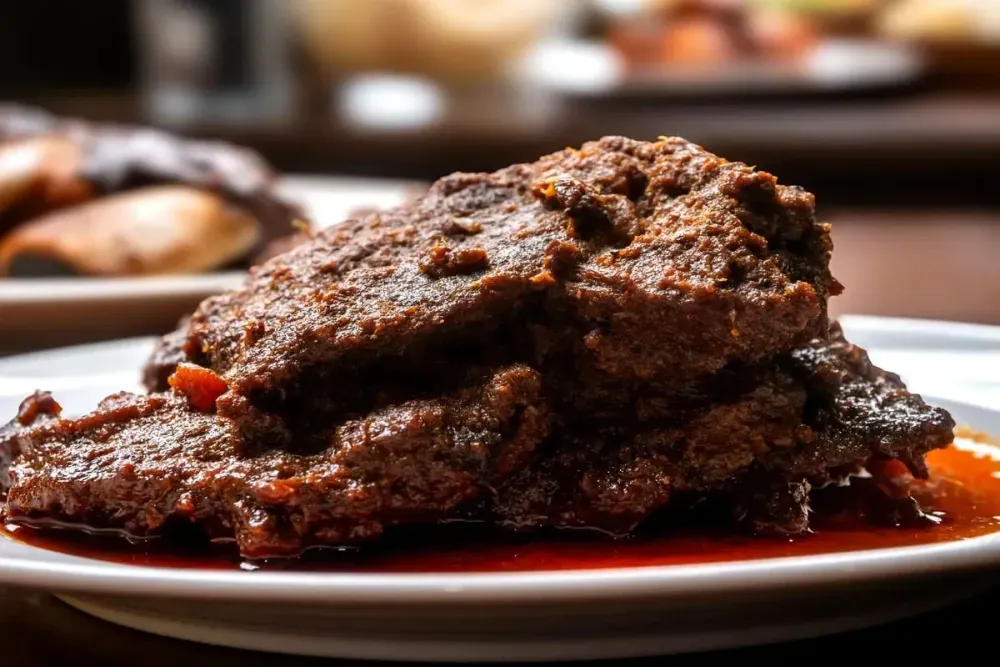
Rendang is one of the most complex dishes in Southeast Asian cooking — and one of the most patient. Beef is simmered in coconut milk and a spice paste of lemongrass, galangal, ginger, garlic, shallots, and dried chilli for 3-4 hours, until the coconut milk has completely evaporated, the spice paste has reduced to a thick coating, and the beef begins to fry in the residual coconut fat that lines the bottom of the pot. The transition from wet curry to dry fry is the moment rendang transforms from good to exceptional.
The Coconut Fat Fry
The defining characteristic of rendang is the dry fry at the end of the cooking process. After 2-3 hours of simmering, all the coconut milk liquid has evaporated, leaving only the coconut fat and the dense, reduced spice paste. At this point, the beef pieces fry in that coconut fat, developing a caramelised, slightly crispy exterior that absorbs no more liquid and carries the entire complexity of the spice paste in every piece. This phase requires constant stirring and careful heat management.
The Kerisik
Kerisik — toasted, ground coconut — is the traditional thickener and flavour enhancer added to rendang in the final stage. Toast desiccated coconut in a dry pan over medium heat until deep golden brown, then grind to a paste in a food processor. Stirred into the rendang in the last 30 minutes, it adds texture, aroma, and the characteristic slightly grainy exterior of properly made rendang.
Serves 4 · Prep 30 min · Cook 3.5 hours
Ingredients
- 1kg beef chuck, cut into large pieces
- 400ml full-fat coconut milk
- 200ml coconut cream
- Spice paste: 6 dried red chillies soaked, 4 shallots, 6 garlic cloves, 2 lemongrass stalks, 3cm galangal, 3cm ginger — blended
- 3 kaffir lime leaves
- 2 turmeric leaves (or 1 tsp dried turmeric)
- 2 tbsp coconut oil
- Kerisik: 50g desiccated coconut, toasted and ground
- Salt and palm sugar to taste
Method
- Blend spice paste ingredients until smooth.
- Heat coconut oil in a heavy pot. Add spice paste. Cook 5-8 minutes until fragrant and oil separates.
- Add beef. Stir to coat in paste.
- Add coconut milk, coconut cream, kaffir lime leaves, and turmeric leaves.
- Bring to a boil, then reduce to a gentle simmer. Cook uncovered 2-2.5 hours, stirring occasionally.
- As the liquid reduces, stir more frequently. When nearly dry, add kerisik.
- Continue cooking, stirring constantly, until beef is dark, dry, and frying in coconut fat, 30-45 minutes.
- Season with salt and palm sugar.
Beef Choice
Chuck is the best choice for rendang — heavily marbled, collagen-rich, and suited to the long cooking time. The collagen converts to gelatin, which helps the spice paste adhere to each piece. Topside or round works but is drier. Never use lean cuts — rendang requires fat in the meat to survive the extended cooking without becoming dry.
Can I make rendang in a slow cooker?
Yes for the first phase (simmering). The dry-fry phase cannot be replicated in a slow cooker — finish it in a pan on the stovetop.
How long does rendang keep?
3-4 days refrigerated. Up to 3 months frozen. Rendang is a dish traditionally made to last — the high fat content and low moisture preserve it well.
What is galangal?
A rhizome related to ginger with a more citrusy, pine-like, slightly medicinal flavour. Available fresh at Asian grocery stores, frozen, or dried. Fresh is best; ground galangal is a poor substitute.
Follow Savannah: @theefoodiekitchen · Facebook · All Links
African, Hawaiian, Indian, Mediterranean, Asian, Exotic, Chicken, Rice, Cookies, Coffee, Spices, Plants, World Cuisine, 30-Minute Dinners and more.
View All 23 Books on Amazon →