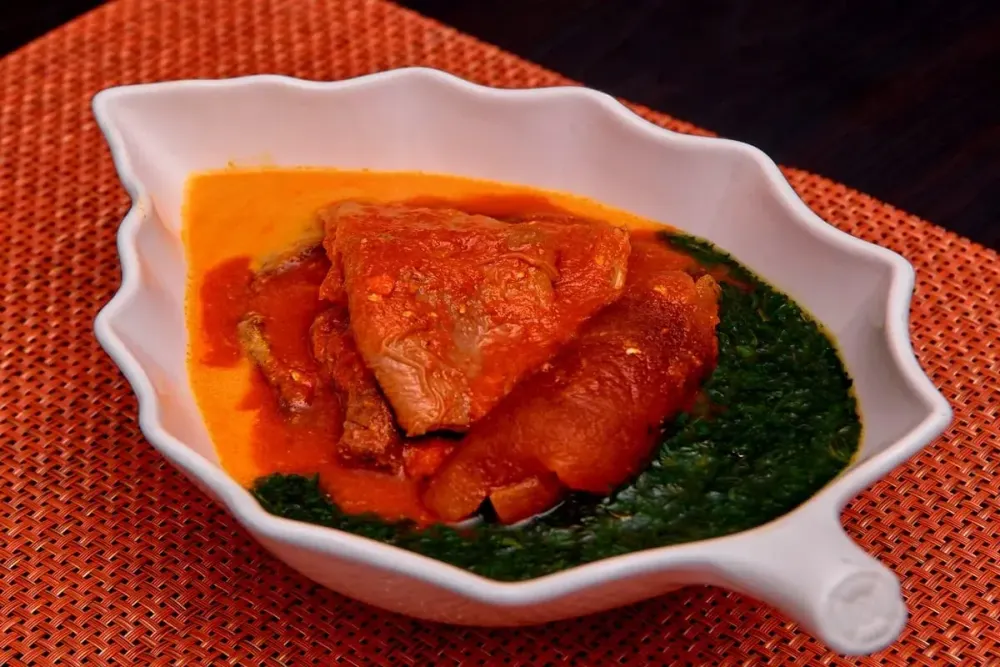
Egusi stew is as deeply Nigerian as jollof rice — ground melon seeds (Citrullus lanatus var. seeds) fried in red palm oil until they form a thick, crumbly cake, then simmered with leafy greens, smoked fish, stockfish, assorted meats, and dried crayfish into one of West Africa's most intensely flavoured and nutritionally dense dishes. It divides Nigerians into two camps: the frying method (egusi fried directly in palm oil) and the mixing method (egusi mixed with water first to form a paste, then fried). The frying method produces a nuttier, more textured result. This recipe uses it.
What Is Egusi
Egusi refers to the seeds of certain cucurbit plants — watermelon relatives grown specifically for their seeds rather than their fruit. The seeds are dried, shelled, and ground to a coarse powder with a high fat and protein content. The fat in egusi is predominantly unsaturated, and the seeds have been a staple protein source in West African cooking for centuries. Ground egusi is available at African grocery stores.
The Palm Oil Foundation
Red palm oil is not optional in egusi stew. Its colour, its flavour, and its ability to fry the egusi seeds at high temperature without burning are all part of what makes the dish work. A generous pour — 6 tablespoons for a pot of four — is standard. The palm oil will rise to the top of the finished stew; this is correct and desirable.
Serves 4 · Prep 20 min · Cook 45 min
Ingredients
- 200g ground egusi (melon seeds)
- 6 tbsp red palm oil
- 300g assorted meat (beef, tripe, or goat), pre-cooked
- 100g stockfish, soaked and cleaned
- 2 tbsp ground crayfish
- 2 tomatoes + 1 scotch bonnet, blended
- 1 onion, half blended, half sliced
- 200g leafy greens (bitter leaf, spinach, or ugu/fluted pumpkin)
- 2 stock cubes, salt
Method
- Heat palm oil in a pot over medium heat.
- Add sliced onion. Fry 3 minutes.
- Add blended tomato and scotch bonnet. Fry 8 minutes until oil rises.
- Add ground egusi directly to the pot. Stir into the palm oil base.
- Fry egusi 5-7 minutes, stirring, until golden and fragrant.
- Add meat, stockfish, and crayfish. Add 250ml water.
- Simmer 15 minutes. Add leafy greens.
- Cook 5 more minutes. Season and serve with pounded yam, fufu, or rice.
Leafy Greens
Bitter leaf (Vernonia amygdalina) is traditional and adds a distinctive slightly bitter note that balances the richness of the egusi and palm oil. It needs washing and squeezing repeatedly to reduce bitterness before adding. Ugu (fluted pumpkin leaf) is milder. Spinach is the most accessible Western substitute — add it in the last 3 minutes only, as it wilts fast.
Where to find egusi?
African grocery stores. Also sold online as 'melon seeds' or 'egusi seeds.' Buy pre-ground or grind whole seeds in a blender.
What is stockfish?
Dried, unsalted cod that has been air-dried for months. An essential flavour component in Nigerian cooking. Soak for several hours before cooking. Available at African grocery stores.
Can I make egusi stew without meat?
Yes — use more stockfish and crayfish for the umami base. The egusi provides the protein. A vegetarian version without stockfish or crayfish also works.
Follow Savannah: @theefoodiekitchen · Facebook · All Links
African, Hawaiian, Indian, Mediterranean, Asian, Exotic, Chicken, Rice, Cookies, Coffee, Spices, Plants, World Cuisine, 30-Minute Dinners and more.
View All 23 Books on Amazon →