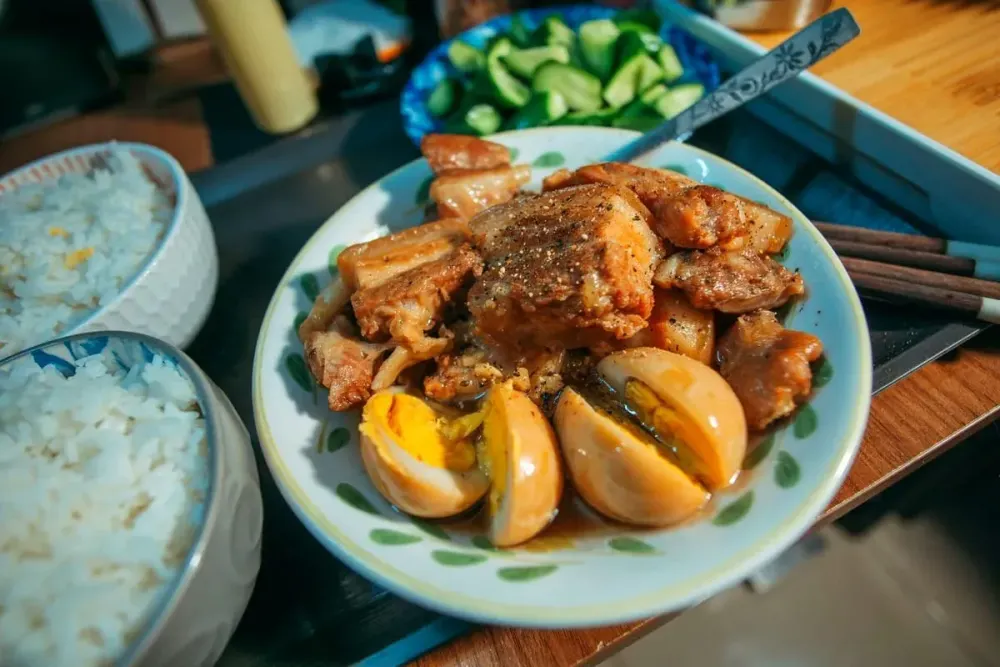
Filipino chicken adobo is the Philippines' national dish and one of Southeast Asia's most elegant braises — chicken simmered in vinegar, soy sauce, garlic, black pepper, and bay leaves until the liquid reduces to a thick, sticky, intensely savoury sauce. The dish is beloved for practical as much as culinary reasons: the acidity of the vinegar and the salt of the soy sauce preserve the chicken at room temperature for days in a tropical climate. This is practical ancestral food that tastes extraordinary.
The Vinegar
Philippine cuisine has a rich vinegar tradition — cane vinegar, coconut vinegar, palm vinegar, and sugarcane vinegar are all used in different regional adobo preparations. The vinegar provides both flavour and preservation. White cane vinegar or coconut vinegar is most traditional; white wine vinegar and apple cider vinegar are excellent substitutes. Never use balsamic — it is too sweet and thick for adobo.
The Two-Stage Method
The classic adobo preparation has two stages. First, the chicken is braised in the vinegar, soy, and aromatics until almost all the liquid has evaporated. Second, the dried chicken is returned to the pan in coconut oil and fried until the skin is crispy and golden. This second fry is optional but produces a dramatically better result — the skin, which has absorbed all the adobo flavours during the braise, now crisps in the coconut oil.
Serves 4 · Prep 10 min · Cook 45 min
Ingredients
- 1.5kg chicken pieces (thighs and drumsticks)
- 120ml white vinegar or coconut vinegar
- 80ml soy sauce
- 8 garlic cloves, crushed
- 4 bay leaves
- 1 tsp whole black peppercorns
- 2 tbsp coconut oil
- Optional: 200ml coconut milk for a richer sauce
Method
- Combine chicken, vinegar, soy sauce, garlic, bay leaves, and peppercorns in a pot.
- Bring to a boil. Reduce heat and simmer uncovered 30-35 minutes until the liquid has reduced to a thick glaze.
- Remove chicken. Set aside.
- Add coconut oil to the pot over medium-high heat.
- Return chicken to the pot. Fry 5-6 minutes per side until crispy and golden.
- Remove chicken. If the sauce needs more body, simmer the remaining liquid briefly.
- Pour sauce over chicken and serve with steamed rice.
Coconut Milk Variation
Adobo sa gata (adobo with coconut milk) is a rich regional variant from the Bicol region of the Philippines, known for its love of coconut and chilli. Add 200ml full-fat coconut milk in the last 10 minutes of braising — the sauce becomes thicker, creamier, and subtly sweet from the coconut. Still finish with the coconut oil fry for the crispy skin.
Can I use pork instead of chicken?
Yes — pork adobo is equally traditional. Use pork shoulder cut into cubes. The braising time extends to 45-55 minutes.
Why does the chicken not taste too sour?
The vinegar's acidity mellows significantly during the long simmer. What reads as sharp and acidic raw becomes savoury and complex when reduced. The soy sauce's salt balances the acid.
How long does adobo keep?
Refrigerated for 5-7 days. The vinegar and salt in the sauce genuinely preserve the chicken. Some argue adobo is better on days 2-3 as the flavours continue to develop.
Follow Savannah: @theefoodiekitchen · Facebook · All Links
African, Hawaiian, Indian, Mediterranean, Asian, Exotic, Chicken, Rice, Cookies, Coffee, Spices, Plants, World Cuisine, 30-Minute Dinners and more.
View All 23 Books on Amazon →