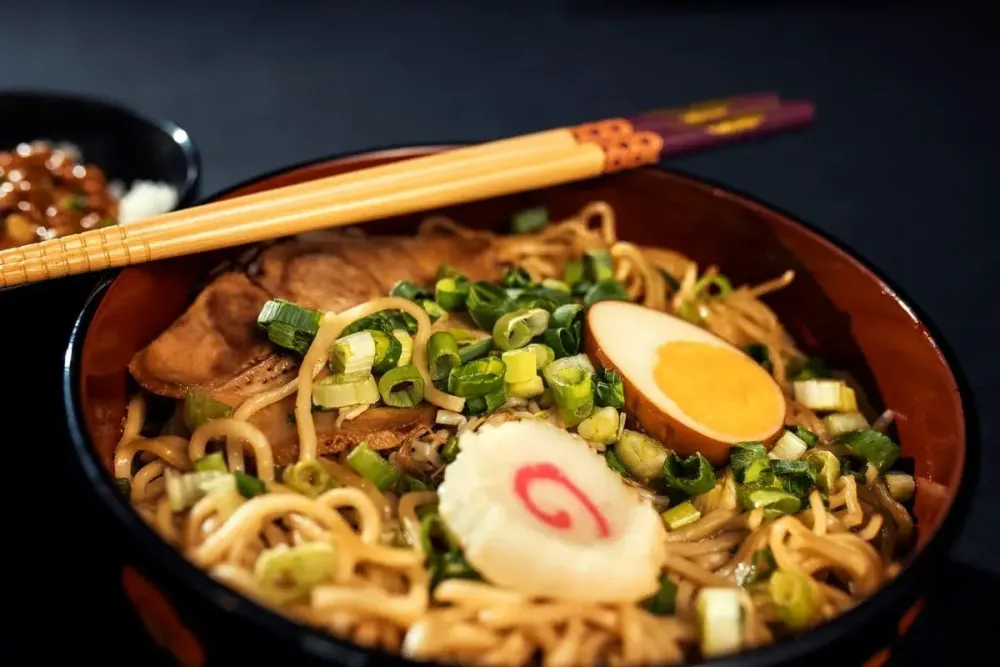
Tonkotsu ramen is an exercise in patience — pork bones (trotters, knuckles, and spine) boiled aggressively for 12-18 hours, which causes the collagen to dissolve into gelatin and the marrow to emulsify into the broth, turning it from a clear stock into an opaque, creamy, intensely flavoured white liquid. The fat that accumulates on the surface — pork tallow — is skimmed and used as the finishing oil added to each bowl. This is ancestral fat cooking in its most complete form: the fat of the animal used to cook and enrich the broth made from that animal's bones.
The Boil vs Simmer Distinction
Tonkotsu broth is intentionally boiled — not simmered. Most stock-making advice says never boil, because boiling makes stock cloudy. For tonkotsu, the cloudy, emulsified result IS the goal. The vigorous boil drives the fat and gelatin from the bones into the water, creating the characteristic creamy opacity. This requires commitment: a full rolling boil for 12 hours minimum, with water topped up as needed.
Serves 4 · Prep 20 min · Cook 12 hours
Ingredients
- Broth: 1.5kg pork trotters and knuckle bones; 6 garlic cloves; 2cm ginger; 3 litres water
- Tare (seasoning): 4 tbsp soy sauce, 2 tbsp mirin, 1 tsp salt
- Toppings: 4 portions fresh ramen noodles or dried; 4 ramen eggs (soft-boiled, marinated); chashu pork belly (braised in soy, mirin, sake); nori; sliced spring onion; sesame seeds
- Finishing: 2 tbsp pork tallow (skimmed from broth) or lard
Method
- Blanch bones: boil in water 10 minutes. Drain, rinse under cold water.
- Place blanched bones in a large pot. Cover with 3 litres fresh water. Bring to a vigorous boil.
- Boil hard for 12-18 hours, topping up water to maintain level. The broth should be milky white.
- Strain through a fine sieve. Season with tare.
- For each bowl: place 1 tbsp tare in bowl. Add hot broth. Add cooked noodles.
- Top with chashu, ramen egg halved, nori, spring onion.
- Drizzle with pork tallow skimmed from the broth surface.
The Ramen Egg
Ramen eggs (ajitsuke tamago) are soft-boiled eggs marinated in a mixture of soy sauce, mirin, and water. Boil eggs 6 minutes 30 seconds, transfer immediately to ice water, peel, and submerge in the marinade for at least 4 hours. The whites turn golden-brown. The yolk remains jammy. Slice in half directly before serving.
Can I make a quicker version?
A pressure cooker reduces the broth time to 3-4 hours at high pressure. The result is less milky-white but has good depth of flavour.
What is chashu?
Pork belly rolled, tied, and braised in soy sauce, mirin, sake, and sugar until tender. Sliced cold and added to the ramen bowl. The marinade becomes the ramen egg marinade.
Can I use chicken or beef bones?
Yes — chicken backs and feet produce an excellent clear ramen broth (chintan). Beef marrow bones produce a different, darker style.
Related guides: Vegetable Oil Substitute Guide · Cooking With Beef Tallow
📌 Follow on Pinterest: Asian Seed Oil Free Recipes on Pinterest
Follow Savannah: @theefoodiekitchen · Facebook · All Links
African, Hawaiian, Indian, Mediterranean, Asian, Exotic, Chicken, Rice, Cookies, Coffee, Spices, Plants, World Cuisine, 30-Minute Dinners and more.
View All 23 Books on Amazon →