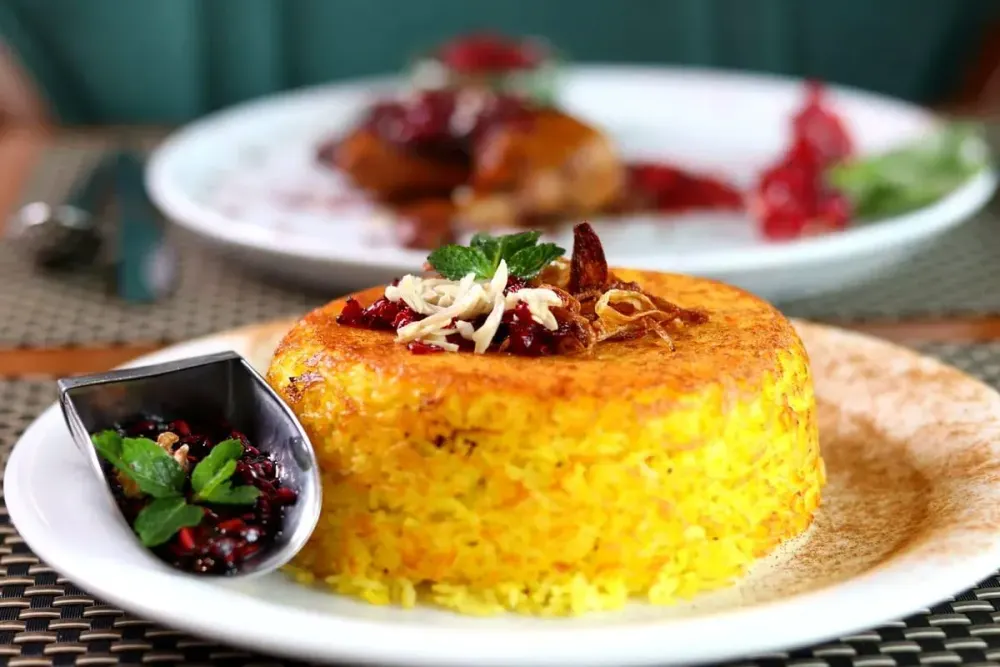
Tahdig — 'bottom of the pot' in Farsi — is one of the great achievements of Persian cooking. Every Persian household has a method for creating the perfect tahdig: the golden, shatteringly crispy crust that forms on the bottom of the rice pot during the long, covered steam, then inverted onto a platter in a golden disc. Guests compete for it. The cook's reputation depends on it. The fat that creates it is butter — a generous amount, spread on the bottom of the pot before the parboiled rice goes in.
The Technique
Tahdig requires two cooking stages. First, the rice is parboiled in well-salted water until 70% cooked — the grains are still chalky in the centre. It is drained. The pot is dried, buttered generously, and the saffron-bloomed butter is spread on the base. Then the parboiled rice is piled on top in a pyramid (the domed shape creates the steam circulation needed for the long, slow second cook). A clean cloth wrapped around the lid absorbs steam and prevents water dripping back onto the rice.
Serves 6 · Prep 20 min · Cook 1 hour
Ingredients
- 400g basmati rice, rinsed and soaked 30 min
- 80g unsalted butter
- Large pinch saffron, bloomed in 2 tbsp hot water
- Salted water for parboiling
- 1 tbsp vegetable oil (only for the base — keep rice pure butter)
Method
- Parboil rinsed, soaked rice in well-salted boiling water 7-8 minutes until 70% done. Drain.
- Dry the pot completely. Melt 50g butter over medium heat until foaming.
- Mix saffron water into the melted butter. Swirl to coat base.
- Add 2-3 large spoons parboiled rice to the saffron base. Pat flat. This becomes the tahdig.
- Pile remaining rice on top in a dome. Do not press. Use handle of spoon to poke 3-4 holes.
- Melt remaining butter. Pour over rice. Place a clean cloth under the lid.
- Cook on medium 5 minutes, then lowest heat 45 minutes.
- To invert: place a large platter over the pot. Flip quickly. The tahdig should release as a golden disc.
The Golden Disc
The moment of inverting the tahdig is tense. If the pot is properly buttered and the heat has been right, the crust releases cleanly and the golden disc sits on top of the white rice on the platter. If it sticks, the pot was not buttered generously enough or the heat was too high. A perfect tahdig is the mark of a Persian cook. It takes practice and is worth every attempt.
Why a cloth under the lid?
The cloth absorbs steam during the long cook, preventing water condensing on the lid from dripping back onto the rice. This is what produces the dry, fluffy grains with the crispy bottom.
Can I add potato to the tahdig?
Yes — thin slices of potato placed on the buttered base before the rice creates a potato tahdig (tahdig-e sib zamini). The potato crisps up under the rice.
How do I know the tahdig is ready?
After 45 minutes on low heat, the base should be golden and starting to smell slightly toasted. A thin-bladed knife slid down the side of the pot can reveal the colour.
Follow Savannah: @theefoodiekitchen · Facebook · All Links
African, Hawaiian, Indian, Mediterranean, Asian, Exotic, Chicken, Rice, Cookies, Coffee, Spices, Plants, World Cuisine, 30-Minute Dinners and more.
View All 23 Books on Amazon →