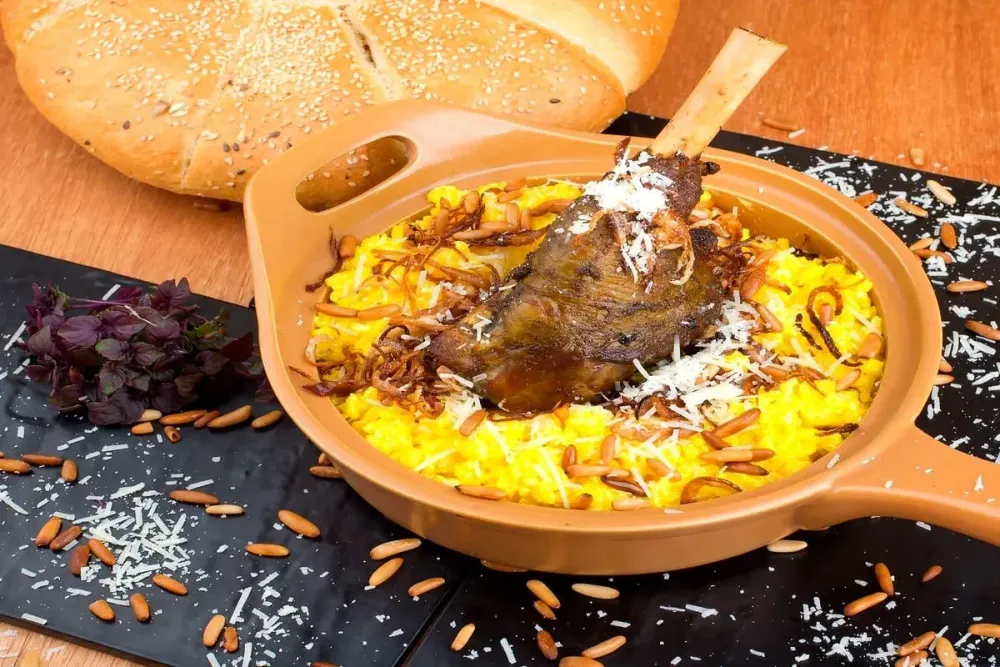
Persian cuisine is one of the great under-appreciated cooking traditions of the world — a cooking culture that has been refining its techniques and flavour combinations for over 2,500 years. At its centre is the khoresh (stew) — meat slow-braised with dried fruits, nuts, herbs, and aromatic spices in ghee, served over the perfect white rice with a golden tahdig crust. The saffron is not a garnish: it is a structural flavour, bloomed in ghee or hot water and stirred through the braise at the end to add its distinctive floral, slightly medicinal depth.
Persian Saffron
Iran produces 90% of the world's saffron — the stigmas of the Crocus sativus flower, harvested by hand in October in the Khorasan region. Persian saffron has a more complex, more intensely floral character than Spanish or Kashmiri saffron. To bloom saffron properly, grind a generous pinch with a small amount of sugar using a mortar and pestle, then dissolve in 2 tbsp hot water or ghee. This releases the maximum colour and flavour.
Serves 4 · Prep 15 min · Cook 2 hours
Ingredients
- 800g bone-in lamb shoulder, cut into large pieces
- 3 tbsp ghee, divided
- 2 large onions, thinly sliced
- 1/2 tsp saffron, bloomed in 2 tbsp hot water
- 1 tsp turmeric
- 3 dried limes (loomi), pierced with a skewer
- 100g walnuts, toasted and roughly chopped
- 1 tbsp pomegranate molasses
- 300ml water or lamb stock
- Salt, black pepper
Method
- Heat 2 tbsp ghee in a heavy pot. Brown lamb in batches on all sides. Remove.
- Add remaining ghee. Cook onions over medium heat 20 minutes until deeply golden.
- Add turmeric. Cook 1 minute.
- Return lamb. Add saffron water, dried limes, and stock. Season.
- Bring to simmer. Cover and cook 1.5 hours on lowest heat.
- Add walnuts and pomegranate molasses. Cook uncovered 20 minutes.
- The sauce should be thick and fragrant. Remove dried limes before serving.
- Serve over white rice with tahdig.
What are dried limes (loomi)?
Sun-dried limes used throughout Persian and Gulf cooking. They have a fermented, sour, slightly bitter flavour that is completely different from fresh lime. Pierce before using so the braising liquid enters the hollow fruit. Available at Middle Eastern grocery stores.
What is pomegranate molasses?
Reduced pomegranate juice — thick, tart, and intensely fruity. Used as a souring and sweetening agent in Persian and Levantine cooking. Available at Middle Eastern stores.
Can I use chicken instead of lamb?
Yes — use bone-in thighs and reduce cooking time to 45 minutes covered, 15 minutes uncovered.
Follow Savannah: @theefoodiekitchen · Facebook · All Links
Storage and Reheating
Store the lamb and sauce refrigerated for up to 4 days. The ghee in the sauce will solidify on top when cold — this is normal and the fat is still good. Reheat gently over low heat, stirring occasionally. The saffron flavour intensifies on reheating, making day-two Persian lamb often better than day one.
Recipe Variations
- Lamb shank version — substitute bone-in lamb shanks (one per person) and increase cooking time to 2.5-3 hours at 300°F — the presentation with a whole shank in the sauce is the formal Persian dinner party version
- Pomegranate molasses version — add 2 tablespoons of pomegranate molasses (rob-e-anar) with the stock for a tangy-sweet Khorasani variation
- Adjust the fat — this recipe works equally well in ghee, lard, or grass-fed butter if ghee is unavailable. Each fat produces a slightly different flavour profile; ghee gives the most historically accurate result.
What to Serve With Persian Lamb with Ghee and Saffron
Persian lamb is served over jewelled saffron rice (chelow) with a tahdig (crispy rice crust) on the side. The sauce is ladled over the rice at the table. Sabzi khordan — a plate of fresh herbs including tarragon, mint, radish, and feta — is the traditional Persian accompaniment. A wedge of lemon squeezed over the lamb before eating is the finishing touch.
How do I bloom saffron correctly for Persian cooking?
Grind a large pinch of saffron threads with a small amount of sugar in a mortar until powdered. Dissolve in 3-4 tablespoons of hot (not boiling) water and steep for 15 minutes before adding to the dish. This method produces maximum colour and flavour extraction.
Why is ghee used in Persian cooking?
Sadeyagh — clarified butter — is the traditional Persian cooking fat for slow-cooked dishes. Ghee (the South Asian equivalent) is essentially the same product and substitutes identically. The clarification process removes the water and milk solids that cause butter to burn at the temperatures Persian braises require.
What cut of lamb is best for this dish?
Bone-in shoulder (palak) for the most flavour from marrow and connective tissue. The bones contribute gelatin to the sauce as they cook, naturally thickening it without flour or cornstarch. Boneless leg of lamb also works but produces a thinner sauce.
African, Hawaiian, Indian, Mediterranean, Asian, Exotic, Chicken, Rice, Cookies, Coffee, Spices, Plants, World Cuisine, 30-Minute Dinners and more.
View All 23 Books on Amazon →