
As an Amazon Associate I earn from qualifying purchases. Affiliate disclosure.
If you have already read our tallow vs ghee comparison, this is the next question most cooks ask: what about plain butter? Butter is the fat most kitchens already have, and tallow is the one people bring in when they drop seed oils for frying. They are not interchangeable in every dish. This guide compares them with published data from USDA and a 2026 Nebraska Extension guide. Sources are listed at the end.
What tallow and butter are
Tallow is beef fat that has been rendered: heated slowly so the fat separates from protein and water, leaving a fat that sets firm as it cools.[1] See how to render tallow.
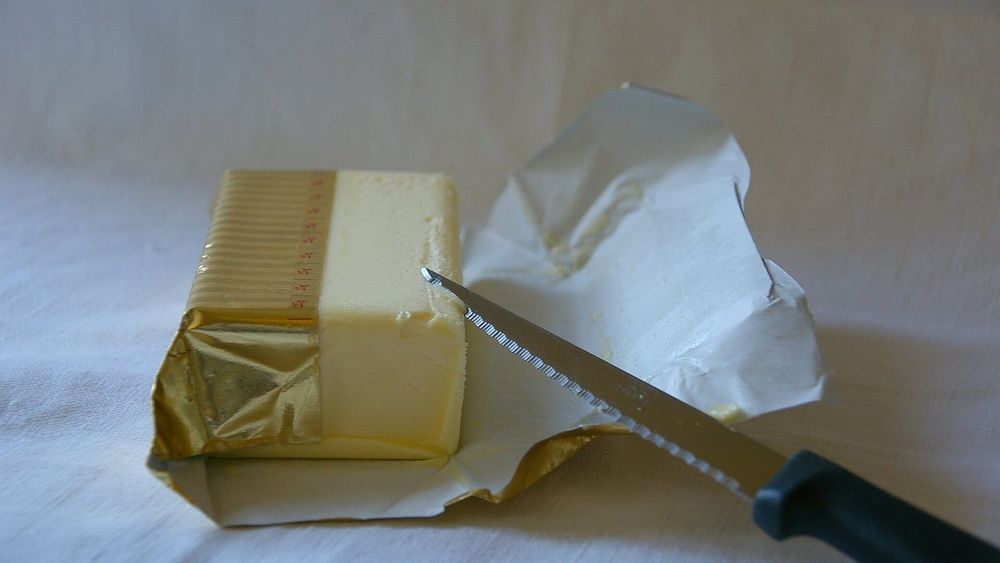
Butter is made by churning cream until the butterfat separates from the buttermilk.[1] It is not pure fat: USDA lists unsalted butter at 81.1 g of fat per 100 g, while tallow is 100 g.[2][3] The rest of butter is mostly water and milk solids, and those milk solids are what brown, and then burn, in a hot pan.
Tallow vs butter side by side
| Per 100 g | Beef tallow | Butter, unsalted |
|---|---|---|
| Source | Beef fat | Cow's milk cream |
| Total fat | 100 g | 81.1 g |
| Saturated fat | 49.8 g | 50.5 g |
| Monounsaturated fat | 41.8 g | 23.4 g |
| Polyunsaturated fat | 4.0 g | 3.0 g |
| Linoleic acid (18:2) | 3.1 g | 1.8 g |
| Cholesterol | 109 mg | 215 mg |
| Vitamin A (RAE) | 0 µg | 684 µg |
| Smoke point (Nebraska Extension) | 400 °F (about 204 °C) | 300 °F (about 149 °C) |
| Texture | Firm solid | Soft solid (spreadable) |
| Flavour | Mild, beefy | Creamy, rich |
| Dairy | No | Yes |
Nutrients: USDA FoodData Central SR Legacy, "Fat, beef tallow" (FDC 171400) and "Butter, without salt" (FDC 173430).[2][3] Smoke point, texture and flavour: Nebraska Extension G2369, Table 2.[1]
Smoke point and high-heat cooking
This is the biggest practical difference. Nebraska Extension lists tallow at 400 °F and butter at 300 °F, and notes that butter "burns substantially more easily" than tallow or lard because of its lower smoke point and its milk solids.[1] Industry testing of deodorised commercial tallow puts its smoke point higher still, at about 230 °C (446 °F).[4] Home-rendered tallow usually smokes lower than that.
So for deep frying, hard searing and hot roasting, tallow is the easier fat. Butter can still go in a hot pan if you add it near the end, mix it with tallow, or clarify it first. Removing the milk solids is how you get ghee. For the full chart, see cooking fat smoke points and can you fry in butter?.
Fat profile
Per 100 g, tallow and butter carry almost the same saturated fat (49.8 g vs 50.5 g). Tallow has much more monounsaturated fat (41.8 g vs 23.4 g), partly because butter is only about 81% fat to begin with. Butter carries vitamin A from the milk fat (684 µg RAE), while USDA lists none for tallow. Butter is also higher in cholesterol (215 mg vs 109 mg).[2][3]
For seed oil free cooking, the number most readers watch is linoleic acid. Tallow has 3.1 g and unsalted butter 1.8 g per 100 g, against about 51 g in soybean oil.[2][3][5] Both are a long way below seed oils. If you are managing saturated fat or cholesterol for a medical reason, follow your own doctor's or dietitian's advice.
This page contains affiliate links. As an Amazon Associate I earn from qualifying purchases. Affiliate disclosure.
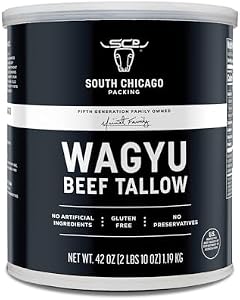
42 oz of 100% wagyu beef tallow, a size that suits regular deep frying. Use it where butter would burn.
Check price on Amazon
Unsalted, so you control the salt in baking and pan sauces. Use it where you want butter flavour and the heat stays moderate.
Check price on AmazonWhen to use tallow and when to use butter
Use tallow for
- Deep and shallow frying: Nebraska Extension lists frying, roasting and high-heat use as tallow's best uses.[1] Try tallow french fries or tallow fried chicken.
- Roasting potatoes and vegetables: tallow roast potatoes.
- Searing steak and burgers in cast iron.
- Dairy-free cooking.
Use butter for
- Baking: cookies, cakes and sweet pastry, where its flavour matters. Nebraska Extension lists baking and low-heat sautéing as butter's best uses.[1] Try brown butter chocolate chip cookies.
- Sauces and basting: pan sauces, beurre blanc and spooning over a steak at the end.
- Eggs and gentle sautéing over medium heat.
- Finishing vegetables, rice or mashed potatoes: butter mashed potatoes.
Can you swap one for the other?
In savoury cooking, mostly yes. Because butter is about 81% fat and tallow is 100% fat,[2][3] tallow is the more concentrated of the two: if you are replacing butter by weight, start with a little less tallow. Expect a beefy note instead of a creamy one. In sweet baking the swap is harder: tallow is firmer and savoury, so butter (or lard, in pastry) is the better choice. See lard vs tallow for pastry.
Storage
Nebraska Extension notes that refrigerated butter typically lasts only a few weeks once opened, salted butter a little longer, and frozen butter up to a year.[1] Well-strained tallow is low in water, which is part of why it keeps well; store it airtight, cool and dark. Our brand picks are in best tallow brands, and the full pantry list is on the shop page.
Frequently asked questions
Which has a higher smoke point, tallow or butter?
Tallow. Nebraska Extension lists tallow at 400 °F (about 204 °C) and butter at 300 °F (about 149 °C). Butter burns sooner because it contains milk solids.
Can I substitute tallow for butter?
In savoury cooking, yes. Butter is about 81% fat and tallow is 100% fat (USDA), so you need a little less tallow by weight. In sweet baking, tallow changes the flavour, and butter is the usual choice.
Is tallow or butter better for frying?
Tallow. It handles high heat and is a classic frying fat. Butter is better for gentle sautéing, basting and finishing.
Is tallow dairy-free?
Yes. Tallow is rendered beef fat and contains no milk. Butter is a dairy product.
Which has more omega-6, tallow or butter?
Both are low. USDA lists about 3.1 g of linoleic acid per 100 g of beef tallow and about 1.8 g per 100 g of unsalted butter, compared with about 51 g in soybean oil.
Sources
- Curry & Yates, The Big Fat Comparison: Tallow, Butter, & Seed Oils as Culinary Options, Nebraska Extension G2369, April 2026
- USDA FoodData Central: Fat, beef tallow (FDC 171400)
- USDA FoodData Central: Butter, without salt (FDC 173430)
- Institute of Shortening and Edible Oils: smoke, flash and fire points of commercial fats and oils
- USDA FoodData Central: Oil, soybean, salad or cooking (FDC 171411)
Part of: Traditional Cooking Fats Guide — Tallow, Ghee, Lard, Butter · Tallow vs Ghee · Shop the pantry →
African, Hawaiian, Indian, Mediterranean, Asian, Exotic, Chicken, Rice, Cookies, Coffee, Spices, Plants, World Cuisine, 30-Minute Dinners and more.
View All Books on Amazon →